

Watch This Episode: Our Phuket Real Estate Podcast
Our podcast covers all the topics for property investors looking at buying real estate in Thailand.
Thinking about buying a place in Thailand? It’s a popular thought, with its sunny beaches and generally lower cost of living. But can you actually own land there as a foreigner? It’s not as straightforward as you might hope. Thai law has some specific rules about who can own what, and it’s important to get these right before you get too far down the line. We’ll break down the ins and outs of foreign land ownership Thailand.
Key Takeaways
- Foreigners generally cannot own land directly in Thailand, with very limited exceptions for major investments.
- Condominium units can be owned by foreigners, but only up to 49% of the total units in a building.
- Long-term lease agreements (up to 30 years, renewable) are a common and legal way for foreigners to secure property use.
- Establishing a Thai company allows land ownership, but Thai nationals must hold the majority of shares (at least 51%).
- Marriage to a Thai national can facilitate property ownership, but requires specific legal declarations and waivers of rights for the non-Thai spouse.
Understanding Foreign Land Ownership in Thailand
When it comes to owning property in Thailand as a foreigner, it’s not quite as straightforward as you might think. The general rule, laid out in the Land Code Act, is that only Thai nationals are permitted to own land. This is a pretty firm restriction, designed to keep the country’s land resources primarily in the hands of its citizens. So, you can’t just walk into a land office and buy a plot of land outright in your own name, unless there’s a specific treaty or exemption in place, and Thailand doesn’t currently have treaties with any country that allow for this kind of direct land acquisition. Violating these rules can lead to some serious trouble, including fines and even jail time, so it’s definitely something to be aware of from the outset.
The General Prohibition on Direct Land Ownership
Thai law is quite clear on this: foreigners are generally barred from directly owning land. This is enshrined in the Land Code Act, which aims to protect national interests and prevent foreign control over land. It means that unless you fall under a very specific, rarely used exemption, direct freehold ownership of land is off the table for non-Thai individuals.
Exceptions for Significant Investment
There is a provision in the Land Code (Section 96 bis) that allows foreigners to own a limited amount of land, up to 1,600 square metres, for residential purposes. However, this comes with a hefty requirement: an investment of at least 40 million Baht in Thai bonds or other assets deemed beneficial to the Thai economy. This investment must also be approved by the Board of Investment (BOI) and the Minister of Interior. Even if granted, this ownership right is personal and not transferable or inheritable. It’s a route that’s rarely pursued due to its complexity and stringent conditions.
Legal Framework Governing Foreign Property Acquisition
The legal landscape for foreign property acquisition in Thailand is primarily governed by the Land Code Act and the Condominium Act. While direct land ownership is restricted, these frameworks do provide alternative avenues. Understanding these laws is key to making a sound property investment. It’s important to know that while you can’t own the land itself in most cases, you can own buildings constructed on it, and there are specific rules for condominium ownership and long-term lease agreements. The Condominium Act of 1979 is particularly relevant for those looking at apartment-style living.
Permitted Property Investments for Overseas Nationals
Right then, let’s talk about what overseas nationals can actually buy in Thailand. It’s not quite as simple as just picking a place and handing over the cash, but there are definitely ways to get your foot in the door, so to speak.
Condominium Ownership: The Foreign Quota
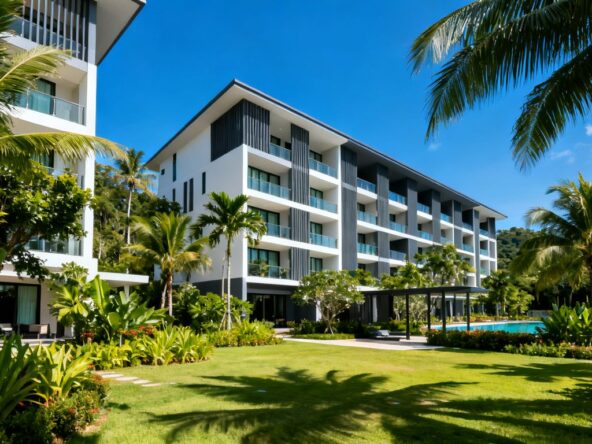
So, the most straightforward way for foreigners to own property outright is by buying a condominium. The law here is pretty specific: you can own 100% of an individual apartment unit, but there’s a catch. In any given condominium building, no more than 49% of the total sellable floor space can be owned by foreign nationals. This means you’ll need to check if the building you’re interested in has already hit its foreign ownership limit. It’s a bit like a race to get the best units sometimes!
Leasehold Agreements: Securing Long-Term Use
If buying a condo isn’t your thing, or if you’ve got your eye on a villa or a plot of land, a leasehold agreement is a really common alternative. Essentially, you’re not buying the land itself, but you’re securing the right to use it for a long period. These leases are typically for 30 years, and importantly, they usually come with options to renew for another 30 years. It gives you a good sense of security and long-term use, much like owning it outright, but it’s structured differently legally. It’s a popular choice for many who want to live in Thailand for extended periods.
Owning Buildings Separately from Land
This is a bit more niche, but it’s worth knowing about. Thai law does allow for foreigners to own buildings separately from the land they sit on. This means you could potentially own a house or a commercial building, but the land itself would be leased or owned by a Thai entity. It’s a way to get ownership of the physical structure without directly owning the ground beneath it, which can be useful in certain investment scenarios. It’s not as common for personal residences, but for business ventures, it can be a viable option. You might find this particularly relevant if you’re looking at prime land near Surin Beach.
Establishing a Thai Company for Property Acquisition
Right then, let’s talk about setting up a Thai company to buy property. It’s a pretty common route for foreigners, mainly because you can’t directly own land in your own name here. So, you form a Thai company, and that company then owns the land. It sounds straightforward enough, but there are definitely a few things to get your head around.
Company Structure and Shareholding Requirements
When you’re setting up a company for property ownership, the most common structure is a Thai Limited Company. Now, here’s the kicker: to comply with regulations, at least 51% of the company’s shares must be held by Thai nationals. This means, as a foreigner, you’ll typically hold a minority stake, usually up to 49%. It’s not ideal if you want full control, but it’s the legal way to go about it. You’ll need to make sure the company’s business activities are legitimate and not just a front for land ownership, which can cause problems down the line.
Navigating Nominee Shareholder Risks
Because of that 51% Thai ownership rule, you might be tempted to use ‘nominee’ shareholders – basically, Thai friends or associates who hold shares on your behalf. This is a really risky business and is actually illegal in Thailand. If the authorities suspect a nominee arrangement, the company’s land ownership can be challenged, and you could face serious penalties. It’s much safer to structure things properly from the start, even if it means a bit more paperwork and potentially less direct control than you’d ideally want. Always get legal advice on this.
Benefits and Drawbacks of Corporate Ownership
So, why bother with a company? Well, the main benefit is that it allows you to own property, including land, which you otherwise couldn’t. It can also be useful if you plan to develop the property or run a business from it. However, there are definite downsides. You’ve got the ongoing costs of maintaining the company, filing annual returns, and the risk of nominee shareholding issues if not handled correctly. Plus, if you ever want to sell the property, you’re essentially selling the company shares, which can add a layer of complexity to the transaction. It’s a trade-off, really, between being able to own property and the administrative hassle and potential risks involved. If you’re looking to buy a family home in Chalong, Phuket, for instance, this might be a route to consider, but weigh it up carefully against other options like leasehold agreements.
Leasehold Agreements: A Viable Alternative
When direct land ownership is off the table for most foreign nationals in Thailand, leasehold agreements emerge as a really practical alternative. It’s not quite owning the freehold, but it gives you the right to use and occupy a property for a set period, often up to 30 years. Think of it as a long-term rental, but with more security and defined rights. This is a popular route because it sidesteps the complexities and restrictions associated with direct foreign land ownership. It’s a way to get a foothold in the Thai property market without running into legal roadblocks.
Understanding the Terms of a Thai Lease
A Thai lease agreement is essentially a contract, governed by the Civil and Commercial Code. It lays out the terms of your occupancy, including the duration, rent payments, and any specific conditions. Crucially, a lease is considered a personal contract right rather than a real property right. This means it’s tied to the individuals involved and isn’t automatically transferable like freehold ownership. You can’t typically mortgage a lease, and while you might be able to sublet or assign your remaining lease term, this usually requires the property owner’s explicit consent and registration at the Land Department. It’s vital to have a clear agreement on things like who is responsible for repairs and maintenance, and what happens to any improvements you make to the property when the lease ends.
Renewal Options and Legal Considerations
While leases can be for up to 30 years, renewal isn’t automatic. The possibility of extending your lease for another 30-year period depends entirely on the terms written into the original contract and the landowner’s willingness to agree to a new arrangement. The Land Department doesn’t automatically grant extensions. This means that if you’re planning for the long haul, you need to ensure the lease agreement clearly outlines the renewal process and any associated conditions. It’s also worth noting that if you build on the leased land, any structures generally become the landowner’s property at the end of the lease unless there’s a specific agreement for compensation or removal. This is a key point to clarify upfront.
Leasehold vs. Freehold: Key Differences
Here’s a quick rundown of how leasehold stacks up against freehold ownership:
- Ownership Rights: Freehold means you own the land outright. Leasehold grants you the right to use the land for a fixed term.
- Transferability: Freehold property can be sold or inherited easily. Transferring a leasehold interest usually requires the landowner’s consent and registration.
- Financing: Securing a mortgage on a freehold property is standard. Mortgaging a leasehold interest is generally not possible.
- Improvements: With freehold, any improvements are yours. With leasehold, improvements might revert to the landowner unless otherwise agreed.
- Duration: Freehold is perpetual. Leasehold is for a defined period, typically up to 30 years, with potential for renewal.
For many foreigners looking to enjoy property in Thailand, like a modern Thai villa for sale, a long-term lease offers a secure and legally sound way to do so, providing many of the benefits of ownership without the direct legal hurdles.
Marriage to a Thai National: Property Implications
So, you’re married to a Thai national and wondering about property ownership? It’s a common route, but it’s not quite as simple as just putting your name on the deed. While the law generally prohibits direct land ownership by foreigners, being married to a Thai citizen opens up some specific avenues, though with important caveats.
Legal Declarations Required for Spouses
When a foreigner is married to a Thai national, and the Thai spouse is acquiring property, the couple will likely be asked to make a formal declaration at the Land Department. This declaration essentially states that the funds used for the purchase are the separate, personal assets of the Thai spouse. It’s a way for the authorities to confirm that the property isn’t being acquired with joint marital funds, which could imply foreign ownership rights. This is based on the principle that if personal property is exchanged for other assets during a marriage, those new assets remain the personal property of the original owner, not joint marital property.
Waiver of Rights for Non-Thai Partners
As the foreign spouse, you’ll typically need to formally state that you have no claim or rights over the property. This is a crucial step, effectively waiving your right to assert ownership or claim the property, especially in the event of a divorce. The property will be registered solely in the name of the Thai spouse. It’s a bit like saying, “I support my Thai spouse owning this, and I don’t have a stake in it myself.” This is why having a prenuptial agreement can be a good idea to clarify financial arrangements and protect your interests.
Ensuring Legal Protection for Joint Assets
While the property is registered in your Thai spouse’s name, and you’ve waived direct ownership rights, there are ways to ensure your interests are considered. A well-drafted prenuptial agreement can be incredibly helpful. It can outline how assets acquired during the marriage, including property, should be handled, particularly in the unfortunate event of a divorce or the passing of the Thai spouse. It helps to provide clarity and can mitigate potential disputes down the line. It’s always wise to consult with a legal professional to understand all the implications and to draft any agreements correctly, ensuring your financial well-being is considered. For those looking at prime locations, consider exploring a sea-view land plot in Yamu.
Board of Investment (BOI) Incentives and Property Rights
While direct land ownership for foreigners in Thailand is generally restricted, the Board of Investment (BOI) offers a pathway for certain investors. This route isn’t typically for buying a holiday home, but rather for those making substantial business investments that qualify for special privileges. Essentially, if your business activities are approved by the BOI, you might gain exemptions allowing your company to own land. This is usually tied to the duration of your business operations in Thailand and requires significant capital outlay.
Eligibility Criteria for BOI Schemes
To even be considered for BOI incentives related to property, your business must align with the government’s promotion goals. This means investing in sectors deemed beneficial for Thailand’s economic development. The investment amount needs to be substantial, far beyond what a typical personal property purchase would involve. It’s about bringing significant capital and creating economic value.
Specific Ownership Privileges Granted
If your business is granted BOI approval, the privileges can include the ability for your company to own land. This isn’t a personal freehold title, but rather a corporate ownership structure facilitated by the BOI’s framework. The land ownership is usually limited to what’s necessary for the approved business activities. Think of it as owning the factory site or the land for your promoted industrial estate, not a beachfront villa for personal use.
Suitability for Personal Property Investment
Let’s be clear: the BOI route is generally not suitable for individuals looking to buy a condo or a house for personal living or as a straightforward investment. The requirements are geared towards large-scale business ventures. If you’re looking for personal property ownership, you’ll likely need to explore other avenues like condominium ownership within the foreign quota or long-term lease agreements. It’s a different ballgame entirely, focused on business growth rather than personal real estate acquisition. For those interested in property in Phuket, exploring Phuket properties for sale might be a more direct approach.
Navigating the Property Purchase Process

So, you’ve decided to buy property in Thailand. That’s exciting! But before you start picturing yourself on a beach with a cold drink, there are a few practical steps to get through. It’s not as simple as just handing over cash, you know.
Choosing the Right Ownership Structure
First off, you need to figure out how you’re going to own the place. Are you going for a condo, which has that foreign ownership quota, or perhaps a long-term lease? Maybe you’re thinking about setting up a Thai company, which has its own set of rules and potential pitfalls. Each option has different legal implications and affects what you can actually do with the property. It’s a big decision, so don’t rush it.
The Importance of Reputable Real Estate Agents
Finding a good agent can make all the difference. A trustworthy agent knows the local market inside out and can help you find properties that fit your needs and budget. They should also be transparent about ownership structures and any potential issues. Always ask for references and check their credentials. It’s easy to get swept up in the excitement, but a solid agent keeps you grounded.
Verifying Condominium Foreign Ownership Limits
If you’re eyeing a condominium, you absolutely must check the foreign ownership percentage. Thai law limits the total foreign ownership in any single condominium building to 49%. If that quota is already filled, you won’t be able to buy a unit in that building, no matter how much you like it. Your agent or lawyer should be able to confirm this for you. It’s a bit like trying to get into a popular club – once it’s full, it’s full!
Remember, the process involves more than just finding a nice place. Legal checks, paperwork, and understanding the local regulations are key to a smooth transaction. Don’t skip these steps; they’re there to protect you.
Here’s a rough idea of the steps involved:
- Initial Property Search: Find a property that suits your needs.
- Due Diligence: This is where you (or your lawyer) check the title deeds, look for any debts or encumbrances, and confirm the seller’s right to sell. This is a really important step.
- Sales Agreement: Once satisfied, you’ll sign a purchase agreement and usually pay a deposit.
- Fund Transfer: You’ll need to transfer funds from overseas in foreign currency, and a specific form (FET) is required for registration.
- Land Office Registration: Finally, the ownership transfer is registered at the local Land Department. You’ll need all your documents ready for this.
It might seem like a lot, but taking it step-by-step makes it manageable. Getting professional advice, especially from a good real estate lawyer in Thailand, is highly recommended.
Financial Considerations for Foreign Buyers
So, you’re thinking about buying property in Thailand. That’s exciting! But before you get too carried away with visions of beachfront villas, let’s talk about the money side of things. It’s not always straightforward, and there are definitely a few things you need to get your head around.
Securing Financing: Challenges for Non-Residents
This is a big one. Most foreigners buying property here end up using cash. Thai banks are generally quite reluctant to offer mortgages to people who aren’t residents. It’s not impossible, mind you; some international banks might have options, but don’t count on it being easy or readily available. You’ll likely need a substantial amount of capital upfront. Saving up is often the most direct route.
Compliance with Thai Currency Regulations
When you’re sending money from overseas to buy property, it has to be done in foreign currency. The Thai bank receiving the funds will then convert it into Thai Baht. Crucially, you’ll need a Foreign Exchange Transaction Form (FET). This little piece of paper is a must-have for registering your ownership later on, so don’t lose it!
Understanding Property Transfer Fees and Taxes
Buying property isn’t just the sticker price, oh no. There are a bunch of fees and taxes that add up. Here’s a rough breakdown:
- Transfer Fee: This is usually 2% of the property’s value. It’s often split between the buyer and seller, but that’s something you agree on.
- Stamp Duty: Expect to pay 0.5% of the property price.
- Withholding Tax: This is 1% if you’re an individual, but it jumps to 3.3% if you’re buying through a company.
- Business Tax: If the property is sold within five years of purchase, you might be looking at a 3.3% business tax.
- Legal Fees: These can vary quite a bit, but budget anywhere from 20,000 to 100,000 Thai Baht.
It’s really important to factor all these extra costs into your budget from the start. Unexpected expenses can really put a dampener on your new Thai property dreams.
Remember, getting your finances sorted and understanding all the associated costs is a massive part of making sure your Thai property purchase goes smoothly. It’s worth doing your homework and maybe even chatting with a local financial advisor who knows the Thai system.
Understanding Specific Property Rights

While direct land ownership is generally off-limits for foreigners in Thailand, the legal landscape does permit certain specific property rights that can grant long-term use and enjoyment of land and buildings. These rights are distinct from outright ownership and are governed by specific sections of Thai law, primarily the Civil and Commercial Code. Understanding these can be a game-changer for those looking to secure a stake in Thai real estate without falling foul of ownership restrictions.
Usufruct and Superficies Rights Explained
A usufruct is essentially the right to use and enjoy another person’s property, including its fruits, for a set period or for the duration of the holder’s life. Think of it as a very strong form of lease, but it’s registered with the Land Department and can last up to 30 years, or for the lifetime of the usufructuary. Once registered, it’s a real right, meaning it’s binding on subsequent owners of the land. It’s often used to provide security for a foreign spouse, for example. Superficies, on the other hand, is the right to own a building or structure on someone else’s land. This means you could own the house, but the land it sits on would belong to someone else. This is also a registered right and can be granted for up to 30 years, with renewal possibilities.
Habitation Rights and Their Limitations
Habitation rights are a more limited form of usufruct. They grant the right to live in a property but don’t typically extend to using it for commercial purposes or deriving income from it, unlike a usufruct. The key difference is that a habitation right is personal to the grantee and their family; they cannot transfer this right to a third party. It’s purely for dwelling. This right is also registered and can be for a fixed term or for life. It’s a simpler arrangement, often used for family members who need a place to stay but aren’t involved in the property’s broader management or income generation.
Servitude Agreements in Property Law
Servitude, or easements, are rights granted over a piece of land for the benefit of another piece of land. These are non-possessory interests. Common examples include the right to cross a neighbour’s land to access a public road, or the right to lay utility pipes or cables across someone else’s property. A registered servitude is a real right, meaning it attaches to the land itself and remains valid even if the ownership of either the dominant or servient land changes. It’s a way to manage access and utility needs between neighbouring properties, ensuring that one plot isn’t landlocked or lacks essential services. For instance, securing access to a public road is a common reason for establishing a servitude.
These specific property rights offer foreigners ways to secure long-term use of Thai property. However, they are not the same as freehold ownership and come with their own set of rules and limitations. It’s always wise to get professional legal advice to understand exactly what you’re agreeing to.
Risks and Considerations in Foreign Land Ownership Thailand
Buying property in Thailand as a foreigner isn’t always straightforward, and there are definitely a few things to keep in mind to avoid any nasty surprises. It’s not just about finding a nice villa or apartment; you’ve got to be aware of the legal landscape, which can be a bit of a maze.
Potential for Company Ownership Challenges
Setting up a Thai company to hold property is a common route, but it’s not without its pitfalls. The Thai government is pretty strict about preventing foreigners from effectively owning land through shell companies that are just fronts for nominee shareholders. If your company structure looks dodgy or is seen as a way to get around the rules, it could be challenged. This means the company’s ownership of the land could be questioned, leading to serious legal trouble, including fines and potentially the forfeiture of the property. It’s vital that the company is genuinely established for business purposes, not just as a property-holding vehicle for foreigners.
Navigating Market Volatility
Like any property market, Thailand’s can swing up and down. Some areas might be booming, while others could be a bit stagnant. It really depends on the location, the type of property, and even broader economic factors. You can’t just assume that a property will increase in value. Doing your homework on local market trends and understanding the economic outlook for the specific region you’re interested in is a must. Don’t put all your eggs in one basket, especially if you’re relying on property appreciation for your investment returns.
Understanding Legal Penalties for Violations
Getting the legal side wrong can have some pretty hefty consequences. If you end up violating foreign ownership laws, you could be looking at fines or even a jail sentence, up to two years. It’s not just a slap on the wrist. The Land Code Act is quite clear on this. For instance, if you buy a condo and the building has already hit its foreign ownership limit, your purchase might not be valid. It’s also why getting proper legal advice before signing anything is so important. You don’t want to find yourself on the wrong side of the law, especially when you’ve invested a significant amount of money. Making sure your purchase is above board from the start is the only way to go. For example, a 4 rai plot of land in Thalang, Phuket might seem like a great deal, but you need to ensure the ownership structure is perfectly legal.
Thinking about owning land in Thailand? It’s a big step, and there are a few things you’ll want to know first. We’ve put together some helpful information to guide you through the process, covering potential pitfalls and important details. Make sure you’re well-informed before you dive in. For a clearer picture of the legal side of things, check out our detailed guide on the website.
So, Can Foreigners Own Land in Thailand? The Bottom Line
Right then, after all that, it’s pretty clear that owning land outright in Thailand as a foreigner isn’t really on the cards. Thai law is quite firm on that, mostly to keep the country’s land in local hands. But don’t pack your bags just yet! There are perfectly legal ways around this, like buying a condo unit, as long as the building hasn’t hit its foreign ownership limit. Or you could go for a long-term lease, which gives you the right to use a property for ages, usually up to 30 years with renewal options. Setting up a Thai company to hold the land is another option, though you’ll need to make sure it’s all above board and Thai nationals hold the majority of shares. It might seem a bit complicated, but with the right advice, getting a slice of Thai property is definitely achievable.