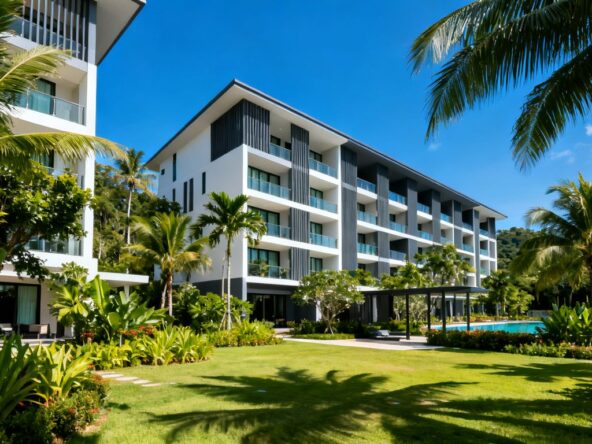


Thinking about buying a condo in Thailand? It’s a great idea, lots of people love it here. But there’s a bit of a rule you need to know about – the Thailand condominium foreign quota. It basically means foreigners can only own a certain percentage of units in any given condo building. It sounds a bit complicated, but don’t worry, it’s quite manageable once you understand how it works. We’ll walk you through the basics so you can make an informed decision.
Key Takeaways
- Foreigners can own up to 49% of the total usable floor area in a Thai condominium building.
- This quota is calculated based on floor area, not the number of units.
- Always verify the remaining foreign quota availability before agreeing to purchase.
- Funds for the purchase must be transferred from abroad and converted to Thai baht.
- Alternative options like leasehold or company ownership exist if the foreign quota is full.
Understanding the Thailand Condominium Foreign Quota
So, you’re thinking about buying a condo in Thailand, eh? It’s a pretty common dream, especially with how lovely the country is. But before you get too carried away picturing yourself on a balcony overlooking the ocean, there’s a bit of a hurdle to jump over: the foreign quota. It sounds a bit official, doesn’t it? Basically, it’s a rule that limits how much of a condominium building can be owned by people who aren’t Thai nationals.
What Constitutes a Foreign Quota Condo?
A foreign quota condo is simply a condominium unit that falls within the legal allowance for foreign ownership. The Thai Condominium Act is quite clear on this: foreigners can collectively own up to 49% of the total usable floor space in any given condominium project. This means that at least 51% of the building’s space must be owned by Thai citizens. It’s a way to ensure that Thai nationals maintain majority control over property within the country. Knowing this is pretty important if you’re serious about buying.
The Legal Framework Governing Foreign Ownership
The main law you need to know about is the Condominium Act B.E. 2522 (1979). This is the piece of legislation that lays out all the rules for foreigners buying property here. It specifically states that the 49% limit applies to the total usable floor area of the entire building, not just the number of units. So, if a building has a lot of large penthouses, those can take up a significant chunk of the foreign quota pretty quickly. It’s not just about how many individual flats foreigners can buy, but the actual space they occupy.
The 49% Rule Explained
Let’s break down this 49% rule. It’s a cap on the total share of usable floor space within a single condominium building that can be owned by foreign nationals. Once a building’s foreign ownership reaches this 49% limit, no more units in that specific building can be sold to foreigners on a freehold basis. Developers sometimes even set their own internal quotas lower than 49%, so it’s always a good idea to check with them directly. This limit is fixed once registered and can’t be changed later, so availability is key. If you’re looking at a specific Phuket condo for sale, it’s vital to confirm the current quota status.
Navigating the 49% Ownership Limit
So, you’ve got your eye on a Thai condo, which is great. But before you get too excited, we need to talk about the 49% rule. It’s not as complicated as it sounds, but you do need to know how it works.
How the Foreign Quota is Calculated
The 49% limit applies to the total floor area of all units within a condominium building. It’s not about the number of units, but the combined square footage owned by foreign nationals. So, if a building has 100 units, each 100 square meters, the total sellable area is 10,000 square meters. Foreigners collectively can own up to 4,900 square meters of that total.
The Importance of Verifying Quota Availability
This is a big one. You can’t just assume there’s space in the quota for your purchase. The building management or the developer will have records of how much floor area is already owned by foreigners. It’s your responsibility, or your agent’s, to check this before you commit. If the quota is full, you simply can’t buy a unit in that building under freehold ownership. It’s a bit like trying to get into a sold-out concert – no ticket, no entry.
Impact of Unit Size on Quota Calculations
Because the quota is based on total floor area, the size of the unit you want to buy matters. A larger unit will take up a bigger chunk of the available foreign ownership percentage. This means that in a building where the foreign quota is nearly full, a foreigner might be able to buy a smaller unit, but not a larger one, even if the number of units owned by foreigners remains below 49%. It’s all about the square meterage.
Always double-check the current foreign ownership status of a building before making any offers. Relying on outdated information or assumptions can lead to significant disappointment and wasted time.
Key Requirements for Foreign Buyers
Eligibility Criteria for Foreign Nationals
To purchase a condominium unit in Thailand under the foreign ownership quota, you generally need to be a foreign national who can legally enter the country. This means you must comply with Thailand’s immigration laws. While there aren’t specific income or wealth thresholds mandated by the Condominium Act for quota purchases, you will need to demonstrate that the funds for the purchase are legitimately sourced and transferred from overseas. It’s not about being a resident, but about meeting the legal requirements for property acquisition as a non-Thai citizen. The primary legislation governing this is Section 19 of the Condominium Act, which sets out the framework for foreign ownership.
Ensuring Funds are Transferred from Abroad
This is a really important step, and it’s not just a formality. The Thai authorities require that the money you use to buy your condo comes from outside Thailand. It needs to be converted into Thai Baht by an authorised financial institution here in the country. Think of it as a way for the government to track foreign investment. You’ll need official documentation to prove this transfer happened, which is a must-have for registering the property in your name at the Land Department. Without this paperwork, the sale can’t be completed. It’s a bit of a bureaucratic hurdle, but it’s there for a reason.
The Role of the Foreign Exchange Transaction Form
When you bring your funds into Thailand for property purchase, you’ll likely deal with a bank or financial institution. They will issue a Foreign Exchange Transaction Form (FET Form). This document is your official receipt and proof that you’ve brought foreign currency into the country and converted it into Thai Baht for the specific purpose of buying property. It’s absolutely vital for the Land Department when you go to register the ownership transfer. Make sure you get this form and keep it safe, as it’s a key piece of evidence in the whole process. You can find out more about the FET form and its significance.
Here’s a quick rundown of what you might need:
- For individuals buying on their own: A copy of your passport, your Thai visa or immigration stamp, and potentially a Residence Certificate or Non-Thai Identity Card if you have them. A House Registration (Tabien Baan) might also be requested, though less common for foreign buyers.
- If buying with a Thai spouse: You’ll both need copies of your passports and Thai immigration stamps. A copy of your Marriage Certificate is essential, and if it was registered abroad, it needs to be officially translated and legalised in Thailand. Your spouse will also need to provide a consent letter for the purchase.
It’s always best to check with the specific condo project or the Land Department for the most up-to-date list of required documents, as requirements can sometimes vary slightly.
Purchasing Under the Foreign Quota
So, you’ve decided you want to buy a condo in Thailand and you’re looking at places that fall within that 49% foreign ownership limit. It sounds a bit complicated, but it’s really just about making sure the building hasn’t already hit its foreign buyer cap. It’s not as scary as it sounds, honestly.
Verifying Quota Status Before Purchase
Before you get too attached to a particular apartment, you absolutely must check if there’s still room in the building’s foreign quota. You can ask the building’s management office, often called the ‘juristic person’, for a certificate confirming the current foreign ownership percentage. Alternatively, you can check with the local Land Department. It’s a good idea to get this confirmed in writing in your sales agreement, just to be safe. You don’t want to get to the finish line and find out there’s no space left for you.
Understanding Freehold Title Transfer
When you buy a condo under the foreign quota, you’re getting a freehold title. This means you own the unit outright, just like a Thai national would. It’s the most secure form of ownership. The process involves registering your ownership with the Land Department. This is where you’ll need to show proof that the funds for the purchase came from overseas and were converted into Thai Baht. It sounds like a lot of paperwork, but it’s standard procedure.
The Condo Buying Process for Foreigners
Buying a condo here as a foreigner generally follows these steps:
- Find a Property: Look for condos that have availability within their foreign quota. Remember, the quota is based on total floor area, not just the number of units.
- Check the Quota: As mentioned, verify the available foreign ownership percentage. Don’t skip this step!
- Sign the Sale Agreement: Once you’re happy, you’ll sign a purchase agreement. This is a legally binding contract.
- Transfer Funds: Arrange for your purchase money to be sent from abroad and converted to Thai Baht. You’ll need the Foreign Exchange Transaction Form (FETF) as proof.
- Transfer Ownership: Go to the Land Department to officially transfer the title deed into your name. This is the final step where you become the legal owner.
It’s really important to be organised with your documentation, especially the proof of funds. This makes the whole process much smoother when you get to the Land Department.
If you’re looking for a modern condo near Kathu, you might want to check out property in Phuket. They have options in various locations.
Considerations for Foreign Buyers
When you’re looking to buy a condo in Thailand as a foreigner, there are a few things you really need to get sorted before you sign anything. It’s not just about finding a place you like; it’s about making sure you can actually own it legally.
Due Diligence for Quota Availability
First off, you absolutely must check if the building you’re interested in still has room in its foreign quota. This isn’t something you can just assume. The 49% limit is calculated based on the total usable floor space in the building, not just the number of individual units. So, a few large penthouses bought by foreigners could fill up the quota faster than you might think. It’s wise to ask the building’s management office, often called the juristic person, for a certificate confirming the current quota status. Don’t rely on the developer’s word alone; get it in writing.
Legal Requirements for Property Transfer
Beyond the quota, there are legal hoops to jump through. You’ll need to make sure the money you use to buy the property comes from overseas. This usually means transferring funds into Thailand and converting them to Thai baht through a licensed bank. You’ll need a specific form, often called the Foreign Exchange Transaction Form (FETF), as proof of this. Without this paperwork, the Land Department might not allow the freehold title transfer to your name. It sounds like a lot, but it’s just to show the money isn’t originating from within Thailand.
Seeking Professional Legal Advice
Honestly, trying to figure all this out on your own can be a real headache. It’s a good idea to get a lawyer who specialises in Thai property law. They can help you check the building’s quota, review all the contracts, and make sure all the paperwork is in order for the title transfer. They’ve seen it all before and know exactly what to look for to protect your interests. It might cost a bit extra, but it could save you a massive amount of trouble down the line. Finding good Phuket luxury condos is one thing, but ensuring the purchase is legally sound is another entirely.
Historical Context of Foreign Ownership

Temporary Measures and Amendments
When Thailand first opened its doors to foreign condominium ownership, the regulations weren’t quite as defined as they are today. Initially, there were various temporary measures and amendments introduced to manage foreign investment in property. These early rules were often reactive, aiming to address emerging issues as more foreigners expressed interest in buying homes here. The landscape has certainly shifted over the years, with the government looking to balance attracting foreign capital with protecting national interests.
The Evolution to the Current 49% Rule
The 49% rule, which is the cornerstone of foreign condo ownership now, didn’t just appear overnight. It evolved through a series of legislative adjustments. The Condominium Act B.E. 2522 (1979) laid the groundwork, but specific percentages and how they were calculated have been refined. The primary goal was to ensure that Thai nationals always held the majority stake in any given condominium building. This was seen as a way to maintain a level of national control over property ownership.
Understanding Previous Ownership Regulations
Before the current framework solidified, there were periods where regulations were less clear or perhaps more restrictive in certain aspects. For instance, the focus might have been on different metrics for calculating the foreign ownership limit, or perhaps there were fewer avenues for foreign buyers altogether. Understanding these past regulations helps to appreciate the current system and why it’s structured the way it is. It’s a bit like looking at old maps to see how a city grew and changed over time. For those interested in buying property, knowing this history can provide context for the rules you encounter today, such as understanding foreign land ownership in Thailand.
What Happens When the Quota is Full?

So, what happens if you’ve got your eye on a lovely condo in Thailand, but the building’s foreign quota is already full? It’s a common situation, and it means outright ownership, the freehold kind, is off the table for you in that particular building. Don’t despair though, there are still ways to get involved with Thai property.
Leasehold Agreements as an Alternative
When a building hits its 49% foreign ownership limit, the most frequent alternative is a leasehold agreement. This essentially means you’re renting the property for a long period, typically up to 30 years, with the option to renew. You don’t own the land or the building itself, but you get to use and enjoy the unit as if it were yours. It’s a popular choice for many who want to invest in Thai real estate without the complexities of freehold ownership when the quota is maxed out. It’s important to get the lease agreement checked by a legal professional to make sure the terms are fair and the renewal options are clear.
Exploring Other Property Options
If a specific condo building’s quota is full, it doesn’t mean your property search in Thailand has to end. There are plenty of other condominium projects that still have space within their foreign quota. You might also consider different types of property altogether. For instance, some serviced apartments or commercial properties might have different ownership rules. It’s worth looking into areas like buying property in Phuket if you’re set on a particular region but find your first choice is full. Diversifying your search can open up more possibilities.
Potential Complications of Exceeding the Quota
Trying to buy a unit in a building that has already reached its foreign quota limit, without going through the proper channels like a leasehold or a company structure, can lead to serious trouble. The sale might not be legally recognised by the Land Department, meaning you wouldn’t get a proper title deed in your name. This could result in losing your investment. It’s really important to always verify the available foreign quota with the building’s management or the local Land Office before you commit to any purchase. Trying to bypass the rules is just asking for problems down the line.
Rights and Obligations for Foreign Owners
Once you’ve successfully purchased a condominium unit in Thailand under the foreign quota, you gain certain rights but also take on specific responsibilities. It’s not just about owning a piece of property; it’s about being a lawful owner within the Thai legal system.
Understanding Your Legal Standing
As a foreign owner, your title deed, or chanote, is the primary document proving your ownership. This freehold title grants you the right to occupy, use, and dispose of your property as you see fit, subject to Thai law. Your ownership rights are generally the same as those of a Thai national, provided you acquired the property within the legal foreign ownership limits. This means you can sell it, rent it out, or pass it on to heirs, though specific procedures apply, especially for the latter.
Responsibilities of Property Ownership
Owning property comes with ongoing duties. You’ll be responsible for:
- Paying annual property taxes: These are typically a small percentage of the property’s assessed value.
- Contributing to the Condominium Juristic Person: This covers the maintenance and upkeep of common areas like swimming pools, gardens, and security.
- Adhering to the building’s rules and regulations: These cover things like pet ownership, noise levels, and common area usage.
- Complying with any lease agreements: If you’re leasing the land your condo sits on, you must uphold the terms of that lease.
Ensuring Compliance with Thai Law
It’s vital to stay on the right side of the law. For instance, if you inherit a condo, the inheritor must individually qualify for ownership under Thai law, meaning they must meet the same criteria as any other foreign buyer. Failure to comply with regulations, such as exceeding ownership quotas or not properly transferring funds from abroad, can lead to complications. It’s always wise to keep all documentation related to your purchase and ownership, including the Foreign Exchange Transaction Form, readily available.
Proper documentation and adherence to the rules are key to a hassle-free ownership experience in Thailand. Understanding these obligations from the outset will save you potential headaches down the line.
Making Thailand Your Home
Thailand’s appealing climate and attractive lifestyle certainly draw many people in. For foreigners, making the move and settling down here, perhaps with a family, is a dream for many. Owning a piece of property, like a condominium, is a big part of that dream. It’s definitely achievable, but you do need to get your head around the rules, especially that 49% foreign ownership limit we’ve been talking about. It might seem a bit tricky at first, but with a bit of effort and knowing where to look, it’s perfectly manageable.
Overcoming Challenges in Property Acquisition
Buying property in Thailand as a foreigner can feel like a puzzle. You’ve got the foreign quota to consider, plus all the paperwork. It’s not always straightforward, and sometimes you might find the condo you love is already full on the foreign side. Don’t let that put you off, though. There are other ways to get involved in the property market, like looking at leasehold options or even setting up a Thai company if you’re planning a longer-term investment. It’s about finding the right fit for your situation.
Insights for Investment and Residency
Thinking about property ownership in Thailand often goes hand-in-hand with thinking about residency or making a long-term investment. While the 49% rule is specific to condos, understanding the broader property market is key. You might find that investing in property can also support your visa applications or long-term stay plans. It’s worth looking into how property ownership ties into residency requirements, as it can make your move much smoother. Remember, illegal daily rentals of condominiums are still a problem, so stick to legal avenues. Illegal daily rentals can cause issues for everyone involved.
Embarking on Your Thai Property Journey
So, you’ve looked at the rules, considered your options, and you’re ready to go. That’s fantastic! The process of buying a condo in Thailand, even with the foreign quota, is quite manageable when you’re prepared. It’s all about doing your homework, making sure you’ve got all your documents in order, and getting the right advice. Taking that first step towards owning a home in Thailand is exciting, and with the right approach, it’s a journey that leads to making this beautiful country your home.
Thinking about making Thailand your new home? It’s a fantastic choice! Imagine waking up to sunny skies and beautiful views every day. If you’re ready to find your perfect place, we can help you explore all the amazing options available. Visit our website today to start your journey to a new life in Thailand!
So, What’s the Takeaway on Thai Condo Ownership?
Right then, so buying a condo in Thailand as a foreigner isn’t quite as straightforward as just picking one and signing on the dotted line. That 49% rule is definitely something you need to keep in mind. It means not every building will have units available for foreign buyers, and you’ve got to make sure the funds come from overseas. It might sound a bit fiddly, but honestly, with a bit of research and maybe a chat with someone who knows the ropes, it’s totally doable. Whether you’re planning to live here or just invest, understanding these bits and bobs is the first step to making it happen. Don’t let the paperwork put you off; there are ways around it, and plenty of people have successfully bought their slice of Thailand.