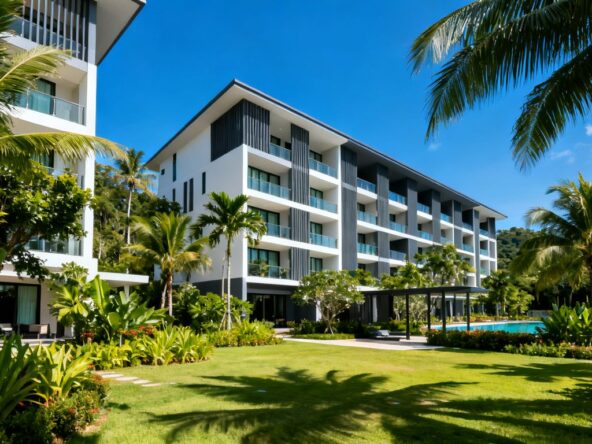


Everyone’s talking about a potential Phuket real estate bubble these days. It’s a popular phrase, but a lot of people asking about it don’t really know what a ‘bubble’ means in this context. We’ve seen bubbles before, like the US housing crisis in 2007, or the dot-com crash in 2000. Basically, a bubble happens when prices get way too high and don’t match the real value of things, which usually ends in a crash. For property, that means a big drop in prices. So, let’s look at the Phuket real estate bubble concerns.
Key Takeaways
- Phuket’s property market is pretty unique, with most deals being cash-based and resort properties making up most of the value.
- Developers often build in stages, tied to sales, which keeps the number of failed projects low.
- Unlike many places, interest rates haven’t really affected Phuket property prices much in the past.
- Inflation is pushing up construction costs, which developers are finding tough to deal with.
- Phuket might be hitting a peak in its property cycle, but it’s also seen as a safe place to put money, attracting buyers from all over the world.
Understanding the Phuket Real Estate Bubble Concerns
One of the most frequent questions I get asked is whether Phuket is facing a real estate bubble. It’s a hot topic, but many people don’t really understand what a bubble actually is. A bubble happens when property values become unrealistically high, and the basic reasons for growth aren’t sustainable anymore. This usually leads to a crash, meaning property prices fall sharply.
Defining a Property Bubble
So, what exactly is a property bubble? It’s more than just prices going up. It’s when prices are way out of line with what’s actually happening in the economy. Think of it like this:
- Rapid price increases that aren’t supported by income growth.
- Lots of speculation, with people buying property hoping to quickly sell it for a profit.
- Easy credit, making it simple for people to borrow money to buy property, even if they can’t really afford it.
A true property bubble is characterised by irrational exuberance, where prices are driven by speculation rather than genuine demand or economic fundamentals. When the bubble bursts, the consequences can be severe, leading to financial hardship for many.
Historical Context of Market Crashes
We’ve seen property bubbles before. The most famous one recently was the subprime mortgage crisis in the US in 2007. There was also the dot-com crash around 2000 and the crypto crash of 2018. These events show us what can happen when things go wrong. It’s important to remember these lessons when looking at the Phuket property market.
Phuket’s Unique Market Fundamentals
Phuket’s property market is different from many others. Here’s why:
- Most transactions are done with cash.
- Resort-style properties are worth more than regular homes.
- Not many Thai buyers use loans to buy property.
Because of these things, Phuket’s market might be less likely to crash like other markets. The lack of reliance on loans means there’s less risk of people defaulting if prices drop. This is a key factor when considering the risks of buying property in Phuket.
Phuket’s Distinct Market Characteristics
Prevalence of Cash Transactions
Phuket’s property market stands out due to the high number of cash transactions. Unlike many Western markets where mortgages are the norm, a significant portion of property purchases in Phuket are made outright with cash. This reduces reliance on interest rates and bank lending policies, making the market less susceptible to fluctuations in the global financial system. This is partly due to the international nature of buyers, who may have diverse financial backgrounds and preferences.
Dominance of Resort-Grade Properties
Phuket’s real estate landscape is heavily influenced by resort-grade properties. These aren’t your average homes; they’re often luxury villas, condos with hotel-like amenities, and properties designed for holiday rentals. This focus shapes the market in several ways:
- It attracts a specific type of buyer – those seeking holiday homes or investment properties for rental income.
- It drives up prices, as resort-grade properties command a premium.
- It creates a market that’s more sensitive to tourism trends and global travel patterns.
Limited Thai Buyer Leverage
While there’s a growing local market, the Phuket property scene is still largely driven by foreign investment. This means that Thai buyers have limited leverage in shaping market trends and prices. The influx of Burmese workers indicates growing prosperity among Thai households. However, most local salaries aren’t high enough to afford developments targeted at foreigners. This dynamic creates a unique situation where external factors often outweigh local economic conditions in determining property values. The beachfront villa for sale is a prime example of the kind of high-end property that attracts international buyers.
The limited influence of local buyers means that the Phuket market can sometimes feel disconnected from the broader Thai economy. While Bangkok’s property market tends to move with the economy, Phuket’s is more influenced by international tourism, foreign investment, and global economic trends.
Developer Practises and Market Stability
Phased Development Linked to Sales
One thing I’ve noticed about Phuket is how developers tend to roll out projects in phases. It’s not like they build everything at once and hope for the best. Instead, they link each phase to actual sales figures. This approach has a really interesting effect: it keeps developer defaults surprisingly low. Basically, they only build more if they’re selling what they’ve already built. It’s a smart way to manage risk and keep things stable.
Low Incidence of Developer Defaults
Because of the phased approach, you don’t see many developers going bust in Phuket. It’s not to say it never happens, but it’s far less common than in other places. This is reassuring for buyers, of course. It means there’s a lower chance of getting stuck with a half-finished condo or villa. The developers are incentivised to complete the project, because their future phases depend on it. It’s a system that seems to work pretty well.
Mitigating Single Market Risk
Phuket’s property market isn’t reliant on just one country or economy. You’ve got buyers from all over the globe – Europe, Asia, America, you name it. This diversification is a big plus. If one country’s economy takes a hit, it doesn’t necessarily tank the whole Phuket market. It’s like having a well-diversified investment portfolio; you’re not putting all your eggs in one basket. This helps to mitigate single market risk and keeps the market more resilient overall.
The spread of buyers across different countries and economic backgrounds is a key factor in Phuket’s market stability. It means the island isn’t overly exposed to the economic fortunes of any single nation, providing a buffer against global economic shocks.
Post-Covid Market Dynamics
Accelerated Price Increases
The pandemic really shook things up, didn’t it? Phuket saw some pretty wild price increases after Covid. It’s like everyone suddenly realised they wanted a slice of island life. We saw a massive migration, driven by people wanting to work from home in a nicer place. People who were stuck in cold, wet cities during lockdown decided they wanted a sunny tropical island instead, just in case it happened again. This surge in demand, especially for family homes, really pushed prices up. The beachfront oasis became even more desirable.
Absence of a Local Housing Index
One of the tricky things about the Phuket market is the lack of a proper, reliable housing index. It makes it hard to really know what’s going on with prices. Without a good index, it’s difficult to accurately track trends and compare properties. You’re kind of relying on anecdotal evidence and what estate agents tell you, which isn’t always ideal. This lack of transparency can make things a bit risky for buyers and sellers alike.
Impact of Global Economic Shifts
Phuket isn’t immune to what’s happening in the rest of the world. Global economic shifts definitely have an impact. Things like inflation, interest rates, and the strength of different currencies all play a role. For example, if the pound is strong against the Thai baht, British buyers might find Phuket property more affordable. And of course, geopolitical events can also influence buyer behaviour. People see Phuket as a safe haven, so when things get rocky elsewhere, they might decide to invest here.
The pandemic highlighted the importance of lifestyle, and Phuket benefitted hugely from that. But it also created some distortions in the market, with prices rising faster than perhaps they should have. Now, we’re seeing a bit of a correction, as things start to normalise and global economic factors come into play.
Interest Rates and Their Limited Influence

Historical Lack of Impact on Prices
Phuket’s property market dances to a different tune than many others. Interest rates, typically a major player in real estate, have historically had a muted impact here. This is largely because the market is dominated by cash transactions, particularly from foreign buyers. Unlike places where mortgages fuel the market, Phuket’s reliance on cash means it’s somewhat insulated from interest rate fluctuations. This cash-heavy dynamic has shielded Phuket from the dramatic boom-and-bust cycles seen elsewhere.
Absence of Precedent for High Interest Rates
It’s tough to predict the future, but looking back, Phuket’s prime years occurred during periods of relatively low interest rates globally. What would happen if rates shot up to levels seen in the 1980s, when they peaked around 18%? It’s uncharted territory for Phuket’s modern real estate scene. While it’s unlikely to be positive, the exact impact is hard to gauge. One thing is for sure, higher rates would make Phuket investment properties less attractive if investors could get solid returns from safer options like bank deposits.
Foreign Demand and Deposit Rates
One factor that could sway foreign demand is deposit rates in other countries. Many buyers seek rental returns to offset the interest they could be earning elsewhere. If deposit rates rise significantly, potential buyers will need to weigh whether a Phuket property offers a compelling enough return to justify tying up their funds. It’s a balancing act between the allure of Phuket property and the safety of more traditional investments.
Here’s a quick look at how deposit rates might influence buyer decisions:
- Low Deposit Rates: Phuket property looks very attractive.
- Moderate Deposit Rates: Buyers carefully weigh rental yields vs. deposit returns.
- High Deposit Rates: Phuket property needs to offer exceptional returns to compete.
Ultimately, while interest rates don’t directly affect those already unable to finance a Phuket property, they do influence the mindset of potential investors. The appeal of Phuket needs to outweigh the alternatives.
The Role of Inflation in Property Values
Rising Construction Material Costs
Inflation’s impact on Phuket’s property market is undeniable. Rising costs of construction materials directly translate into higher prices for new developments. Think about it: cement, steel, and even the sand used in concrete – when these get more expensive, building a villa or condo becomes pricier. This increase is then passed on to the buyer. It’s a pretty straightforward equation.
Increased Fixture and Fitting Prices
It’s not just the raw materials that are affected. The price of fixtures and fittings, like tiles, appliances, and even lightbulbs, has also seen a significant increase. These items, often imported, are subject to global market fluctuations and currency exchange rates, adding another layer of cost to property development. This means that even a modest apartment can end up costing more than initially anticipated, thanks to inflation pushing up the price of everything from door handles to kitchen sinks. The Bangkok real estate market is also facing similar challenges.
Developer Challenges with Input Costs
Developers in Phuket face a real challenge managing these rising input costs. They have to balance maintaining profit margins with keeping prices competitive. This can lead to a few different outcomes:
- Developers might try to absorb some of the cost increases, which eats into their profits.
- They could opt to use cheaper materials, potentially affecting the quality of the finished product.
- Or, most likely, they’ll pass the increased costs onto the buyer, resulting in higher property prices.
Inflation puts developers in a tough spot. They need to deliver quality properties while dealing with ever-increasing expenses. This balancing act is crucial for the long-term health of the Phuket real estate market.
Ultimately, inflation’s impact on Phuket property values is complex, but it’s a key factor to consider for both buyers and developers. Understanding these pressures can help you make more informed decisions in the market.
Market Cycles and Future Outlook
Phuket Reaching a Property Cycle Peak
There are whispers that Phuket might be nearing the crest of its current property cycle. It’s not about panic, but awareness. Markets don’t climb forever, and understanding where we are in the cycle is key to making smart decisions. Phuket’s unique position, driven by tourism rather than the broader Thai economy, means it dances to a different tune. But even the best tunes eventually change.
Lessons from Past Market Influxes
Remember the influx of smaller, cheaper condo projects a decade ago? Bangkok-based developers flooded the market, targeting a growing middle class eager to invest. Asia was bouncing back from the financial crisis, and Thai buyers saw these condos as a new investment class. But what happens when the music stops? It’s a reminder that even strong demand can be oversupplied. The Mandarin Oriental renovation is a good example of how established players adapt to changing market conditions.
Anticipated Demand Flattening
What’s likely to happen? Demand will probably level off. A secondary market will emerge, offering competitive options to new developments. Supply will increase, giving buyers more choices. Think of it as a rational view of the low season – a time for reflexion and strategic planning. This doesn’t mean a crash, but a shift in the balance of power. The property cycle is a natural phenomenon, and understanding its ebb and flow is crucial for long-term success.
Phuket’s position as a safe haven investment destination could buck the cycle. Growth in other geographical source markets, the return of China, and other geopolitical events will spur more diversity in buyers and those migrating to Phuket.
Phuket as a Safe Haven Investment

Resilience Amidst Global Upheaval
Phuket has increasingly become viewed as a safe haven for investment, particularly during times of global instability. This perception is driven by a combination of factors, including the island’s inherent appeal, its relatively stable economy, and the increasing desire for individuals to diversify their assets geographically. The island’s resilience is evident in its ability to bounce back from past crises, reinforcing its image as a secure place to park capital.
Diversification of Buyer Demographics
Phuket’s property market benefits from a diverse range of international buyers, mitigating the risk associated with relying on a single market. This diversification is key to the island’s stability. Consider the following:
- Chinese investors are returning to the market.
- Russians are increasingly seeing Phuket as a safe place for their money, given restrictions elsewhere.
- Buyers from Europe and other parts of Asia continue to show strong interest.
The variety of nationalities investing in Phuket real estate helps to cushion the market against downturns in any one particular region. This broad base of demand provides a more stable foundation for property values.
Geopolitical Events and Migration Trends
Geopolitical events significantly influence migration trends, and Phuket is benefiting from this. As global uncertainties rise, more people are seeking stable and secure locations to live and invest. Phuket’s appeal as a tropical paradise, combined with its relative safety and security, makes it an attractive destination. This is reflected in the increasing demand for sea-view pool villa and other high-end properties. The island’s popularity is also boosted by:
- Its established infrastructure.
- International schools.
- World-class healthcare facilities.
These factors contribute to Phuket’s attractiveness as a long-term safe haven. The island’s property market is challenging tourism as a key economic indicator, with over 20,000 residential units under development in areas like Greater Bangtao. This growth, coupled with the trend of buyers paying cash and taking a long-term view, reinforces Phuket’s position as a real estate investment destination.
Buyer Considerations and Risks
Buying property anywhere comes with risks, and Phuket is no different. It’s easy to get caught up in the sunshine and the potential returns, but it’s important to keep your feet on the ground. Let’s have a look at some things you should think about before you sign on the dotted line.
Understanding Inherent Buyer Risks
Okay, so what are the actual risks? Well, for starters, you’re dealing with a market that isn’t always as transparent as you might like. Due diligence is absolutely key. Make sure you get proper legal advice and don’t just rely on what the developer tells you. Things to consider:
- Construction delays: These can happen, pushing back your rental income projections.
- Currency fluctuations: The Thai Baht’s value can change, affecting your investment.
- Resale market: It might not be as liquid as you think, making it harder to sell quickly if you need to.
Impact of External Deposit Rates
Something that often gets overlooked is how external deposit rates can affect your investment. If you’re relying on income from deposits in other countries to fund your purchase or ongoing costs, changes in those rates can really throw a spanner in the works. For example, if you’re getting a measly interest rate on your savings back home, it might make sense to invest in Phuket property. But what happens if those rates suddenly jump up? Suddenly, the Thailand’s property market doesn’t look quite so attractive, does it?
Evaluating Rental Return Justification
Everyone talks about rental yields, but how realistic are they? Don’t just take the developer’s word for it. Do your own research. Look at similar properties in the area and see what they’re actually renting for. Consider:
- Occupancy rates: How often is the property likely to be rented out?
- Management fees: These can eat into your profits.
- Seasonal variations: Phuket’s tourism is seasonal, so expect lower returns during the low season.
It’s easy to get blinded by the potential for high returns, but remember that property investment is a long-term game. Don’t overstretch yourself, and always have a plan B. Things can change quickly, so it’s important to be prepared for the unexpected.
The Cyclical Nature of Property
Ebb and Flow of the Market
It’s easy to forget that property markets don’t just go up and up forever. Like the tide, they have an ebb and flow. What we’ve seen in the past is that there’s always a cycle. When demand is high and supply is low, prices go up. Then, eventually, things cool off. This happens for a few reasons, but it’s important to remember that what goes up must come down – eventually.
Niche Opportunities in Froth
When the market is really hot, things can get a bit frothy. Prices might seem a bit crazy, and everyone’s talking about property. But this is exactly when niche opportunities can appear. Maybe there’s a particular type of property that’s being overlooked, or a certain area that’s about to take off. Keeping an eye out for these can be a smart move. It’s a good time to consider Ocean Worldwide Phuket Real Estate.
Reasons for Below-Market Sales
Sometimes, you see properties selling for less than you’d expect. There are usually specific reasons for this. It could be due to personal circumstances like a death, divorce, or financial problems. These situations can create opportunities for buyers who are willing to do their homework and act quickly. It’s worth remembering that these below-market sales don’t necessarily mean the whole market is crashing; they’re often just isolated cases.
Property is a cyclical endeavour. Once we hit a high, there will be froth, and niche opportunities arise. For resort property, below-market sales are usually mainly due to death, divorce, or personal financial problems so broad market movement is probably not going to occur.
Secondary Market Evolution
Emergence of a Rising Secondary Sector
Phuket’s property market is seeing a shift, with the secondary market gaining traction. This means more existing properties are being resold, creating a different dynamic compared to solely focusing on new developments. It’s a natural progression as the market matures and initial buyers look to move on, upgrade, or simply cash out. This sector offers a range of options, from older, established properties to relatively new units that have already been lived in.
Competitive Supply Dynamics
The rise of the secondary market introduces a new layer of competition for developers. Instead of only competing with other new projects, they now have to contend with existing properties that may offer better value, location, or unique features. This increased competition can influence pricing strategies and the types of projects developers choose to undertake. It also gives buyers more bargaining power, as they have a wider selection to choose from. The villas and condos available can vary greatly.
Rational View of Low Season Trends
Phuket’s property market, like many resort destinations, experiences seasonal fluctuations. The low season can often be viewed with some trepidation, but a rational perspective suggests it’s a natural part of the cycle. During these periods, demand may soften, leading to price adjustments and increased negotiation opportunities. It’s a time when buyers can potentially find better deals, and sellers may be more willing to compromise. Understanding these seasonal trends is crucial for making informed decisions in the Phuket property market.
The secondary market’s growth is a sign of a maturing property landscape in Phuket. It presents both opportunities and challenges for buyers, sellers, and developers alike. Keeping a close eye on these trends is essential for navigating the market effectively.
Here are some factors influencing the secondary market:
- Global economic conditions
- Changes in buyer demographics
- Interest rate fluctuations
- The availability of financing options
The way people buy and sell things that have been owned before is always changing. It’s like a big puzzle where new pieces are added all the time. To see how this market is growing and what’s new, pop over to our website. You’ll find loads of helpful stuff there!
Wrapping Up: What Does This Mean for Phuket Property?
So, after looking at all this, it seems pretty clear that Phuket’s property market isn’t really set up for a big crash like some other places. Most people buy with cash, and there aren’t many huge loans floating around. Plus, buyers come from all over, which helps spread out the risk. Sure, prices have gone up a lot lately, and things might slow down a bit, but a full-blown “bubble burst” just doesn’t seem likely here. It’s more about the usual ups and downs of any market, maybe with some good deals popping up now and then. Phuket’s kind of a unique spot, and it might just keep doing its own thing, even when the rest of the world is a bit wobbly.