


Investing in rental properties in Thailand can be very rewarding. The country offers a mix of high rental yields, beautiful locations, and a growing real estate market. Whether you’re looking at condos, villas, or even undeveloped land, understanding the rental yields can help you make smart investment choices.
Key Takeaways
- Thailand’s rental yields range from 5% to 10%, depending on the property type and location.
- Condominiums in Bangkok and Phuket offer some of the highest rental returns.
- Villas and houses in popular tourist areas can also provide good rental income.
- Investing in undeveloped land carries higher risks but can be very profitable.
- Tourism significantly impacts rental yields, especially for short-term rentals.
Understanding Rental Yields in Thailand
Definition of Rental Yield
Rental yield is a measure of the annual return on investment from a rental property, expressed as a percentage of the property’s value. It is a crucial metric for investors to assess the profitability of their real estate investments. For example, if you own a property worth $200,000 and earn $10,000 in annual rent, your rental yield would be 5%.
Factors Influencing Rental Yields
Several factors can influence rental yields in Thailand, including location, property type, and market demand. Properties in high-demand areas like Bangkok and Phuket often yield higher returns. Additionally, the type of property, such as condominiums or villas, can significantly impact rental yields. For instance, a Luxury Villa In Thailand might offer different returns compared to a condominium in the Phuket Real Estate Market.
Importance of Rental Yields for Investors
Understanding rental yields is essential for investors as it helps in making informed decisions. High rental yields can provide a steady income stream and ensure a good return on investment. In Thailand, short term rentals are particularly popular among tourists, which can lead to higher rental yields in tourist-heavy areas.
In the Real Estate Phuket Thailand market, rental yields can vary significantly based on the type of property and its location. Investors should carefully analyze these factors to maximize their returns.
In summary, rental yields are a vital aspect of real estate investment in Thailand, influenced by various factors and crucial for ensuring profitable returns.
Rental Yields for Condominiums
Average Yields in Bangkok
In Bangkok, the average rental yield for condominiums is a crucial metric for investors. For instance, a condo in The Ritz-Carlton Residences valued at 20,000,000 THB can be rented out for 85,000 THB per month, resulting in a Gross Rental Yield of 5.1% and a Net Rental Yield of 4.6% after expenses. This example highlights the potential profitability of investing in high-end properties in the capital city.
Yields in Phuket
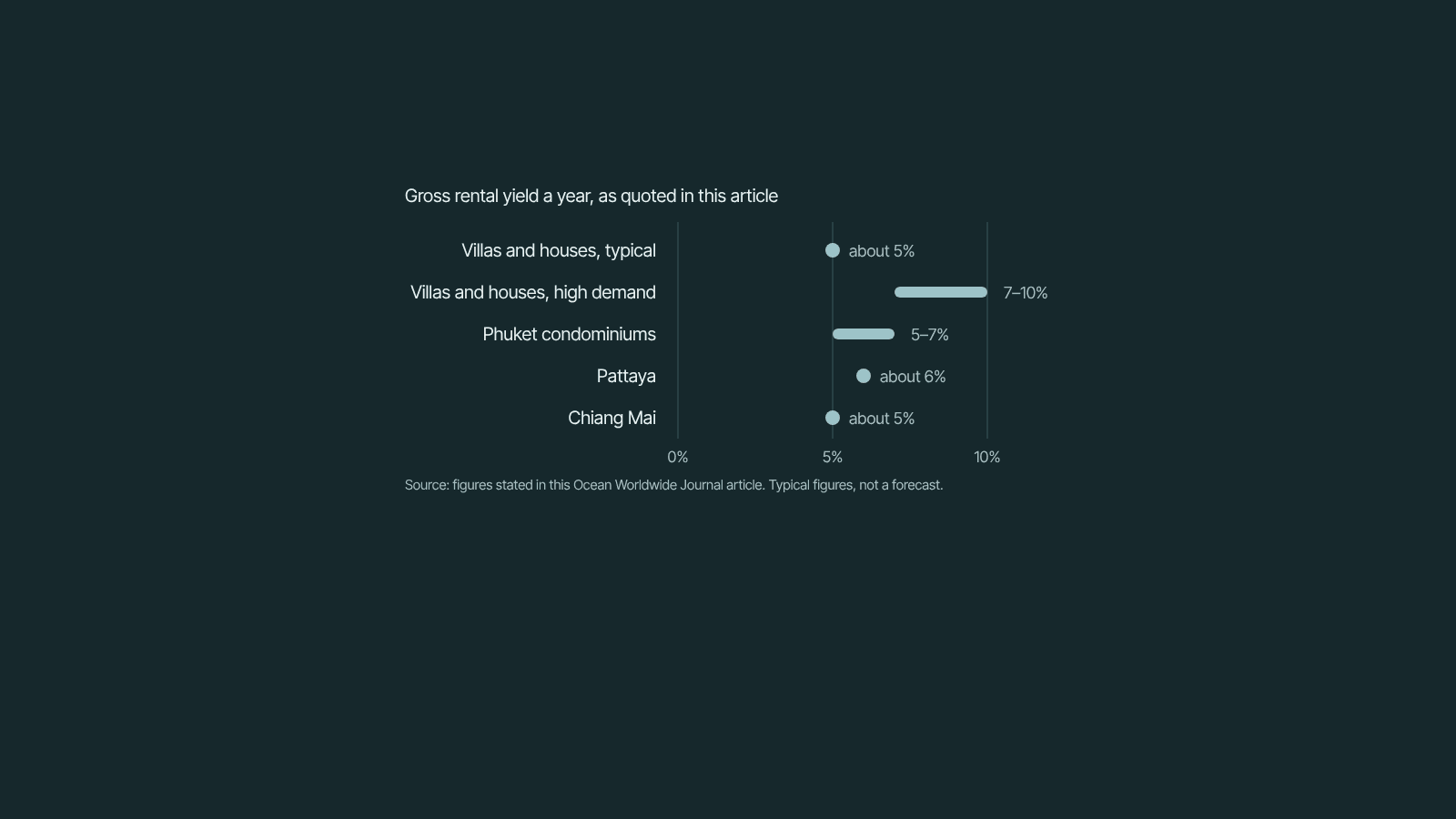
Phuket, known for its tourism, offers attractive rental yields for condominiums. The island’s popularity among tourists ensures a steady demand for short-term rentals, which can significantly boost rental income. Investors often find yields ranging from 5% to 7%, depending on the location and amenities of the property.
Comparison with Other Cities
When comparing rental yields across different cities in Thailand, Bangkok and Phuket often stand out. However, cities like Pattaya and Chiang Mai also offer competitive yields. For example, Pattaya’s vibrant nightlife and tourist attractions can lead to yields of around 6%, while Chiang Mai’s cultural appeal and lower property prices can result in yields of approximately 5%.
Understanding rental yields in various cities helps investors make informed decisions and maximize their returns. By comparing yields, investors can identify the best opportunities for their investment strategies.
Rental Yields for Villas and Houses
Popular Locations for Villas
Thailand boasts several prime locations for villas, with Phuket and Koh Samui being among the most sought-after. An elegant 4-bedroom villa near Bangtao in Phuket is a prime example of the luxury available. These areas are known for their beautiful beaches and vibrant communities, making them ideal for both short-term and long-term rentals.
Average Yields for Houses
Rental yields for houses in Thailand can vary significantly based on location and property type. On average, rental returns are around 5% annually, but in high-demand areas, returns of 7% to 10% are achievable. For instance, a villa in a gated community near the beach can command higher rental rates due to its desirable location and amenities.
Market Trends
The market for villas and houses in Thailand is influenced by several factors, including tourism and foreign investment. Recent trends indicate a growing interest in Luxury Villas For Sale and Best Beach Villas. This surge is driven by the increasing number of tourists and expatriates seeking long-term stays in Thailand. Additionally, the demand for Best Luxury Villa options has led to a rise in property values and rental rates.
Investing in villas and houses in Thailand offers a unique opportunity to capitalize on the country’s booming real estate market. With careful selection and management, investors can achieve substantial rental yields and long-term growth.
Conclusion
In summary, the rental yields for villas and houses in Thailand are promising, especially in popular locations like Phuket and Koh Samui. By understanding the market trends and focusing on high-demand areas, investors can maximize their returns and enjoy the benefits of owning property in one of the world’s most beautiful destinations.
Rental Yields for Undeveloped Land
Investment Potential
Investing in undeveloped land in Thailand can be a lucrative opportunity. The potential for high returns is significant, especially in rapidly growing areas. However, it’s essential to conduct thorough research to identify the best locations. For instance, areas near upcoming infrastructure projects or tourist attractions often offer higher yields.
Risks and Considerations
While the potential for profit is high, investing in undeveloped land comes with its own set of risks. One major risk is the uncertainty of future development. Without proper planning and market analysis, you might end up with land that doesn’t appreciate in value. Additionally, legal issues such as land ownership disputes can pose significant challenges.
Case Studies
Several investors have seen substantial returns from investing in undeveloped land in Thailand. For example, a 4-bedrooms seaview tropical pool villa in Kata was developed on previously undeveloped land, resulting in significant rental yields. These success stories highlight the importance of strategic planning and market research.
Investing in undeveloped land requires a keen understanding of market trends and future development plans. Proper due diligence can lead to substantial returns, but it’s not without its challenges.
Impact of Tourism on Rental Yields
Tourism plays a significant role in shaping rental yields in Thailand. The influx of tourists directly influences the demand for short-term rentals, especially in popular destinations like Phuket and Samui. High tourist traffic often leads to increased rental prices, benefiting property owners who cater to short-term stays.
Tourism Trends in Thailand
Thailand has consistently been a top destination for international travelers. Recent data shows a steady increase in tourist arrivals, which boosts the demand for rental properties. This trend is particularly noticeable in coastal areas and major cities, where tourists seek both luxury and budget accommodations.
Effect on Short-term Rentals
Short-term rentals see a direct impact from tourism. During peak seasons, property owners can charge premium rates, significantly enhancing their rental yields. However, this market is also highly competitive, with many properties vying for the attention of tourists. It’s crucial for owners to offer unique features or competitive pricing to attract renters.
Long-term Rental Market
While short-term rentals benefit from tourism, the long-term rental market is influenced differently. High tourist seasons can lead to increased rental prices, making it challenging for long-term tenants to find affordable housing. Conversely, during off-peak seasons, long-term rentals may become more attractive due to lower prices and less competition.
The dynamic nature of tourism in Thailand means that rental yields can fluctuate significantly. Property owners must stay informed about tourism trends to maximize their returns.
Guaranteed Rental Returns by Developers

Understanding Guaranteed Returns
In Thailand, some developers offer guaranteed rental returns to attract buyers. These guarantees can be very high, sometimes reaching up to 15%. However, it’s important to be cautious of unrealistic guarantees. No one can predict the future, especially in real estate, where market conditions can change rapidly.
Top Developers Offering Guaranteed Returns
Many top developers in Thailand provide rental guarantees. These guarantees usually range from 7% to 9% per year for a period of 3 to 10 years. This is often calculated on the initial value of the property. Some developers even offer a buyback option during the rental return period, ensuring that you get your initial capital back.
Pros and Cons
Guaranteed rental returns have their advantages and disadvantages:
Pros:
- Provides a stable income
- Reduces investment risk
- Often includes a buyback option
Cons:
- Guarantees may not be fulfilled during economic downturns
- High guarantees can be unrealistic
- Limited flexibility in property management
"Projects are often promoted as providing guaranteed rental incomes that range up to 15%. It’s hard to know whether developers can fulfill these obligations, especially in economic downturns as we have witnessed during the COVID-19 pandemic."
When considering a property with a guaranteed rental return, it’s crucial to do your research and understand the terms and conditions. Always be cautious of offers that seem too good to be true.
Comparing Rental Yields in Urban vs. Rural Areas

Urban Rental Yields
Urban areas in Thailand, such as Bangkok and Chiang Mai, often offer higher rental yields compared to rural regions. This is primarily due to the high demand for rental properties in cities, driven by factors like job opportunities, better infrastructure, and amenities. For instance, Bangkok’s city center boasts an average gross rental yield of 5.54%, according to recent data from Numbeo. This makes urban properties a lucrative option for investors seeking steady returns.
Rural Rental Yields
In contrast, rural areas tend to have lower rental yields. The demand for rental properties is generally lower, and the rental income may not be as high. However, rural properties can be attractive for those looking for long-term investments or lower initial costs. For example, properties outside the city center can offer a gross rental yield of around 6.03%, which, while slightly higher, comes with its own set of challenges, such as lower occupancy rates and less liquidity.
Investment Strategies
When deciding between urban and rural investments, it’s crucial to consider your investment goals and risk tolerance. Urban properties may offer higher yields and quicker returns, but they also come with higher costs and competition. On the other hand, rural properties might be more affordable and offer a different kind of investment opportunity, especially for those interested in undeveloped land or long-term growth.
Choosing between urban and rural properties requires a careful analysis of market trends, potential returns, and personal investment goals. Both options have their unique advantages and challenges, making it essential to align your choice with your financial objectives.
Conclusion
In summary, urban areas in Thailand generally provide higher rental yields due to higher demand and better infrastructure. Rural areas, while offering slightly higher yields in some cases, come with different risks and benefits. Investors should weigh these factors carefully to make informed decisions that align with their investment strategies.
Legal Considerations for Foreign Investors
Property Ownership Laws
Foreigners can own condos freehold, but land ownership is more restricted. As a general rule, foreigners cannot own land in Thailand; a foreign buyer would usually hold land on a lease registered for up to 30 years. Foreign ownership in a condo project is capped at 49%. For a foreign-freehold condominium, bring the purchase money into Thailand in foreign currency and get the bank's evidence of the inward transfer (usually a Foreign Exchange Transaction form or an equivalent bank certificate).
Tax Implications
Foreign investors should be aware of the tax landscape. Thailand has a divestment-gains tax, which can be significant. It’s crucial to understand these taxes to avoid unexpected costs.
Navigating Legal Challenges
Foreign investors must navigate various legal challenges, including understanding property laws and ensuring compliance with local regulations. Consulting with legal experts familiar with Thai property laws is advisable.
Investing in Thai real estate requires careful consideration of legal aspects to ensure a smooth transaction process.
Maximizing Rental Yields
Choosing the Right Property
Selecting the right property is crucial for maximizing rental yields. Net Rental Yield offers a clearer picture of the actual return on investment. This is calculated by subtracting all annual property-related costs from the yearly rental income, dividing this net income by the property’s value, and converting it to a percentage. For instance, a contemporary pool villa in Pasak might have different yields compared to a similar property in another location.
Effective Property Management
Effective property management can significantly impact rental yields. Good management ensures that the property is well-maintained, tenants are satisfied, and vacancies are minimized. This includes regular maintenance, prompt repairs, and efficient tenant communication.
Market Timing
Understanding market trends and timing your investments can also help in maximizing rental yields. Keeping an eye on economic indicators, real estate development trends, and tourism patterns can provide insights into the best times to invest or adjust rental rates.
In the ever-changing real estate market, staying informed and adaptable is key to maximizing returns.
By focusing on these strategies, investors can enhance their rental yields and achieve better returns on their investments.
Analyzing Market Data for Informed Decisions
Sources of Market Data
To make smart investment choices, it’s crucial to gather data from reliable sources. Numbeo is one such platform, offering insights into average rental yields. For instance, investors can expect a Gross Rental Yield of 5.54% in city centers and 6.03% outside of them. However, relying solely on one source can be risky. Cross-referencing data from multiple platforms ensures a more accurate picture.
Interpreting Data Trends
Understanding trends in the market helps in predicting future rental yields. For example, the demand for stunning 4-5 bed modern style villas in Layan has been on the rise. This trend can be attributed to the growing interest in luxury properties. By analyzing such trends, investors can identify lucrative opportunities.
Using Data for Investment Decisions
Once the data is collected and interpreted, it can guide investment decisions. Calculating net rental yield involves considering various factors like annual rental income, property value, and associated costs. This comprehensive approach provides a clearer picture of potential returns, helping investors make informed choices.
The more factors you can include in the calculation, the more accurate the resulting rental yield figure will be. However, it can be challenging to estimate all associated expenses accurately.
In summary, analyzing market data is a multi-step process that involves gathering information from various sources, understanding trends, and using this data to make informed investment decisions.
Future Outlook for Rental Yields in Thailand
Economic Factors
Thailand’s economy is expected to grow steadily, which will likely have a positive impact on rental yields. Economic stability often translates to higher rental demand, especially in urban areas. However, inflation and interest rates are factors that could influence the overall returns.
Real Estate Development Trends
New developments are continuously emerging, particularly in major cities like Bangkok and tourist hotspots such as Phuket. These new projects often come with guaranteed rental returns, ranging from 7% to 9% annually for a period of 3 to 10 years. This trend is expected to continue, providing investors with stable income opportunities.
Predictions for Rental Yields
Experts predict that rental yields in Thailand will remain competitive compared to other Asian markets. While the average rental return is around 5%, yields of up to 10% are achievable with the right investment strategy. Short term rentals, especially in tourist-heavy areas, are likely to see higher yields due to the constant influx of visitors.
The future of rental yields in Thailand looks promising, with both economic growth and real estate development playing crucial roles. Investors should keep an eye on market trends and adjust their strategies accordingly.
The future of rental yields in Thailand looks promising, with many opportunities for investors. Whether you’re interested in Phuket or Samui, the market is ripe for growth. To learn more about how you can benefit from these opportunities, visit our website today.
Conclusion
In summary, Thailand offers a promising landscape for rental property investments. With rental yields ranging from 4% to 10%, depending on the property type and location, investors can find opportunities that suit their financial goals. The country’s favorable economic conditions and the increasing interest from expatriates make it an attractive market. However, it’s crucial to work with knowledgeable partners to navigate the market effectively and maximize returns. Whether you’re looking at condos in bustling Bangkok or villas in serene coastal areas, Thailand’s real estate market holds significant potential for stable and profitable rental income.