
The Thai government has unveiled a series of initiatives aimed at rejuvenating the struggling property market, including significant policy changes for foreign investors and the introduction of soft loans. These measures are designed to stimulate demand and attract foreign capital amidst a challenging economic landscape.
Key Takeaways
- The Thai Cabinet has approved an increase in foreign ownership in condominium projects from 49% to 75%.
- Leaseholds for foreigners have been extended from 30 years to 99 years.
- The government has allocated 55 billion baht ($1.58 billion) in soft loans to support property purchases and renovations.
- The central bank is considering relaxing loan-to-value rules to facilitate borrowing for property developers.
New Policies for Foreign Investors
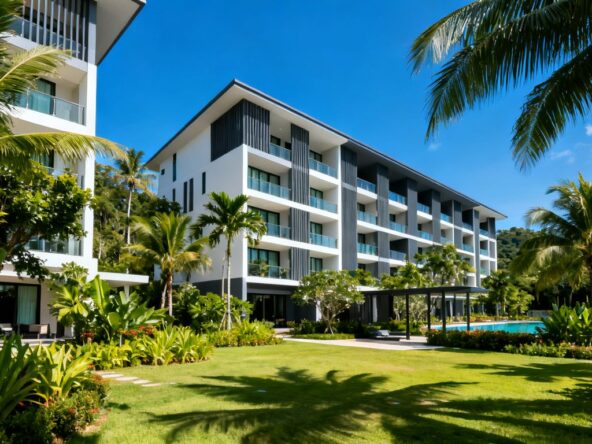
In a bid to attract foreign investment, the Thai Cabinet has approved a significant policy change that allows foreigners to own up to 75% of condominium projects, a substantial increase from the previous limit of 49%. This move is expected to draw multinational executives and digital nomads looking for long-term investment opportunities in Thailand.
Additionally, the extension of leaseholds from 30 years to 99 years provides greater security for foreign investors, making Thailand a more attractive destination for property investment. This policy shift comes in response to a notable decline in purchasing power among Thai consumers, exacerbated by stricter lending criteria imposed by banks.
Financial Support for the Property Sector
To further bolster the property market, the Thai government has approved soft loans worth 55 billion baht. These loans are intended for various purposes, including purchasing, decorating, repairing, and building houses. The initiative aims to stimulate demand in the property sector, which has seen a significant increase in unsold units, with over 213,000 properties remaining unsold as of the first quarter of the year.
Central Bank’s Considerations
In light of the current market conditions, Thailand’s central bank is also exploring measures to support the property sector. Property developers have requested the central bank to relax loan-to-value rules, which dictate the percentage of a property’s value that can be financed through loans. Currently, these rules allow for financing of up to 90% to 100% for first residential properties.
Finance Minister Pichai Chunhavajira has acknowledged the urgent need for support in the property sector, citing weak demand and rising non-performing loans as critical issues that need addressing. The central bank’s potential adjustments to lending policies could provide much-needed relief to developers and buyers alike.
Optimism for Recovery
Industry experts are optimistic about the potential recovery of Thailand’s property market. Pornnarit Chuanchaisit, president of the Thai Real Estate Association, believes that the market could rebound within three to six months, driven by government investment projects, an anticipated tourism boom, and economic stimulus measures such as the digital wallet handout scheme.
The combination of these initiatives is expected to enhance Thailand’s competitiveness in the global property market, positioning it as an attractive destination for foreign investment. As the government takes proactive steps to stimulate the economy, the property sector may soon see a resurgence in activity, benefiting both local and foreign investors alike.
Sources
- Thai Cabinet Approves New Property Policy for Foreigners, Thailand Business News.
- Thailand’s central bank considers measures to support property sector, ET RealEstate, ET Realty.
- Thailand approves soft loans worth $1.58 bln to boost property market, Reuters.