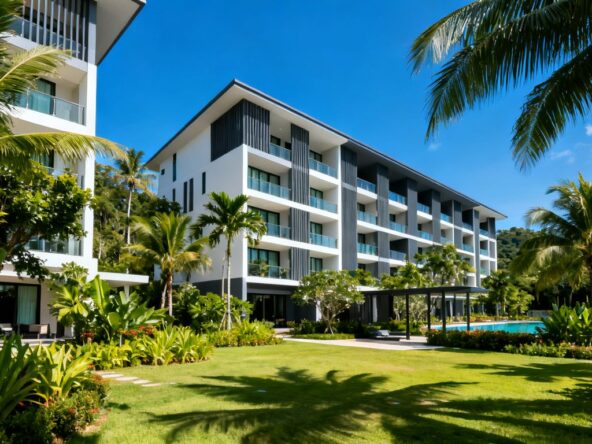


Phuket’s once-booming property market is experiencing a significant slowdown, marked by a growing oversupply of residential units and a notable shift in buyer demand. Developers who previously capitalized on foreign investment, particularly from China and Russia, are now grappling with unsold inventory and a cooling market, prompting a re-evaluation of strategies.
Key Takeaways
- A substantial oversupply of new housing and condominium units exists in Phuket, with tens of thousands of units remaining unsold.
- The market has seen a dramatic decrease in new project launches and sales, particularly for luxury villas.
- A significant shift has occurred from the new property market to the second-hand market, driven by lower prices and better value.
- Developers are increasingly targeting tourist and retiree demand, but this may not be enough to absorb the current excess supply.
- Specific locations within Phuket are experiencing varying degrees of oversupply, with some areas facing potential sales backlogs of over 20 years.
Oversupply Concerns Mount
Phuket is facing a growing oversupply of residential properties, with reports indicating over 10,000 unsold units valued at approximately 77 billion baht. This situation is exacerbated by a surge in new project launches, which increased by nearly 80% year-on-year, leading to supply potentially outpacing demand. The Real Estate Information Centre (REIC) has issued warnings to developers, urging them to implement strategic sales plans to manage this risk.
Shifting Buyer Dynamics
Historically, Phuket’s property market thrived on strong purchasing power from foreign investors, especially from Russia and China. However, a retreat from these key markets, coupled with global economic and political factors, has led to a significant downturn. Developers are now increasingly relying on demand from tourists and retirees, a strategy that has shown some success but is insufficient to clear the existing backlog.
Luxury Villa Market Struggles
The luxury villa segment has been particularly hard-hit. In the first half of 2025, new villa launches plummeted by over 70%, with sales following suit. Areas like Bang Tao-Surin, once a magnet for foreign millionaires, are now experiencing a significant oversupply of high-end properties. Some unsold villas in prime locations could take over six and a half years to sell at current absorption rates, with the most extreme cases, like Rawai Beach, facing potential sales backlogs exceeding 20 years.
The Rise of the Second-Hand Market
In contrast to the struggling new property market, the second-hand market has seen a remarkable surge, capturing 63% of the market share. This shift is primarily driven by significantly lower prices, often nearly half that of new units. For instance, second-hand condominium units are priced considerably lower per square metre and offer larger sizes, presenting a compelling value proposition that new developments cannot match. Investors who previously bought for rental income are now opting to sell, contributing to the increased availability and attractiveness of pre-owned properties.
Future Outlook and Developer Strategies
The Phuket property market is undergoing a fundamental change. While not in a state of collapse, the dominance of new developments has waned, with the second-hand market now taking centre stage. Developers must adapt by adjusting pricing strategies to compete with the second-hand market, carefully consider location and timing, and crucially, not underestimate the impact of market saturation. Targeting new demographics beyond wealthy foreign buyers, including Thai investors seeking long-term value, will be essential for future success.
Sources
- Bangkok’s housing glut spreads to Phuket as developers rush for tourist demand, South China Morning Post.
- Phuket’s second-hand property market soars, outpacing new builds, Nation Thailand.
- REIC warns of oversupply of residential units in Phuket, Nation Thailand.