
A Senate committee visit signals serious intent behind Thailand’s 2026 cruise hub ambitions. For Phuket property, the focus on piers, transport links and safety systems matters more than the political theatre.
The Senate Committee on Tourism and Sports visited Phuket in mid-May to accelerate solutions for marine tourism infrastructure as part of Thailand’s push to position itself as an ASEAN cruise hub. The visit brought together officials from Phuket Airport, the Marine Department, Tourist Police, the Tourism Authority of Thailand and other agencies.
The key point is coordination. The meeting focused on integrating cooperation between agencies to address airport congestion, transport connectivity and water safety measures while gathering information to shape national tourism policy and infrastructure development.
The cruise hub timeline and what it involves
The discussions form part of the committee’s broader mission to study legislation and infrastructure upgrades aimed at developing Thailand’s cruise port network into a leading regional hub in Southeast Asia by 2026.
Officials from the Phuket Regional Marine Department outlined proposals to improve pier infrastructure and strengthen links between land, sea and air transport systems to improve efficiency and safety.
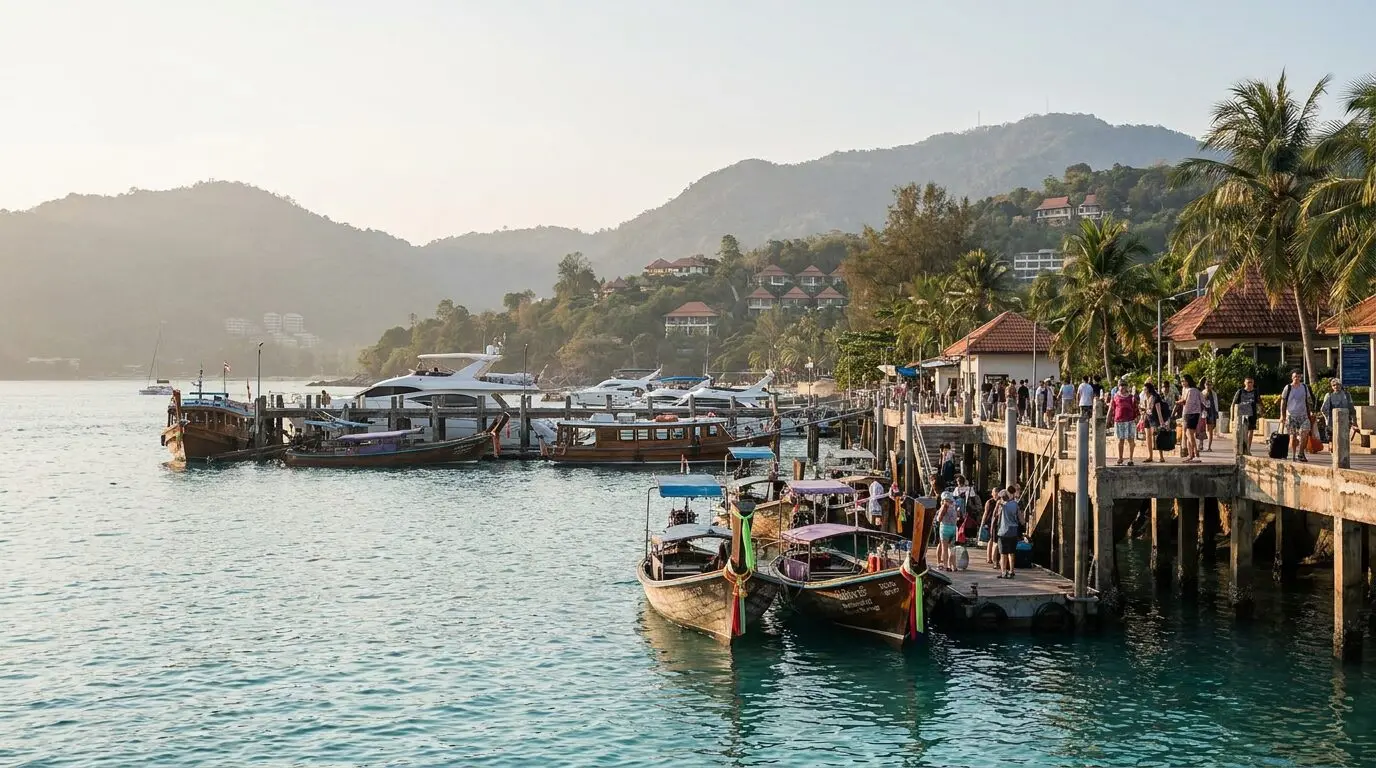
The detail worth watching is vessel density. Authorities noted that Phuket currently has about 4,500 registered vessels operating in its waters, including speedboats, tour boats, yachts and fishing vessels. Heavy traffic at major piers such as Chalong Pier, Rassada Pier and Boat Lagoon has made marine safety oversight an urgent priority, officials said.
This matters because marine infrastructure upgrades are not solely about cruise ships. They affect the entire waterfront transport system that underpins Phuket’s appeal as a yachting, island-hopping and superyacht destination.
Why this matters for Phuket property
For property buyers and investors focused on waterfront, marina or island-access locations, improved pier infrastructure and integrated transport systems directly affect the usability and appeal of coastal property.
Upgraded piers with better safety systems, clearer regulation and improved land-sea-air connectivity make waterfront property more functional for owners who use boats, yachts or regularly travel to nearby islands. They also support rental demand from visitors who prioritise marine access.
The cruise hub ambition, if realised, could increase high-spending visitor numbers and shift seasonal demand patterns. This is worth watching for property owners near cruise-capable piers or transport hubs, as well as for developers planning mixed-use waterfront projects.
The focus on safety and illegal accommodation also signals continued regulatory tightening. The Phuket Tourist Police discussed the use of information technology systems to improve tourist safety and support efforts by authorities to tackle illegal accommodation operations in order to strengthen visitor confidence.
The tourism data behind the push
Despite global economic uncertainties, TAT figures presented at the meeting showed Phuket remained one of the world’s leading tourism destinations during the first quarter of 2026.
Russia ranked as Phuket’s largest international market with 416,716 visitors, followed by China with 209,805 arrivals, India with 154,960, the United Kingdom with 82,984 and Germany with 75,684 tourists.
These figures provide context for the infrastructure push. The visitor mix is diverse, and the Russian, Chinese and Indian markets represent substantial year-round demand. Infrastructure upgrades aimed at improving safety, connectivity and efficiency are designed to support continued growth across these segments.
What remains uncertain
The 2026 timeline is ambitious. The meeting involved discussions and proposals, but the report does not specify committed budgets, project start dates or detailed pier upgrade plans.
Officials said information gathered during field visits in Phuket and neighbouring Phang Nga would be used to develop clearer tourism and infrastructure policies aimed at boosting the economy and reinforcing Thailand’s image as a sustainable world-class tourism destination.
For property buyers, the relevant signal is intent. The government is prioritising marine infrastructure, transport integration and safety systems. Whether the 2026 cruise hub target is met on schedule or takes longer, the direction is clear.
Frequently Asked Questions
What is Thailand’s cruise hub plan?
Thailand aims to develop its cruise port network into a leading regional hub in Southeast Asia by 2026. The plan involves pier infrastructure upgrades, improved transport connectivity and enhanced safety systems, with Phuket identified as a key location.
How does this affect Phuket property buyers?
Improved pier infrastructure and integrated transport systems increase the usability and appeal of waterfront and marina-adjacent property. Better marine access, safety and connectivity support both owner use and rental demand from visitors prioritising island access and yachting.
Which Phuket piers are being targeted for upgrades?
The report identifies Chalong Pier, Rassada Pier and Boat Lagoon as major traffic hubs where marine safety oversight is an urgent priority. These locations are likely focal points for infrastructure improvement, though specific project details were not disclosed.
What is the current tourism picture in Phuket?
TAT figures from the first quarter of 2026 showed Russia as Phuket’s largest international market with 416,716 visitors, followed by China with 209,805, India with 154,960, the UK with 82,984 and Germany with 75,684 tourists.
Is the 2026 timeline realistic?
The timeline is ambitious. The Senate committee meeting involved proposals and policy discussions, but the report does not specify committed budgets or detailed project schedules. The direction is clear, but delivery timelines remain uncertain.
Sources
- The Phuket News — Senate committee pushes Phuket marine infrastructure upgrade — link