
The Conversation That Happens in Every Villa Viewing
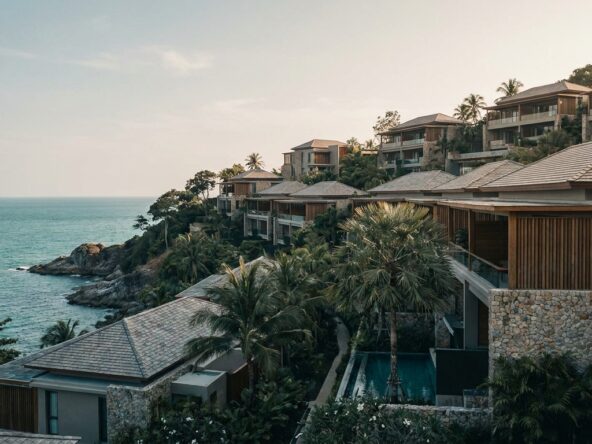
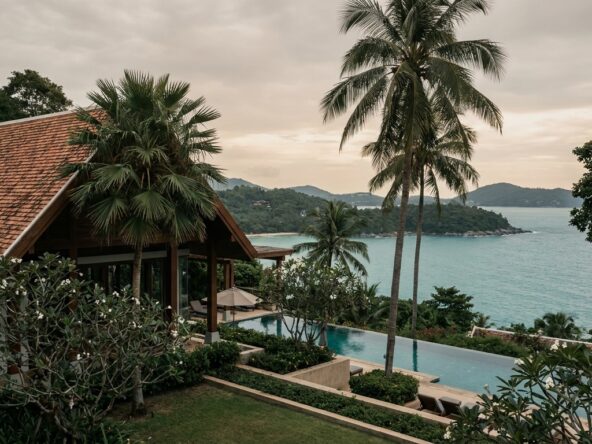
There’s a moment that occurs in nearly every high-end property viewing in Phuket. The international buyer stands on a terrace overlooking the Andaman Sea, captivated by the view. Then reality surfaces: “But how do I actually know this is a sound investment?”
That question—asked in penthouse suites in Kamala, beachfront villas in Rawai, and hillside estates in Cape Yamu—is what separates confident ownership from expensive mistakes. The answer lies not in promises, but in market intelligence.
Why Traditional Property Research Fails in Phuket
Most international buyers approach Phuket property the way they’d approach a purchase in London, Sydney, or Singapore. They look at listings, compare prices per square meter, maybe read a few expat forums. Three problems immediately emerge.
First, listed prices tell you almost nothing about actual transaction values. In Phuket’s high-end market, the gap between asking price and closing price can exceed 20%. Without access to recent comparable sales—not listed properties, but completed transactions—you’re navigating blind.
Second, location analysis requires hyperlocal knowledge that generic research cannot provide. Two villas 400 meters apart can represent entirely different investment propositions based on road access, flood history, proximity to planned infrastructure, and neighborhood trajectory. Online maps don’t capture these distinctions.
Third, ownership structures for foreign buyers introduce legal complexities that vary by property type, developer reputation, and title documentation quality. A villa that appears straightforward on paper can conceal structural issues in how ownership is configured—issues that surface only during due diligence or, worse, years after purchase.
This is precisely why we created The Foreign Buyer’s Due Diligence Framework—a systematic 23-point verification process that addresses the information gaps most buyers don’t even know exist until they encounter them.
What Real Market Intelligence Looks Like
Genuine market intelligence in Phuket property isn’t about trend predictions or market-timing theatrics. It’s about having answers to specific questions before they become problems.
Transaction-Level Pricing Data
Effective price analysis requires access to actual closing prices, not asking prices. In Surin, for instance, beachfront villas listed between ฿45-55 million have been transacting between ฿38-48 million over the past 18 months. That 15% differential matters significantly in negotiation positioning.
Similarly, Cape Yamu hillside properties saw asking prices hold relatively firm through 2023-2024, but average days on market increased from 147 to 203 days. Longer marketing periods create negotiation leverage that list prices alone don’t reveal.
This granular transaction intelligence—broken down by property type, district, and buyer profile—forms the foundation of sound acquisition strategy.
Infrastructure and Development Tracking
Phuket’s property values respond directly to infrastructure changes, but those changes operate on timelines measured in years, not months. The Patong Tunnel project, currently in planning stages, will eventually reshape accessibility and therefore pricing across the west coast corridor. Properties positioned to benefit from improved access are already reflecting anticipatory premium—but not uniformly.
Similarly, the ongoing marina developments in Ao Por and Royal Phuket Marina influence not just immediate waterfront values, but secondary effects on adjacent neighborhoods. Understanding these ripple patterns requires continuous local monitoring, not occasional research.
Developer and Title Verification
In Phuket’s foreign-buyer market, developer track record matters more than in most established markets. A developer with completed projects, transparent ownership structures, and demonstrated post-handover support represents materially lower risk than new market entrants, regardless of how compelling their marketing materials appear.
Title verification extends beyond confirming a Chanote (the most secure Thai land title). It includes verifying the property isn’t subject to undisclosed encumbrances, confirming legal ownership structures actually permit foreign ownership in the intended manner, and ensuring building permits and approvals align with what’s been constructed.
Each of these verification layers requires specific documentation checks, many of which must be conducted in Thai and involve local government offices. This is not DIY territory for international buyers.
The Three Districts Sophisticated Buyers Watch
While attention clusters around established areas like Surin, Bang Tao, and Kamala, three districts currently offer particularly interesting value propositions for informed buyers.
Rawai and Nai Harn
Phuket’s southern tip has transitioned over the past decade from backpacker territory to one of the island’s most authentic residential communities. International residents who actually live here year-round—not just holiday home owners—create stable demand.
Recent transactions in Rawai show premium one-bedroom apartments (500-600 sqm) trading at ฿6.2-7.8 million, while comparable units in Patong command ฿8.5-10.2 million. The lifestyle quality differential doesn’t justify that pricing gap for many buyers, particularly those prioritizing genuine community over tourist-district convenience.
Cape Yamu and East Coast
The east coast, long overlooked due to lack of beaches, has developed into Phuket’s yacht and marina corridor. Properties here attract a specific buyer profile: typically experienced with tropical property markets, often boat owners, and valuing proximity to sophisticated marina amenities over beach access.
Land prices per rai here remain 30-40% below comparable plots on the west coast, yet infrastructure quality—roads, utilities, services—often exceeds west coast standards. For buyers whose priorities align with this profile, the value proposition is compelling.
Laguna District Evolution
The Laguna complex in Bang Tao has matured from resort development into a legitimate residential ecosystem. What makes this relevant for investors is the emergence of resale inventory from original buyers, creating opportunities to acquire established properties at discounts to new-build prices.
We’ve tracked several transactions where 2018-2020 buyers resold at 18-25% below their purchase price, not due to property issues, but because of changed personal circumstances. For a buyer willing to conduct thorough due diligence—using something like our 23-point framework—these situations can represent genuine opportunity.
How to Actually Use Market Intelligence
Having information and knowing how to apply it are different capabilities. Here’s how sophisticated buyers translate intelligence into acquisition advantage.
Build Your Comparison Set Correctly
Most buyers compare properties within a single development or immediate area. More effective: compare across similar buyer profiles rather than geographic proximity. A villa appealing to permanent residents should be evaluated against other properties that attract that profile, even if they’re in different districts. Pricing, rental potential, and resale dynamics differ materially by buyer segment.
Understand Your Position in the Transaction
In Phuket’s current market, inventory levels and seller motivations vary dramatically by price band and property type. Properties above ฿50 million are seeing extended marketing periods and motivated sellers. Properties between ฿15-30 million in desirable locations are moving faster, with less negotiation flexibility.
Knowing where your target property sits in this spectrum informs negotiation strategy more than any generic market trends.
Time Your Due Diligence, Not the Market
Attempting to time Phuket’s property market—waiting for a correction, trying to catch the perfect entry point—typically costs buyers more in lost opportunity than they gain in pricing advantage. The more effective strategy: identify your target property profile, then invest heavily in due diligence when you find a match.
Thorough verification takes time—4-6 weeks is realistic for comprehensive checks on a high-value property. Buyers who rush this process or skip steps encounter issues that could have been identified and either negotiated or avoided entirely.
What Due Diligence Actually Means in Practice
The term “due diligence” gets used casually, but in Phuket property acquisition, it represents a specific, systematic verification process. Here’s what comprehensive due diligence involves:
- Title verification beyond the deed: confirming the land office records match the physical plot, checking for undisclosed encumbrances, verifying boundary markers
- Ownership structure validation: ensuring the legal entity holding the property can actually convey clean title to a foreign buyer
- Building permit and approval verification: confirming what’s built matches what was approved, checking for unofficial extensions or modifications
- Physical inspection protocols: structural assessment, electrical and plumbing systems, water ingress patterns, air conditioning capacity
- Community and environmental factors: flood history, road access during monsoon, neighborhood trajectory, proximity to planned developments
- Financial and tax verification: checking property tax compliance, confirming utility accounts, reviewing common area fee history if applicable
This isn’t an exhaustive list—that’s the point. Comprehensive due diligence involves dozens of specific checks, many requiring local expertise and language capability. Most buyers underestimate the complexity until they’re mid-transaction.
The Infrastructure Question Nobody Asks Upfront
One aspect of market intelligence that separates experienced buyers from first-timers: understanding post-purchase infrastructure and support. The property transaction itself is relatively straightforward compared to what happens afterward.
Who handles property management if you’re not residing full-time? What does maintenance actually cost annually, beyond the estimates provided during purchase? How do you handle tax filing requirements as a foreign property owner? What happens when you eventually want to sell—how long does that process take, and what are the actual costs?
These questions have specific answers, but those answers vary based on property type, location, and how ownership is structured. Buyers who address these questions before purchase—not after—consistently report higher satisfaction with their Phuket property ownership experience.
Why Local Expertise Matters More Than Ever
Phuket’s property market has become increasingly sophisticated over the past decade. Higher transaction values, more complex developments, and growing international buyer diversity have raised the baseline requirement for professional guidance.
A local partner with established relationships—with developers, law firms, inspection professionals, property managers, and government offices—doesn’t just expedite the process. They provide access to information and verification capabilities that simply aren’t available through research alone.
This is particularly relevant for due diligence. Having a systematic framework like our 23-point checklist is valuable. But executing those checks requires local presence, language capability, and professional relationships built over years, not weeks.
Moving from Information to Action
Market intelligence is only useful when it informs better decisions. For international buyers considering Phuket property, the path from research to confident ownership involves three distinct phases.
First, develop clarity on your actual priorities—not aspirational ones, but the factors that will determine whether you’re satisfied with this purchase five years from now. Location, property type, budget, and intended use all interact in ways that constrain options more than most buyers initially realize.
Second, invest in comprehensive due diligence before commitment, not after. The earnest money deposit and sales agreement represent the point of no return—everything meaningful needs to happen before that stage.
Third, structure your ownership and management plan for the long term. The purchase transaction is typically the smoothest part of Phuket property ownership. The decade that follows requires forethought.
These principles sound obvious in isolation, but executing them requires both information and infrastructure. That’s precisely what separates confident ownership from expensive mistakes—not luck, not timing, but systematic preparation backed by local expertise.