
- What Does a House in Thailand Actually Cost?
- Condominiums: A Lower Entry Point
- Freehold vs Leasehold: How Ownership Affects Cost
- Buying Costs on Top of the Purchase Price
- Off-Plan vs Resale: Price Differences in 2026
- Where Does the Best Value Sit in 2026?
- A Realistic Budget Summary for 2026
- Frequently Asked Questions
Buying property in Thailand is genuinely achievable for international buyers, but the cost picture is more nuanced than any single headline figure. Prices vary enormously depending on location, property type, ownership structure, and whether you are buying from a developer or on the secondary market.
This guide covers what you can realistically expect to spend, what sits on top of the purchase price, and where the best value lies in 2026.
What Does a House in Thailand Actually Cost?
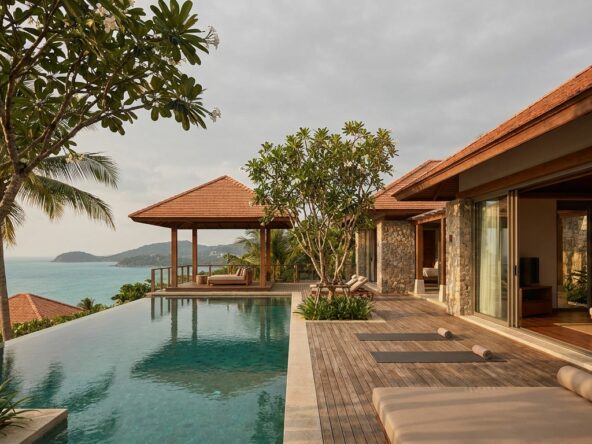
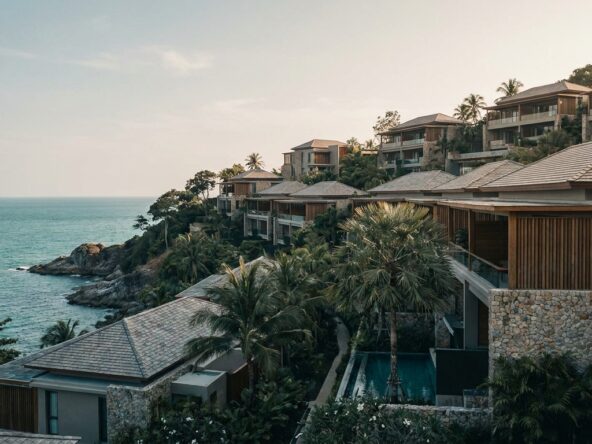
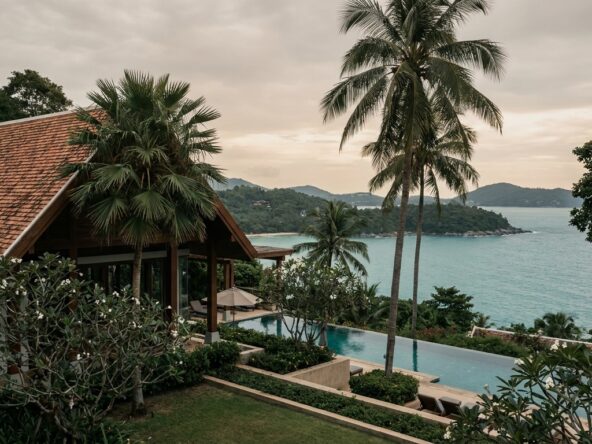
Thailand's property market spans a remarkable range — from modest townhouses in provincial towns to multi-million-dollar beachfront villas in Phuket and Koh Samui. For international buyers, the focus is almost always on resort destinations, so the figures below reflect those markets.
Entry-Level Villas and Houses
In Phuket, smaller villas in inland or developing areas start from around THB 5 million to THB 8 million (approximately $135,000 to $215,000 USD). These are typically two- or three-bedroom properties on modest land plots, often in gated communities with shared facilities.
Koh Samui entry-level pricing is broadly similar. Hillside properties in areas like Maenam or Lipa Noi start around THB 6 million to THB 10 million.
Mid-Range Villas
This is where most serious international buyers focus. In Phuket's established areas, a three- to four-bedroom villa with a private pool, quality finishes, and a solid location typically sits between THB 12 million and THB 30 million ($325,000 to $810,000 USD). Areas like Rawai, Chalong, and parts of Thalang offer strong value at this level.
Luxury and Beachside Properties
Premium locations command premium prices. In Cherngtalay, Layan, and Surin on Phuket's west coast, villas with sea views or Laguna-adjacent positioning commonly range from THB 30 million to THB 80 million and above ($810,000 to $2.2 million+). Trophy properties on Millionaire's Mile or with direct beach access can exceed THB 200 million.
Koh Samui's luxury tier follows a similar curve. High-end villas in Chaweng Noi and Bophut are typically priced between THB 20 million and THB 60 million.
Condominiums: A Lower Entry Point
Condominiums are the most straightforward purchase for foreign buyers. Under Thai law, foreigners can own a condominium unit outright on a freehold basis, provided the foreign ownership quota in the building does not exceed 49 percent.
In Phuket, condominium prices in 2026 range from around THB 3 million for a studio in a mid-market development to THB 20 million or more for a large-format unit in a branded or beachfront project.
For buyers focused on rental yield, condominiums in high-demand tourist zones often deliver returns in the 5 to 8 percent range, depending on management quality and location.
Freehold vs Leasehold: How Ownership Affects Cost
This is one of the most consequential cost factors buyers overlook.
Foreigners cannot own land outright in Thailand. A house sits on land, so the ownership structure matters significantly.
Freehold means you own the building and hold the land through a Thai company structure — or, in the case of condominiums, hold the unit title directly. Freehold properties typically carry a price premium of 10 to 20 percent over comparable leasehold options.
Leasehold means you hold a long-term lease over the land, typically 30 years with options to renew. Leasehold properties are generally priced lower, making them accessible at a lower entry point, but lease renewal is not guaranteed in law and depends on the landowner or developer.
Understanding this distinction before you buy is not optional. It directly affects resale value, financing options, and your long-term security as an owner. The OCEAN Worldwide Property team works with buyers across both structures and can walk you through the practical implications for any specific property.
Buying Costs on Top of the Purchase Price
The sticker price is not the final number. Budget for several additional costs when buying in Thailand.
Transfer Fee
The Land Department charges a transfer fee of 2 percent of the registered property value. This is typically split between buyer and seller, though it is negotiable.
Withholding Tax
Paid by the seller, but it can influence negotiation dynamics. The rate varies depending on whether the seller is an individual or a company.
Specific Business Tax (SBT)
If the seller has owned the property for fewer than five years, a Specific Business Tax of 3.3 percent applies, calculated on the appraised or actual value, whichever is higher. This is a seller cost, but worth understanding when negotiating.
Stamp Duty
Where SBT does not apply, stamp duty of 0.5 percent is charged instead.
Legal Fees
Engaging a qualified Thai property lawyer is strongly recommended. Legal fees typically range from THB 30,000 to THB 100,000 depending on transaction complexity and whether a company structure is involved.
Agent Commission
In Thailand, agent commission is typically paid by the seller, not the buyer. Working with a reputable agency like OCEAN Worldwide Property costs you nothing as a buyer, while giving you access to expert guidance, verified listings, and on-the-ground support.
Total Buyer-Side Costs
As a rough guide, budget an additional 2 to 4 percent of the purchase price for transfer fees, legal costs, and due diligence expenses.
Off-Plan vs Resale: Price Differences in 2026
Off-plan purchases from developers often come in at lower entry prices and offer staged payment plans, which help with cash flow during the build period. In Phuket, many developer projects in 2026 spread payments across construction milestones, with a final payment on handover.
The trade-off is construction risk — which is exactly why working with verified developers matters. OCEAN Worldwide Property only presents developer projects that have been pre-checked, substantially reducing the risk of delays, quality shortfalls, or developer insolvency.
Resale properties are priced at market rate but offer immediate availability and a product you can inspect before committing. For buyers who want to move quickly or start generating rental income without delay, resale villas are often the more practical choice.
Where Does the Best Value Sit in 2026?
Phuket's west coast — particularly Cherngtalay and Bang Tao — remains the most in-demand area for international buyers, and prices reflect that. For buyers seeking better value without sacrificing quality, Rawai and Chalong in the south offer more land per baht, a genuine local atmosphere, and a well-established expat community.
Koh Samui continues to attract buyers looking for a quieter island pace with strong rental demand during peak season. Areas like Maenam and Bang Por offer solid value at the mid-range price point.
To browse current listings by area and filter by ownership type, price range, and property type, the Phuket villas for sale search at OCEAN Worldwide Property is a practical starting point.
A Realistic Budget Summary for 2026
| Property Type | Location | Price Range (THB) | Approx. USD |
|---|---|---|---|
| Entry villa (2–3 bed) | Inland Phuket / Samui | 5M – 10M | $135K – $270K |
| Mid-range villa (3–4 bed) | Rawai, Chalong, Maenam | 12M – 30M | $325K – $810K |
| Luxury villa (4–5 bed) | Cherngtalay, Layan, Surin | 30M – 80M+ | $810K – $2.2M+ |
| Condominium (studio–1 bed) | Phuket resort zones | 3M – 8M | $80K – $215K |
| Condominium (2–3 bed) | Phuket premium zones | 8M – 20M+ | $215K – $540K+ |
Exchange rate approximated at THB 37 per USD. Verify current rates before any financial planning.
Frequently Asked Questions
Can foreigners buy a house in Thailand?
Foreigners cannot own land directly in Thailand, but they can own buildings and structures. The most common routes are purchasing a condominium freehold, holding land through a Thai limited company, or entering a long-term leasehold arrangement. Each structure carries different legal and financial implications, so taking legal advice before purchase is important.
What is the minimum budget to buy property in Thailand as a foreigner?
For a condominium in a resort area like Phuket, entry-level pricing starts around THB 3 million (approximately $80,000 USD). For a villa with a private pool, a realistic minimum in 2026 is closer to THB 8 million to THB 10 million, depending on location.
Is leasehold cheaper than freehold in Thailand?
Generally yes. Leasehold properties are typically priced 10 to 20 percent below comparable freehold options because the buyer does not hold permanent title to the land. That lower price reflects the inherent uncertainty around lease renewal after 30 years.
Are there annual property taxes in Thailand?
Thailand introduced a Land and Building Tax in 2020. For residential properties used as a primary residence, rates are low — typically 0.02 to 0.1 percent of the appraised value per year. Investment properties and vacant land attract higher rates. Your lawyer can advise on the specific rate applicable to your purchase.
What additional costs should I budget for when buying in Thailand?
Beyond the purchase price, budget approximately 2 to 4 percent for transfer fees, legal fees, and due diligence costs. If you are setting up a Thai company to hold land, company formation and annual accounting costs add to this figure.
Is buying off-plan safe in Thailand?
Off-plan purchases carry more risk than resale, primarily around construction timelines and developer reliability. That risk is substantially reduced when you buy through an agency that works only with pre-checked developers and can provide references from completed projects.
How long does the buying process take in Thailand?
For a straightforward resale purchase, the process from offer acceptance to title transfer typically takes four to eight weeks. Off-plan purchases follow a longer timeline tied to construction completion — often 12 to 36 months depending on the project stage at the time of purchase.
Buying property in Thailand does not have to be complicated. The costs are predictable once you understand the structure, and the 2026 market offers genuine options across a wide range of budgets. The key is working with people who know the market, know the developers, and can guide you through the legal framework without surprises.
OCEAN Worldwide Property has been on the ground in Phuket since 2004. If you are ready to explore what your budget can achieve, start at oceanwwp.com.