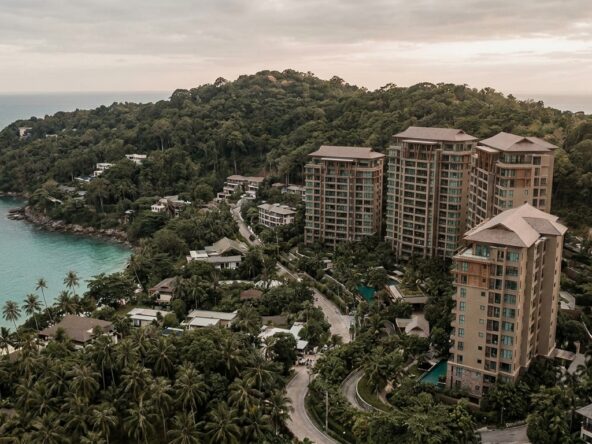


For foreign buyers considering Phuket property, the recent enforcement wave targeting illegal ownership structures is more than background noise. It is a signal that Thai authorities are examining how foreigners hold land and operate businesses, particularly in high-profile resort areas.
The latest operations, reported by the Bangkok Post, stem from a broader investigation into foreign-linked criminal activity that began with the arrest of suspected cyberscammer Sun Mingchen in Chonburi. While the initial case involved weapons trafficking and scam operations, the investigation expanded to include nominee business structures and illegal foreign ownership of land across multiple Thai resort destinations.
Phuket is specifically named as one of the areas under increased surveillance, alongside Koh Phangan, Pai and Hua Hin.
What the enforcement operation uncovered
According to Pol Maj Gen Pattanasak Bupphasuwan, commander of the Crime Suppression Division, investigators identified 32 companies linked to nominee schemes on Koh Phangan, involving ownership of 45 land plots covering more than 40 rai with estimated damages exceeding B200 million.
In one case, authorities found a company using Thai nominees to conceal ownership by an Israeli national while operating an unlicensed hotel business. The company controlled eight land plots covering approximately 7 rai, valued at more than B60 million.
A second group of 32 companies was found to have foreign shareholders holding larger stakes than their Thai partners, in apparent violation of Thai business regulations.
Immigration police recently deported more than 10 Israelis accused of illegally operating businesses on Koh Phangan. A second wave of raids conducted on May 23 targeted foreign nominee networks concealing land ownership through Thai shareholders acting on behalf of foreigners.
Why authorities are focusing on resort areas
Senior police officials say foreign criminal suspects often concentrate in major tourist destinations, where they can blend more easily into expatriate communities and business networks.
Pol Lt Gen Jirabhop Bhuridej, assistant national police chief, said Thailand’s openness as an international tourism and business hub presents both strengths and weaknesses from a security perspective. While the country is generally viewed as neutral and welcoming, the volume of foreign residents and visitors complicates screening and monitoring efforts.
The case prompted Prime Minister Anutin Charnvirakul to summon national police chief Pol Gen Kittharath Punpetch and senior officers for urgent discussions at Government House.
Intelligence, military and police agencies have been instructed to intensify scrutiny of higher-risk nationalities and groups involved in international conflicts.
What this means for Phuket property buyers
The enforcement operations highlight a simple but important point: nominee structures are illegal under Thai law, and authorities are actively investigating them in Phuket and other resort markets.
Nominee arrangements typically involve foreign buyers using Thai nationals as majority shareholders in a company structure that exists solely to hold land on behalf of the foreign buyer. While some property purchasers may have been advised that such structures are acceptable if properly documented, Thai law does not permit foreigners to control land through Thai nominees who have no genuine economic interest in the property.
The recent operations suggest authorities are examining both business ownership patterns and land holdings to identify structures where Thai shareholders appear to be acting on behalf of foreign nationals.
For buyers who already own property through structures that may not comply with Thai law, the enforcement wave raises questions about risk, legal review and potential remedies. For those considering purchasing property in Phuket, the operations reinforce the importance of using legal ownership methods such as freehold condominium units, long-term leasehold agreements with properly structured lease terms, or company structures where Thai shareholders have genuine economic participation.
Language barriers and enforcement capacity
Pol Lt Gen Jirabhop identified language capability as one of the biggest obstacles facing law enforcement, limiting the number of officers able to conduct detailed investigations or penetrate tightly connected foreign networks.
He said Chinese and Russian nationals make up a larger proportion of foreigners living in Thailand than other nationalities, with some having fled criminal charges in their home countries, while others engage in illegal activities after arriving in Thailand.
Despite these challenges, the scale and coordination of the recent operations suggest authorities are prioritising enforcement in resort markets where foreign ownership questions have historically received less scrutiny.
Frequently Asked Questions
What is a nominee structure in Thai property ownership?
A nominee structure involves using Thai nationals as majority shareholders in a company formed to hold land on behalf of a foreign buyer. Thai law prohibits foreigners from controlling land through nominees who lack genuine economic interest in the property. Authorities are now actively investigating such arrangements in Phuket and other resort areas.
Does this enforcement affect all foreign property owners in Phuket?
The operations specifically target illegal ownership structures, not legal foreign ownership methods. Foreigners who own freehold condominium units, hold properly structured leasehold agreements, or participate in legitimate company structures where Thai shareholders have genuine economic interest are not the focus of these investigations.
What should foreign buyers consider when purchasing Phuket property?
Buyers should work with qualified Thai legal advisors to ensure ownership structures comply with Thai law. Legal methods include purchasing freehold condominium units within the 49% foreign quota, entering long-term leasehold agreements with appropriate terms, or establishing company structures where Thai shareholders have genuine participation rather than acting as nominees.
Are authorities likely to continue investigating foreign ownership in resort areas?
The recent operations followed direct instructions from the Prime Minister to intensify scrutiny of foreign-linked activity in tourist destinations. While the initial investigation began with criminal activity unrelated to property, authorities expanded the scope to include nominee structures and illegal ownership. The scale and coordination suggest enforcement may continue.
What happens to property held through illegal nominee structures?
Thai law does not recognise ownership obtained through illegal means. While each case depends on specific circumstances and evidence, property held through nominee structures found to violate Thai law could be subject to legal action, and owners may face penalties. Buyers concerned about existing structures should seek legal review.
Sources
- The Phuket News — High-risk foreign nationals under increased focus — link
- Bangkok Post — cited within The Phuket News report