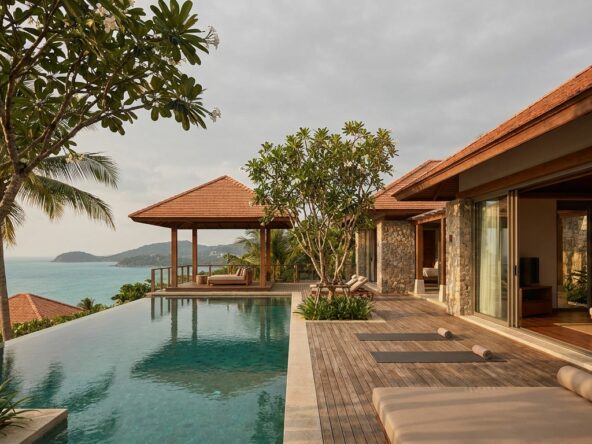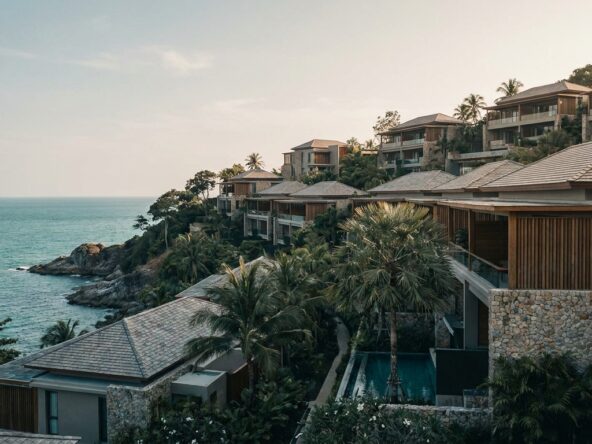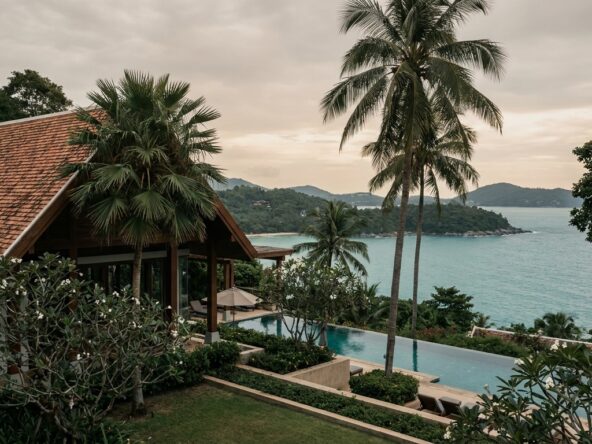

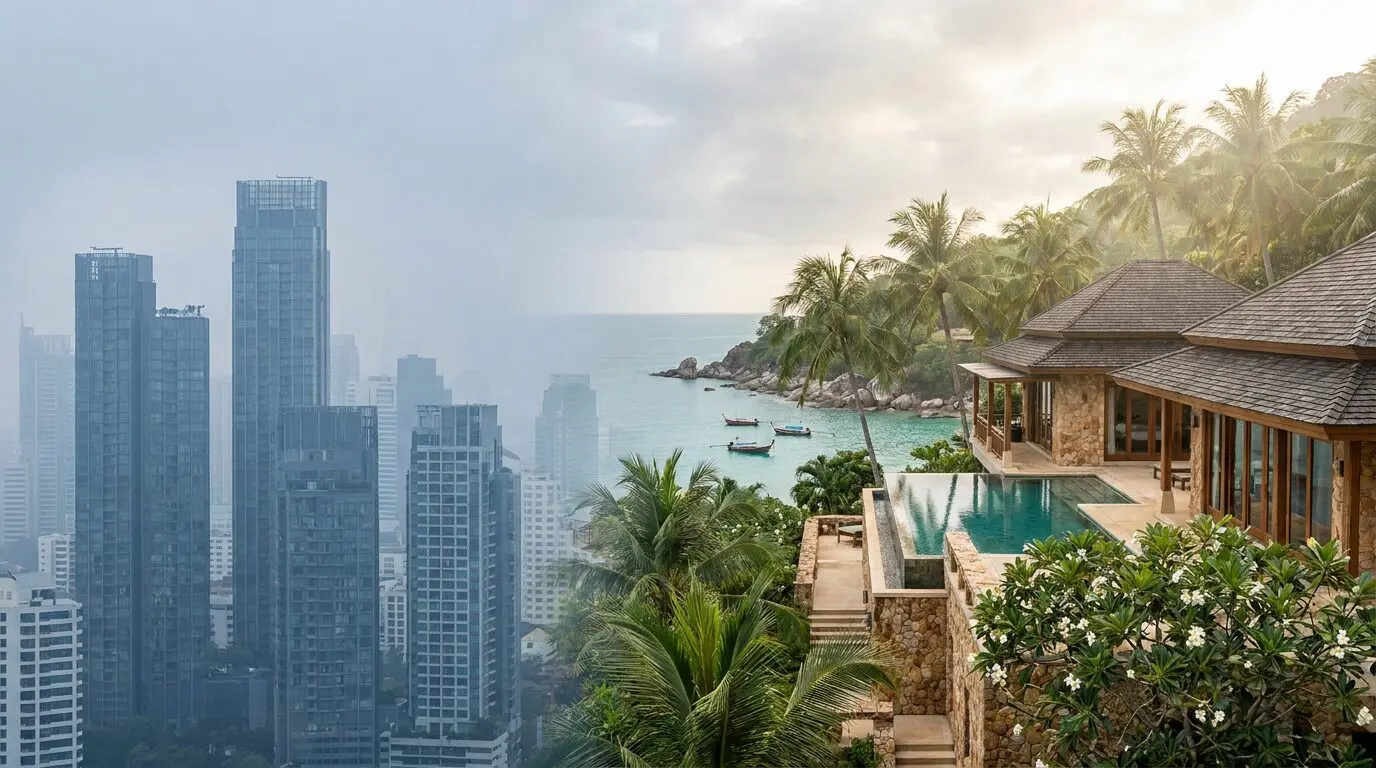
A property budget in Thailand does not translate evenly across regions. The same amount that gets you a modest studio along Sukhumvit could buy a four-bedroom pool villa in Hua Hin, a sea-view condo in Pattaya, or a townhouse in Chiang Mai with money left over.
Thailand property prices in 2026 are running at very different speeds. Bangkok is digesting years of condominium oversupply. Phuket continues to appreciate on the west coast, driven by foreign cash buyers and limited buildable land. Everywhere else sits somewhere in between.
The national average house price is close to useless as a planning number. What matters is understanding the per-square-metre benchmarks in the six markets most foreign buyers actually consider.
The national picture masks regional extremes
For condominium units available under full foreign ownership, the average price in Thailand runs at around 145,000 baht per square metre, or approximately US$4,000, according to data compiled by Thaiger.
Real estate prices in Thailand grew just 0.63% year-on-year in Q4 2025, per Bank of Thailand data. Single-detached houses increased 1.19% and townhouses rose 1.34% nationally. That headline figure effectively shows a flat market.
The detail worth watching is the spread behind that average. Phuket’s west coast is appreciating at 8% to 12% annually in premium zones. Bangkok condominium prices are broadly unchanged, while single-detached house prices in the capital fell 2.15% year-on-year.
Bangkok: oversupply creates buyer leverage
Bangkok has more unsold condo inventory than anywhere else in Thailand, which changes the negotiating dynamic in favour of buyers across most segments.
The median condo price sits at approximately 125,000 baht per square metre as of early 2026. The mean is higher at around 150,000 baht per square metre. Prime CBD stock along Sukhumvit, Silom and Sathorn runs 200,000 to 350,000 baht per square metre, with branded super-luxury product at the top end or above.
Developer discounts have become standard rather than exceptional. Once factored in, Bangkok house prices in most mid-market segments are negative year-on-year in real terms, even as downtown Grade A asking prices from CBRE data point toward 315,000 baht per square metre.
Luxury condominiums are spending 180 to 240 days on the market in 2025 to 2026, compared with 90 to 120 days in 2021. Sellers with liquidity needs are open to negotiation.
Typical unit price range runs from 5 million to 20 million baht for mid-to-premium product. Gross rental yield sits at 4% to 6%.
Phuket: limited land drives continued price growth
Phuket remains one of Thailand’s fastest-growing property markets. Prime west coast developments are benefiting from limited land and sustained foreign demand.
The 8% to 12% annual appreciation rate in premium zones contrasts sharply with the flat or negative movement in Bangkok. The driver is straightforward: Phuket has less buildable land, stronger foreign cash buyer activity, and continued tourism-linked rental demand.
For Phuket property buyers, the important question is not only what changed, but whether the price growth reflects genuine scarcity or speculative momentum. The source material points to limited land as the structural factor, with foreign cash buyers providing liquidity.
Pattaya, Hua Hin, Chiang Mai and Koh Samui: where value sits
Pattaya offers some of the best-value coastal property in Thailand, combining relatively affordable prices with strong rental yields and active foreign buyer demand.
Hua Hin remains one of Thailand’s most affordable lifestyle markets. The same budget often buys significantly more space than in Bangkok or Phuket.
Chiang Mai has the lowest property prices among Thailand’s major expat destinations, appealing to buyers focused on space, affordability and lifestyle.
Koh Samui continues to attract villa buyers and investors, with strong price growth and rental yields despite increasing competition in the short-let market.
Why the regional spread matters for buyers
Foreign buyer activity, infrastructure, tourism demand and local economic conditions create major differences in property prices across Thailand.
Under Thai law, the only residential property foreigners can own outright is a condominium unit. Villas and houses are accessible via 30-year leasehold structures rather than freehold title.
For buyers comparing markets, the spread means budget decisions should start with lifestyle and access priorities, not with national averages. A sea-view condo in Pattaya may cost half the per-square-metre price of equivalent space in central Bangkok.
The negotiating power in Bangkok contrasts with the tighter supply dynamics in Phuket. In plain English, buyers in Bangkok can push harder on price. Buyers in Phuket face less flexibility but potentially stronger capital appreciation over time, if the limited land thesis holds.
What remains unclear
The source material does not specify whether the 8% to 12% Phuket appreciation rate applies across all west coast zones or only to specific premium pockets. Nor does it detail how developer pricing in Phuket new-builds compares with resale stock.
The Bangkok oversupply is well-documented, but the timeline for inventory normalisation is not clear. How long buyer leverage lasts depends on whether developers continue launching new projects or pause to clear existing stock.
Frequently Asked Questions
What is the average property price in Thailand in 2026?
The average foreign-buyable condominium price in Thailand is around 145,000 baht per square metre, or approximately US$4,000. National real estate prices grew just 0.63% year-on-year in Q4 2025, per Bank of Thailand data, effectively flat.
Why are Phuket property prices still growing while Bangkok stagnates?
Phuket west coast prices are appreciating 8% to 12% annually in premium zones, driven by limited buildable land and sustained foreign cash buyer demand. Bangkok faces condominium oversupply, creating strong buyer negotiating power and flat or negative price movement.
Can foreigners own property in Thailand?
Foreigners can own condominium units outright under Thai law. Villas and houses are accessible via 30-year leasehold structures rather than freehold title.
What does 145,000 baht per square metre mean in practical terms?
At 145,000 baht per square metre, a 50-square-metre one-bedroom condo costs around 7.25 million baht. A 100-square-metre two-bedroom unit costs around 14.5 million baht before negotiation or discounts.
Which Thailand property market offers the best value in 2026?
Pattaya, Hua Hin and Chiang Mai offer lower per-square-metre prices than Bangkok or Phuket. Hua Hin and Chiang Mai are noted as particularly affordable lifestyle markets where budgets stretch further.
Sources
- Thaiger — Average house price in Thailand by region (2026) — link
- Bank of Thailand — Q4 2025 real estate price data
- CBRE — Bangkok Grade A condominium pricing data