
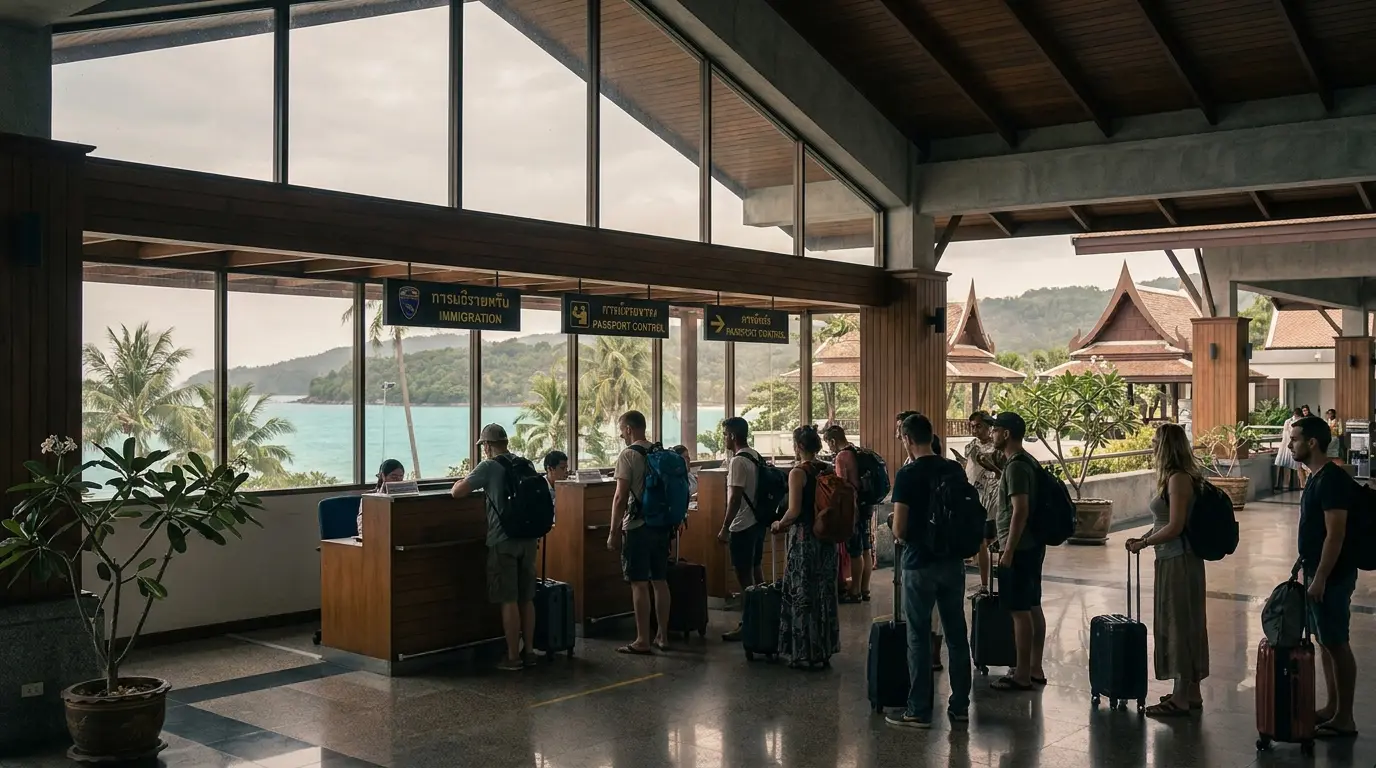
From September 15, 2026, Thailand replaces its 60-day visa exemption with a new framework that reduces the maximum permitted stay under exemption for most nationalities. For buyers viewing Phuket property, planning extended stays, or considering how rental demand and long-stay tourism may shift, the change is worth understanding.
The Tourism Authority of Thailand (TAT) confirmed on September 1 that the new 30-day and 15-day visa exemption categories, together with updated Visa on Arrival eligibility, will take effect on September 15, 2026. The related Ministry of Interior announcements were published in the Royal Gazette on August 31, 2026.
The 60-day visa exemption measure, which had been in place, will end on the same date.
What changes on September 15
Travellers previously covered by the 60-day visa exemption will instead be subject to either a 30-day visa exemption, 15-day visa exemption, Visa on Arrival, or other relevant entry arrangements, depending on their nationality.
Under the new framework, holders of passports or travel documents from 60 countries and territories will be eligible for visa exemption for tourism, with a permitted stay of up to 30 days.
The 60 countries include major source markets for Phuket property buyers and long-stay visitors: Australia, Austria, Bahrain, Belgium, Bulgaria, Bhutan, Brunei Darussalam, Canada, Croatia, Cyprus, Czech Republic, Denmark, Estonia, Fiji, Finland, France, Georgia, Germany, Greece, Hungary, Iceland, Indonesia, India, Ireland, Israel, Italy, Japan, Jordan, Kuwait, Kyrgyzstan, Latvia, Liechtenstein, Lithuania, Luxembourg, Malta, Malaysia, Maldives, Netherlands, New Zealand, Norway, Oman, Philippines, Poland, Portugal, Qatar, Romania, Saudi Arabia, Singapore, Slovakia, Slovenia, South Africa, Spain, Sweden, Switzerland, Taiwan, Türkiye, Ukraine, United Arab Emirates, United Kingdom and United States of America.
For entry through land-border immigration checkpoints, travellers using the 30-day visa exemption may generally enter Thailand under this exemption no more than twice per calendar year. This limit does not apply to nationals of Malaysia, Brunei Darussalam, Indonesia and Singapore, or to other nationalities as may be designated by the Minister.
A 15-day visa exemption will apply to holders of passports or travel documents from Seychelles and Mauritius. Travellers entering through land-border immigration checkpoints under this exemption may generally do so no more than twice per calendar year, except for nationalities designated by the Minister.
Visa on Arrival will apply to holders of passports or travel documents from Azerbaijan, Belarus and Serbia.
Separate bilateral and related entry arrangements will continue to apply where relevant, providing visa exemption periods of 90, 30 or 14 days, depending on the applicable agreement or arrangement.
Why this matters for Phuket property buyers and viewers
The reduction from 60 days to 30 days affects how much time buyers have to view property, meet agents, conduct due diligence, arrange legal work and settle initial planning without needing to extend or exit and re-enter.
For buyers who had planned to use the 60-day exemption to combine property viewing with longer stays in Phuket or elsewhere in Thailand, the new 30-day limit may require a visa application, extension or a break in travel.
The land-border limit — no more than twice per calendar year under the 30-day exemption — may also affect buyers who had planned multiple short viewing trips using land crossings into neighbouring countries and returning to Thailand.
For buyers from Malaysia, Brunei Darussalam, Indonesia and Singapore, the land-border restriction does not apply, which preserves flexibility for property-related travel.
What remains the same
The new rules do not change the broader visa framework. Buyers who need more than 30 days may still apply for tourist visas, multiple-entry tourist visas, or other visa categories before travel. Extensions of stay remain possible under existing immigration rules.
The change affects visa exemption, not visa availability or eligibility.
For buyers who are already in Thailand under the 60-day exemption before September 15, TAT guidance states that travellers should check the entry conditions that apply to their nationality before travelling, but the published announcement does not specify how existing stays are affected. Buyers in this situation should confirm their position with Thai immigration.
The broader context for Phuket
Thailand’s visa exemption policies have been adjusted several times in recent years, often in response to tourism recovery targets, bilateral agreements or policy recalibration.
The 60-day exemption had been seen as one factor supporting longer tourism stays and rental demand in resort areas such as Phuket, though the extent of its influence on actual stay lengths and property rental occupancy was not separately quantified in public tourism data.
The return to a 30-day standard may shift the behaviour of some long-stay tourists, digital nomads and buyers planning extended property search trips. It may also affect how landlords and villa operators consider marketing to audiences who had relied on the longer exemption.
However, the change does not affect buyers or residents who hold longer-term visas, retirement visas, work permits or other immigration status, nor does it prevent travellers from applying for tourist visas or extensions.
What buyers should understand
For buyers planning to view Phuket property after September 15, the key point is to plan time carefully and confirm visa requirements before travel.
If viewing, legal work, financing or due diligence are likely to take more than 30 days, applying for a tourist visa before arrival may provide more certainty than relying on visa exemption and extension.
For repeat visits, understanding the land-border restriction is important. Buyers who had planned to enter Thailand multiple times via land borders during a calendar year should confirm whether their nationality is subject to the twice-per-year limit.
For buyers who are already working with agents, legal advisors or property managers in Phuket, it may be worth discussing whether the new rules affect planned schedules.
Frequently Asked Questions
Does the 30-day visa exemption replace the 60-day exemption for all nationalities?
From September 15, 2026, the 60-day visa exemption ends. Travellers from 60 countries and territories will be eligible for a 30-day visa exemption. Other nationalities may be subject to 15-day exemption, Visa on Arrival, or bilateral arrangements. Separate bilateral agreements providing 90, 30 or 14-day exemptions continue where applicable.
Can I still extend my stay beyond 30 days?
Yes. The change affects visa exemption periods, not visa extension rules. Travellers may still apply for extensions under existing immigration regulations. Buyers who need more than 30 days may also apply for tourist visas before arrival.
What is the land-border restriction?
Travellers using the 30-day visa exemption may generally enter Thailand through land-border immigration checkpoints no more than twice per calendar year. This limit does not apply to nationals of Malaysia, Brunei Darussalam, Indonesia and Singapore, or other nationalities as designated by the Minister.
How does this affect Phuket property buyers?
Buyers planning extended viewing trips, legal due diligence or settlement time in Thailand may have less time under visa exemption. Buyers who need more than 30 days should consider applying for a tourist visa before travel or planning for visa extensions.
Where can I confirm the rules for my nationality?
The Tourism Authority of Thailand advises travellers to check the entry conditions that apply to their nationality before travelling. Thai embassies, consulates and the Ministry of Foreign Affairs website provide nationality-specific guidance.
Sources
- Tourism Authority of Thailand — Thailand introduces new 30-day and 15-day visa exemption rules from 15 September — link