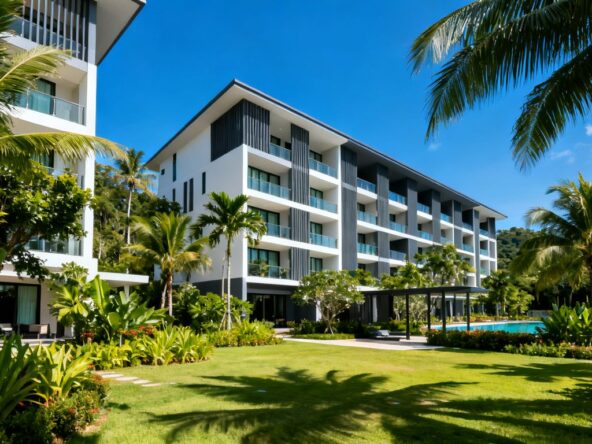


Southeast Asia’s luxury real estate market is experiencing a significant boom in 2025, with Thailand emerging as a dominant force. Driven by robust economic growth, increasing affluence, and evolving consumer preferences, the region is attracting high-net-worth individuals and global investors. Thailand, particularly its key cities, is at the forefront of this expansion, especially in the rapidly growing branded residences sector.
Key Takeaways
- Thailand leads Southeast Asia in the branded residences market, with substantial investment and new projects.
- The global branded residence market is shifting towards Asia, with Thailand identified as a key emerging hub.
- Factors like tourism, infrastructure, favorable visa policies, and a focus on wellness and sustainability are driving demand.
- While challenges like management complexity and potential oversupply exist, Thailand is well-positioned for continued growth.
Thailand’s Dominance in Branded Residences
Thailand is leading the charge in Southeast Asia’s luxury real estate market, particularly in the burgeoning sector of branded residences. These properties, often affiliated with global hotel brands, offer exclusivity and hotel-style services, appealing to a sophisticated clientele. Asia accounts for 21% of global branded residence projects, with Southeast Asia making up 12% of that figure, and Thailand spearheading this growth. The country has seen the launch of 12,656 branded units valued at $6.2 billion, with new developments continuously emerging in Bangkok.
A prime example of this trend is Porsche’s residential tower in Bangkok’s Thong Lo district, slated for completion in 2028. This ultra-luxury development features 22 units with prices ranging from $15 million to $40 million.
Market Growth and Investment Drivers
The broader Southeast Asian real estate sector is projected to reach $27.07 trillion in 2024, with the luxury residential segment playing a crucial role. This market is expected to grow to $30.79 trillion by 2029, at an annual rate of 2.61%. This expansion is fueled by a projected 45.2% increase in ultra-high-net-worth individuals (UHNWIs) by 2028 in markets like Thailand, Vietnam, and the Philippines.
Phuket’s luxury market is thriving, boosted by its strong tourism sector, which has surpassed pre-pandemic levels. This has attracted significant investment in branded residences from renowned brands such as Ritz-Carlton, Four Seasons, and Anantara. Bangkok, meanwhile, is experiencing strong demand from Chinese and European buyers for high-end condos and homes priced above 50 million baht (approximately $1.5 million). Thailand’s appeal is further enhanced by favorable long-term visa policies for wealthy individuals and its relative affordability compared to global financial hubs.
Emerging Trends and Future Outlook
Beyond branded residences, the luxury property market in Southeast Asia is embracing trends like wellness, longevity, and green design. Modern developments are focusing on providing a high quality of life, incorporating wellness services, health centers, and energy-efficient smart home systems. These features are increasingly important to UHNWIs and international investors.
While challenges such as management complexity, high operating costs, and the risk of oversupply exist, Thailand’s strategic positioning, attractive lifestyle, and supportive government policies create a significant “window of opportunity.” If developers can effectively balance brand partnerships, quality living, and investment potential, Thailand is poised to solidify its position as Asia’s leading hub for luxury branded residences in the coming years.
### Key Takeaways
- Thailand Rises as a Dominant Player in Southeast Asia’s Luxury Real Estate Market, Thailand Business News.
- Branded residences keep booming as Thailand emerges as a luxury property hub, Nation Thailand.
- Thailand leads luxury property expansion, Borneo Bulletin.