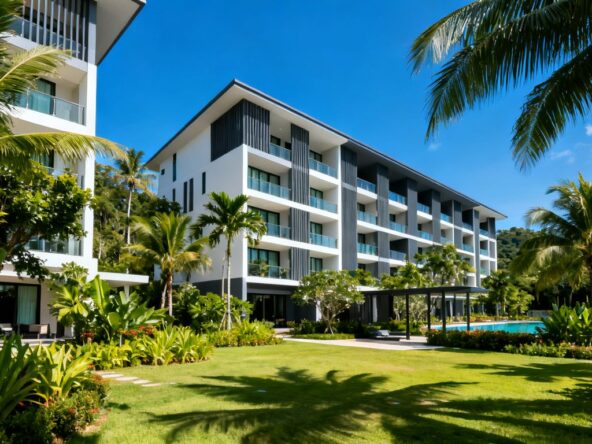


The Thai government is set to review the foreign ownership quota for condominiums, potentially increasing the current cap from 49% to 75%. This move aims to stimulate the economy and attract foreign investment, amidst rising demand from international buyers and a challenging local market.
Key Takeaways
- The foreign ownership cap for condominiums may rise from 49% to 75%.
- The leasehold period for foreign buyers could extend from 50 years to 99 years.
- The proposal aims to boost the economy and attract foreign investment.
- Demand from foreign buyers is increasing, particularly in popular tourist destinations.
Government’s Proposal
Deputy Prime Minister Phumtham Wechayachai announced that the government will study the feasibility of raising the foreign ownership limit in condominiums. This proposal was first discussed in a cabinet meeting in April, reflecting the government’s commitment to stimulate economic growth and attract foreign investment.
The Ministry of Interior has also been tasked with examining the possibility of extending the leasehold period for foreign buyers from the current 50 years to 99 years. This change could make property investments more appealing to foreign nationals, potentially leading to increased sales and investment in the Thai property market.
Market Demand and Challenges
Local property industry executives have been advocating for a change in the foreign ownership cap, citing a significant rise in demand from foreign buyers. However, the local market faces challenges, including high household debt levels and stricter lending conditions, which have dampened property demand among local buyers.
The Real Estate Information Center (REIC) reported a 19.7% decline in land allocation permits in the first quarter of this year, marking the largest drop in nine quarters. This decline is attributed to developers adjusting their strategies in response to a decrease in low-rise house transfers.
Popular Destinations for Foreign Buyers
Certain areas, such as Phuket and Pattaya, have seen their foreign ownership quotas fully occupied in several condominium projects. Vichai Viratkapan, the acting director-general of the REIC, emphasised the need for the government to increase foreign ownership quotas in these locations to stimulate the economy, as the condo market in these areas heavily relies on foreign demand.
Innovative Solutions by Developers
In response to the high demand from foreign buyers, some developers have started reserving units in their projects for leasehold contracts. These units are typically priced 10-15% lower than freehold units, making them more attractive to foreign investors.
Growth in Foreign Condo Transfers
The REIC reported that the number of condo transfers to foreigners in 2023 reached 14,449 units, a 25% increase from the previous year. The total value of these transfers rose by 23.5% to 73.1 billion baht, surpassing pre-pandemic levels. Notably, Chinese buyers accounted for the largest share of these transfers, representing 45.8% of the total units and 46.7% of the total value, followed by buyers from Russia, the United States, and Myanmar.
This review of the foreign condo ownership quota could significantly impact Thailand’s property market, potentially leading to increased foreign investment and revitalising the economy in key tourist destinations.
Sources
- Bangkok Post – Foreign condo ownership quota being reviewed, Bangkok Post.