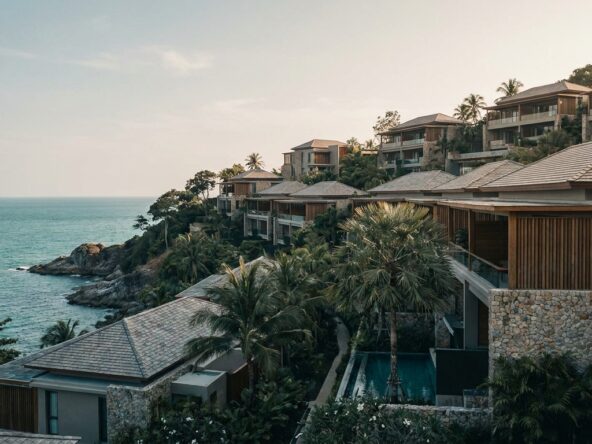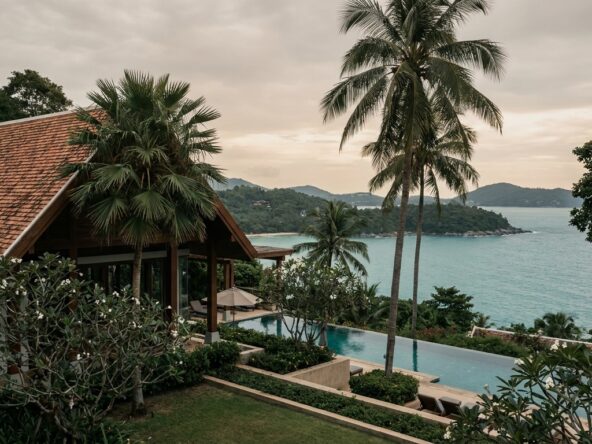


Phuket’s residential market is changing character. What was once understood primarily as a tourism-driven market for holiday homes is now being reshaped by buyers focused on rental income and capital appreciation.
The shift matters because it alters what developers build, where they build it, and who buys it.
According to SET-listed Origin Property, through its subsidiary Park Luxury Co, foreign buyers now account for 70% of its Phuket customer base, and rental yields of 7-10% are becoming a more important selling point than beachfront proximity alone.
Why rental yield is now a primary buying decision
Thanagorn Vutipong, chief executive of Park Luxury Co, explained the change plainly: buyers are placing greater emphasis on rental income and capital appreciation than on personal use or holiday access.
The figures Origin cites are significant. Rental yields of 7-10% per year, combined with capital gains projections of 15-20% annually, position Phuket as an income-generating asset rather than a lifestyle-only purchase.
This shift is visible in buyer behaviour. Despite an estimated 40,000-50,000 residential units across Phuket, demand remains persistent. Some Origin projects have achieved more than 60% sales, with certain developments selling out within two months.
The speed of absorption suggests buyers are not waiting, browsing or comparing endlessly. They are making faster decisions based on projected returns.
Who is buying and where they are looking
Foreign buyers dominate Origin’s Phuket customer base at 70%. Russians represent 47% of that group, followed by Polish buyers at 16% and Chinese buyers at 6%. The mix indicates a more diversified international demand base than Phuket has historically relied on.
Buyer geography within Phuket is also shifting. Mr Thanagorn noted that foreign buyers are increasingly looking beyond established tourist areas such as Patong and Kamala. Surin and Rawai beaches are attracting interest from long-stay buyers seeking less crowded locations with stronger rental income potential.
Thai buyers account for 30% of Origin’s Phuket customers. This group comprises mainly local business owners and Bangkok-based investors purchasing condominiums for rental income rather than personal use.
The typical budget among Thai investors has increased to around 3-4 million baht per unit from 2-3 million baht previously, suggesting that buyers are willing to pay more for properties offering stronger rental potential.
What the shift means for developers
For developers, the investment orientation of the market brings both advantages and pressures.
Foreign buyers provide relatively strong cash flow. Condominium buyers typically pay deposits of around 70%, while villa buyers can put down about 90%, compared with roughly 15% for Thai buyers. This gives developers greater visibility over sales and collections as projects progress.
Gross margins for residential projects in Phuket are estimated at 50-60%, significantly above the 30% average in Bangkok, according to Mr Thanagorn.
However, rising development costs are becoming a growing challenge. Developers are increasingly competing through pricing, promotions and higher agent commissions to secure buyers.
Land prices in Phuket have risen by about 300% over the past three years. Plots in Bang Tao now reach around 60 million baht per rai, with beachfront land approaching 100 million baht per rai.
Mr Thanagorn explained the implication: “The sharp increase in land costs means developers must increasingly select sites based on development economics, as condominium prices may need to reach around 200,000 baht per square metre to maintain project viability.”
That pricing threshold—200,000 baht per square metre—represents a material shift in what is considered viable in Phuket. It also suggests that lower-priced product may become harder to deliver profitably in prime or near-prime locations.
Why this matters for Phuket property buyers
For buyers, the shift from holiday-home market to investment-led market changes the competitive landscape.
Properties offering strong rental yield are being absorbed quickly. Buyers motivated by income are making faster decisions. This may reduce negotiation flexibility and increase the importance of early commitment in projects with credible rental management structures.
For sellers, the trend suggests that properties with demonstrable rental performance or rental management agreements may command stronger buyer interest than comparable units without income history.
For investors comparing Phuket with other resort markets, the reported yield range of 7-10% and capital gain projections of 15-20% annually should be assessed against actual transaction evidence, occupancy data and rental management track records. Projections are not guarantees, and performance varies by location, property type, developer and management quality.
What remains uncertain
The market shift described by Origin Property is supported by the company’s own sales data and customer mix, but it represents one developer’s view rather than comprehensive market data.
Several questions remain open:
First, whether the 7-10% rental yield range is achievable across the broader Phuket market or is concentrated in specific projects, price points or locations.
Second, whether the 15-20% annual capital gain projections reflect historical performance, forward estimates or selective examples.
Third, whether the rapid sales absorption Origin reports is consistent across other developers or specific to Origin’s pricing, product mix and buyer base.
Fourth, whether rising land costs and the 200,000 baht per square metre pricing threshold will push affordability out of reach for a significant segment of buyers, or simply shift demand to secondary locations.
Despite rising costs, Origin plans to expand its Phuket portfolio. The company currently has eight residential projects comprising 3,937 units worth 15.6 billion baht, with average sales exceeding 60%. Three hotels under development will feature 601 rooms.
The expansion reflects confidence that investment-led demand can support residential development beyond the traditional tourism cycle.
Frequently Asked Questions
What is driving the shift from holiday homes to investment properties in Phuket?
Buyers are increasingly focused on rental income and capital appreciation rather than personal use. Reported rental yields of 7-10% and capital gain projections of 15-20% annually are making Phuket more attractive as an income-generating asset, particularly for foreign buyers who now represent 70% of Origin Property’s Phuket customer base.
Which foreign buyers are most active in Phuket property?
According to Origin Property, Russians account for 47% of foreign buyers, followed by Polish buyers at 16% and Chinese buyers at 6%. The mix indicates a more diversified international demand base than Phuket has historically relied on.
Are Thai buyers also investing in Phuket property for rental income?
Yes. Thai buyers account for 30% of Origin’s Phuket customers, comprising mainly local business owners and Bangkok-based investors purchasing condominiums for rental income rather than personal use. Typical budgets among Thai investors have increased to 3-4 million baht per unit from 2-3 million previously.
How have land prices in Phuket changed recently?
Land prices in Phuket have risen by about 300% over the past three years. Plots in Bang Tao now reach around 60 million baht per rai, with beachfront land approaching 100 million baht per rai. Developers report that condominium prices may need to reach around 200,000 baht per square metre to maintain project viability given the sharp increase in land costs.
What should buyers know about rental yield projections in Phuket?
Rental yield projections of 7-10% and capital gain estimates of 15-20% annually should be assessed against actual transaction evidence, occupancy data and rental management track records. Projections are not guarantees, and performance varies by location, property type, developer and management quality. Buyers should request historical performance data and rental management terms before committing.
Sources
- Bangkok Post — Property — Residential market shifting to investment — link