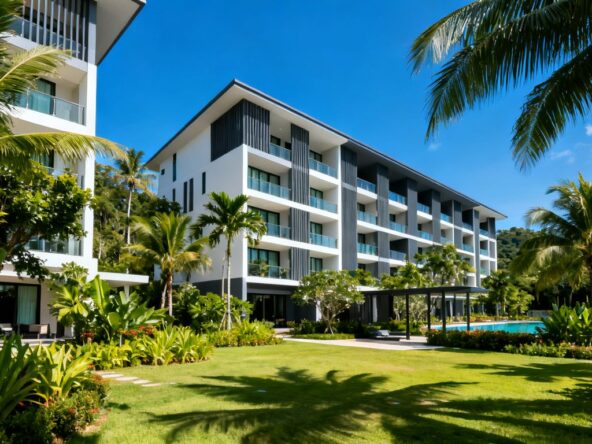


Phuket, with its stunning beaches and vibrant lifestyle, is a dream destination for many. If you’re a foreigner looking to buy property here, especially as part of a couple with a Thai spouse, you’ll need to understand the local laws and processes. This guide will walk you through the essential steps and considerations for buying property with a Thai spouse, helping you make informed decisions along the way.
Key Takeaways
- Foreigners can own condos but not land in Thailand.
- Purchasing property with a Thai spouse has specific legal implications.
- It’s crucial to work with a reliable real estate agent and a lawyer.
- Financing options for foreigners are limited and often require large down payments.
- Understanding local market trends can prevent costly mistakes.
Understanding Foreign Ownership Laws
Overview of Property Ownership Restrictions
So, you’re thinking about buying property in Phuket? Great choice! But before you get too excited about beachfront villas, it’s important to get your head around the rules. Thailand has some pretty specific laws about who can own land, and it’s not always straightforward for foreigners. Generally, Thai law restricts foreigners from directly owning land. This is a biggie, and it affects how you can structure your purchase. It’s not a complete roadblock, but it does mean you need to be smart about it. Think of it as a game with rules you need to learn to play.
Legal Framework for Foreign Buyers
Okay, so how can foreigners own property? Well, there are a few ways. The most common is through a leasehold, which gives you the right to use the property for a set period (usually up to 30 years, with the possibility of renewal). Another option is to buy a condo, as condo ownership laws allow foreigners to own up to 49% of the units in a building. There’s also the possibility of setting up a Thai company, but that comes with its own set of regulations and isn’t always the best route. It’s all governed by the Land Code Act and the Condominium Act, so get familiar with those!
Implications of Buying Property with a Thai Spouse
This is where things get interesting. Buying property with your Thai spouse seems like a simple solution, but it’s not always that clear-cut. While your spouse can legally own the land, the authorities will likely investigate to ensure the funds used to purchase the property genuinely belong to your spouse and not you. They want to prevent foreigners from using Thai nationals as nominees to bypass the ownership restrictions. If it’s determined that you have control over the property despite it being in your spouse’s name, you could face legal issues. It’s a bit of a grey area, and it’s essential to get proper legal advice to make sure everything is above board.
It’s really important to keep detailed records of all financial transactions related to the property purchase. This will help demonstrate the source of funds and ensure compliance with Thai law. Transparency is key to avoiding any potential problems down the line.
Here’s a quick rundown of things to consider:
- Source of Funds: Be prepared to prove where the money came from.
- Legal Advice: Get a solicitor to check everything.
- Ownership Structure: Explore all options, not just the obvious one.
Navigating the Buying Process
Steps to Purchase Property in Phuket
Okay, so you’re thinking about buying a place in Phuket? Ace! Here’s the lowdown on how it usually goes. First, you need to figure out what you actually want and can afford. Scour the property websites, get a feel for the different areas, and set a budget. Then, get yourself over to Phuket and start viewing properties. Don’t rush this bit; take your time and see loads of places. Once you’ve found ‘the one’, you’ll need to make an offer. If it’s accepted, you’ll pay a deposit and get your lawyer to start the due diligence. After that, it’s all about signing the contracts and transferring the funds. Finally, you get the keys!
- Initial Consultation & Property Search
- Property Viewings & Due Diligence
- Sales & Purchase Agreement
Role of Real Estate Agents
Real estate agents in Phuket can be super helpful, but it’s important to choose wisely. A good agent will know the local market inside out, be able to show you a range of properties that fit your needs, and help you negotiate a fair price. They can also assist with the paperwork and connect you with other professionals, like lawyers and surveyors. However, remember that they work for the seller, so it’s always a good idea to have your own representation too. It’s worth checking out a buyer’s guide before you start.
Importance of Legal Assistance
Seriously, don’t even think about buying property in Phuket without a good lawyer. Property law can be complex, especially when foreigners are involved. A lawyer will make sure everything is above board, check the title deeds, and ensure that the contracts are watertight. They’ll also be able to advise you on the best way to structure the ownership, given your circumstances as a foreign-Thai couple. It might seem like an extra expense, but it’s worth every penny for the peace of mind.
Getting proper legal advice is not just a recommendation; it’s a necessity. It can save you from potential legal battles and financial losses down the line. Make sure your lawyer is experienced in Thai property law and has a good reputation.
Financing Your Property Purchase
Available Financing Options for Foreigners
So, you’re dreaming of owning a slice of paradise in Phuket? Great! But unless you’re paying with a suitcase full of cash, you’ll need to figure out the financing. The good news is, it’s possible for foreigners to get mortgages in Thailand, though it can be a bit more complex than back home.
- Thai Banks: Some Thai banks do offer mortgages to foreigners, but the requirements can be strict. Expect to need a solid credit history and proof of income. They’ll also want to see a hefty down payment.
- Foreign Banks: If you have a relationship with an international bank, it might be worth exploring if they offer financing for overseas properties.
- Developer Financing: For off-plan condos, developers sometimes offer payment plans. These can be quite attractive, allowing you to spread out payments during the construction phase. It’s worth checking out home loans for foreigners in Thailand.
Understanding Down Payments and Interest Rates
Down payments are typically higher for foreigners than for Thai nationals. Expect to pay at least 30-50% of the property value upfront. Interest rates can also be higher, reflecting the perceived risk to the lender. It’s a good idea to shop around and compare rates from different lenders. Don’t just jump at the first offer you see!
| Factor | Typical Range | Notes | 30-50% | Higher than for Thai nationals. and down payments are a key consideration for any prospective buyer. This is especially true for foreign buyers in Phuket, as they may not be familiar with the local market and financing options.
Using Personal Funds for Property Purchase
Of course, the simplest way to finance your Phuket property is to use your own savings. If you’ve got the cash, you avoid interest payments and the hassle of dealing with lenders. Just be sure to factor in all the associated costs, like transfer fees and taxes. Also, you’ll need to prove the funds’ origin. It’s important to transfer the money into Thailand correctly. If you bring more than US$50,000 into Thailand to purchase a condominium, you must request a Foreign Exchange Transaction Form (FETF) from your bank and obtain a Foreign Exchange Transaction Form Certificate.
Planning to buy property in Phuket as a foreigner? Make sure you understand all the financial implications. It’s not just about the purchase price; there are other costs to consider, such as legal fees, taxes, and ongoing maintenance. Budget wisely to avoid any nasty surprises down the line.
Choosing the Right Property Type
Phuket offers a diverse range of properties, from compact condos to sprawling villas. Your budget and how you plan to use the property will heavily influence your choice. It’s worth spending some time researching the different options to find the perfect fit.
Condominiums: A Popular Choice
Condos are often a popular choice, especially for foreigners. The ownership process is generally straightforward, and they can be a good option for those looking to rent out their property. Phuket has a strong rental market, attracting both short-term and long-term tenants. Condos also tend to require less maintenance than houses, as building management usually takes care of upkeep. You can find everything from affordable studios to luxury units with sea views. If you are looking for condos & apartments, this might be the right choice for you.
Villas and Houses: Pros and Cons
Villas and houses offer more space and privacy than condos, but they also come with added responsibilities. You’ll be responsible for all maintenance and repairs, which can be costly. However, the potential rewards are great. A villa can provide a luxurious lifestyle and a great investment opportunity. Consider these points:
- Greater privacy and space.
- Higher maintenance costs.
- Potential for customisation and renovation.
Owning a villa can be a dream come true, but it’s important to be realistic about the costs and responsibilities involved. Make sure you factor in things like pool maintenance, gardening, and security when budgeting for your property purchase.
Investment Properties and Rental Potential
If your primary goal is to generate income, consider investment properties with strong rental potential. Phuket is a popular tourist destination, so there’s always demand for rental accommodation. Look for properties in desirable locations, such as near beaches or popular attractions. Also, research the local rental market to understand average rental rates and occupancy levels. You might want to consider investment properties for this purpose.
Here’s a simple table illustrating potential rental yields based on property type (these are just examples):
| Property Type | Average Rental Yield | Notes |
|---|---|---|
| Condo | 5-7% | Higher yields in popular tourist areas. |
| Villa | 4-6% | Can be higher for luxury villas with premium amenities. |
| House | 3-5% | Depends on location and size; may require more active management. |
Buying in Your Thai Spouse’s Name
Buying property in Phuket as a foreign-Thai couple can be a bit of a minefield, especially when it comes to ownership. One common route is purchasing the property in your Thai spouse’s name. Let’s break down what that actually means.
Legal Considerations for Joint Ownership
Historically, Thai law has had some quirks regarding foreign ownership of land. While things have become more flexible, there are still restrictions. It’s not possible for a foreign husband to co-own land in Thailand with his wife. This is a key point to remember. The land office generally won’t register agreements related to property signed between spouses, including leases or usufructs. Any agreement formalised during the marriage can be nullified by either spouse, even up to a year after a divorce.
Implications of Property Declarations
If you decide to buy land in your Thai spouse’s name, you’ll likely need to make a joint declaration. This declaration states that the funds used to purchase the property are the personal funds of the Thai spouse. This effectively means the foreign spouse has no direct claim to the property. It’s a big commitment, so think carefully. You might want to consider getting legal assistance to understand the implications.
Alternative Ownership Structures
So, what are the alternatives? Well, there used to be a common workaround where the Thai spouse owned the land and leased it to the foreign spouse for 30 years. The foreign spouse could then build on the land and own the building. However, this approach isn’t as straightforward as it once was. Here are some other options to consider:
- Setting up a Thai Limited Company: This allows the company to own the land, and you can be a shareholder (though majority Thai ownership is usually required).
- Leasehold: A long-term lease (up to 30 years, with potential renewal) can give you secure rights to use the property.
- Usufruct: This grants you the right to use and enjoy the property for a specified period or for your lifetime.
It’s really important to get proper legal advice before making any decisions. Property law in Thailand can be complex, and you want to make sure you’re protecting your interests. A good lawyer can help you explore all the options and find the best solution for your situation. They can also help you with property purchase documentation.
It’s worth noting that even if the property is in your spouse’s name, you can still protect your investment to some extent. For example, you could ensure that any building constructed on the land is registered in your name. This gives you some control over the property, even if you don’t own the land itself.
Essential Documentation and Requirements
Buying property, especially as a foreign-Thai couple, means paperwork. Lots of it. Getting your ducks in a row early on will save you headaches later. Here’s a breakdown of what you’ll likely need.
Necessary Documents for Property Purchase
So, what exactly do you need to have ready? Well, it depends a bit on the type of property and whether it’s a new build or a resale, but here’s a general list:
- Passports: For all buyers, including your Thai spouse. Don’t forget copies of your visa or immigration stamps.
- Marriage Certificate: If buying jointly, this is a must. If it’s not in English, get it translated.
- Sale and Purchase Agreement: This is the big one, outlining all the details of the purchase. Your lawyer will help you with this.
- Land Title Deed (Chanote): Your lawyer will request a copy of this to begin due diligence in Thailand.
- Condominium Juristic Person (CJP) Letter: For condos, this confirms the foreign ownership quota and that all fees are up to date.
Proof of Funds and Financial Transactions
Showing where the money is coming from is really important. Banks and the Land Department will want to see this. Here’s what you might need:
- Bank Statements: Showing sufficient funds to cover the purchase price.
- Foreign Currency Exchange Documents: If you’re transferring money from abroad, keep records of the exchange rates.
- Loan Approval Letters: If you’re getting a mortgage, have the approval letter ready.
It’s a good idea to open a Thai bank account early in the process. This makes transferring funds easier and provides a clear record of transactions. Plus, it shows you’re serious about investing in Thailand.
Understanding Title Deeds and Ownership Rights
The title deed is the most important document when buying property. It proves ownership. In Thailand, the most common and secure type of title deed is the Chanote. It’s accurately surveyed and guarantees ownership. Make sure your lawyer checks the title deed thoroughly to ensure there are no outstanding debts or legal issues attached to the property.
Here’s a quick rundown of what to look for:
- Check the Name: Make sure the seller’s name matches the name on the title deed.
- Verify the Land Size: Confirm the land size matches the description in the sales agreement.
- Look for Encumbrances: Check for any mortgages, liens, or other claims against the property.
Going through all this documentation might seem like a pain, but it’s a necessary step to protect your investment. Get a good lawyer, stay organised, and you’ll be fine.
Common Pitfalls to Avoid
Misunderstanding Legal Obligations
Buying property in Phuket, especially as a foreign-Thai couple, can be tricky if you don’t fully grasp the legal landscape. It’s easy to assume things work the same way as back home, but Thai property law has its own set of rules and regulations. Not getting proper legal advice early on can lead to costly mistakes down the line. For example, you might think you’re buying a freehold property, only to discover later it’s a leasehold with restrictions you weren’t aware of.
- Failing to understand land ownership regulations.
- Not being aware of the implications of different ownership structures.
- Assuming standard contract terms are fair without review.
It’s always better to be safe than sorry. Engage a reputable lawyer who specialises in property law to guide you through the process and ensure you’re making informed decisions. This is especially important when investing in Thailand.
Overlooking Property Inspections
Skipping a professional property inspection to save a few quid might seem like a good idea initially, but it can come back to bite you. You might miss hidden problems like structural issues, dodgy plumbing, or electrical faults. These can be expensive to fix later on. A thorough inspection will assess the property’s condition, including structural integrity, plumbing, and electrical systems.
- Ignoring signs of damp or water damage.
- Failing to check the condition of the roof and foundations.
- Not testing electrical systems and appliances.
Ignoring Local Market Trends
Phuket’s property market can be quite dynamic, with prices and demand fluctuating depending on the location and type of property. Not keeping an eye on these trends can mean you overpay for a property or miss out on a good investment opportunity. It’s important to do your research and understand what’s happening in the market before you make a move. Collaborating with an experienced local agent can help.
- Not researching recent sales prices in the area.
- Failing to consider future development plans that could affect property values.
- Ignoring seasonal rental demand if you plan to rent out the property.
Final Thoughts on Buying Property in Phuket
So, there you have it. Buying property in Phuket as a foreigner, especially if you’re in a relationship with a Thai partner, can be a bit of a maze. It’s not just about finding a nice place; you’ve got to wrap your head around the laws and the whole buying process. Make sure you know what you’re getting into, and don’t hesitate to seek help from a local lawyer or a trusted real estate agent. They can really make things easier for you. At the end of the day, with the right knowledge and support, you can find that perfect slice of paradise to call home.
Frequently Asked Questions
Can foreigners buy property in Phuket?
Yes, foreigners can buy property in Phuket, but there are specific rules. They can own condos outright, but buying land is more complicated.
What types of properties are available for foreigners?
Foreigners can buy condominiums easily, while villas and houses can be purchased under certain conditions, often through a Thai spouse or company.
Do I need a visa to purchase property in Thailand?
No, you do not need a visa to buy property in Thailand, but it is important to follow the legal process.
Is it necessary to have a lawyer when buying property?
Yes, hiring a lawyer is recommended to help navigate the legal aspects and ensure everything is done correctly.
What documents do I need to purchase property?
You will need several documents, including proof of funds, identification, and possibly a Foreign Exchange Transaction Form if transferring money from abroad.
What should I be careful about when buying property?
Be cautious of legal obligations, always inspect the property before buying, and stay informed about local market trends.