

When home prices rise faster than wages for more than a decade, the market eventually divides. That division is now visible in Bangkok, where newly launched residential prices have grown at 4.3% annually since 2012 while wages increased by just 2.8%, according to research from Krungthai Compass.
The widening gap is pushing middle-income buyers toward second-hand homes and rentals. But at the upper end, the story is different. High-value properties, foreign buyer demand and lifestyle-focused developments are showing stronger performance, creating what analysts describe as a K-shaped market.
For Phuket property buyers and developers, the implication is clear. The capital’s affordability crunch reinforces Phuket’s position as a market where foreign demand, rental yield and lifestyle value matter more than mass-market volume.
What the Bangkok data shows
Kanit Umsakul, senior analyst at Krungthai Compass, the research arm of Krungthai Bank, stated that affordability rather than supply has become the defining issue for Thailand’s residential sector.
The numbers back the claim. Average resale home prices in Bangkok have eased slightly from a 2022-23 peak of 2.4 million baht per unit to around 2.2 million baht this year. That marginal decline has made second-hand properties more attractive to price-conscious buyers.
Krungthai Compass estimates second-hand home transfers in Bangkok will reach 195 billion baht this year, accounting for roughly 40% of total residential transfer value. That compares with 30% in 2019 and 34% in 2022-23.
Rental supply is also expanding. Bangkok’s rental housing stock is projected to reach around 50,000 units this year, up from 48,000 units last year and 33,000 units during 2022-23. The strongest rental demand sits between 10,001 and 30,000 baht per month, representing 44% of the total rental market.
Higher-priced rentals above 50,000 baht account for 27% of supply, followed by units priced at 30,001–50,000 baht with a 20% share. Properties below 10,000 baht comprise just 9%, indicating rental supply concentrates in mid- to upper-market segments.
The K-shaped market and what it means beyond Bangkok
Kanit Umsakul noted the market is increasingly K-shaped, with stronger performance expected in luxury projects, high-value developments, second-hand homes, rentals and demand from foreign buyers outside China. Mass-market and undifferentiated projects face greater pressure.
In plain English, the Thai residential market is splitting. One side struggles with affordability, household debt and slowing domestic demand. The other side remains supported by lifestyle buyers, foreign investment and properties offering clear value beyond square-metre price.
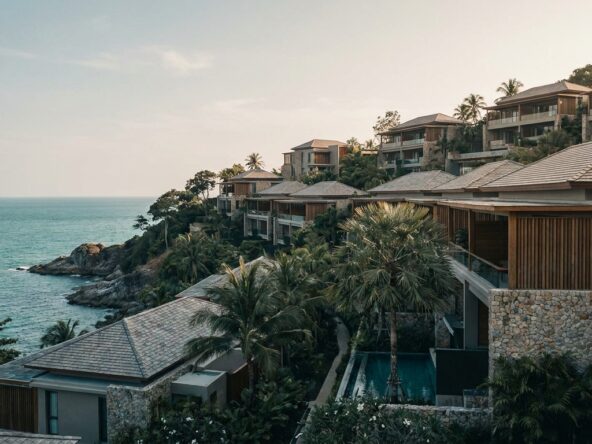
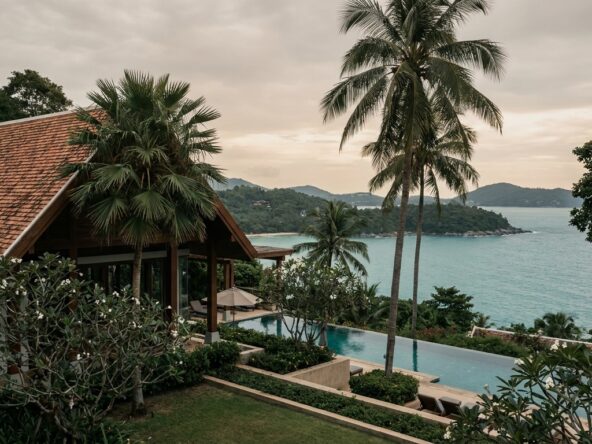
Phuket sits squarely on the stronger side of that divide. The island’s property market has never relied on domestic mass-market volume. Foreign buyers, long-stay visa holders, rental-yield investors and lifestyle-focused purchasers drive demand, particularly in villa, sea-view and branded residence segments.
When Bangkok buyers face affordability pressure, Phuket’s appeal as a second-home, investment or retirement destination becomes clearer. The island offers rental income potential, lifestyle amenities and exposure to foreign tourism demand that Bangkok’s oversupplied condo market cannot match.
Structural challenges remain across the sector
Kanit Umsakul also warned that beyond affordability, the housing market faces structural challenges including elevated household debt, slowing foreign tourism recovery and declining birth rates, all weighing on long-term housing demand.
Geopolitical uncertainty adds external pressure, creating hesitation among buyers and delaying purchase decisions.
For developers, the message is that broad market recovery is unlikely. Instead, success will depend on affordability, product differentiation and projects matching changing consumer priorities.
Phuket developers face a different calculus. Foreign buyers are less sensitive to Thai household debt or domestic wage stagnation. Tourism recovery matters more, as does clarity around visa policy, rental regulation and long-stay access for foreign nationals.
The K-shaped dynamic identified by Krungthai Compass suggests developers focusing on high-value, lifestyle-led or foreign-targeted properties are better positioned than those competing on volume or mass-market pricing.
What buyers should understand
The Bangkok affordability crunch does not directly change Phuket property pricing or demand. But it reinforces the structural shift already underway in Thai real estate.
Markets serving domestic middle-income buyers face pressure. Markets serving foreign buyers, high-net-worth Thais, lifestyle investors and rental-yield seekers remain more resilient.
For Phuket buyers, the takeaway is that property value increasingly depends on differentiation. Location, design quality, rental potential, management, amenities and long-term hold appeal matter more than unit price alone.
Developers offering clear value propositions, strong rental yields or lifestyle amenities are more likely to perform well. Generic product competing on price will struggle, just as it does in Bangkok’s oversupplied condo market.
Frequently Asked Questions
Does Bangkok’s affordability problem affect Phuket property prices?
Not directly. Phuket’s market is driven by foreign buyers, lifestyle investment and rental demand rather than domestic middle-income purchasers. However, the K-shaped market dynamic identified in Bangkok reinforces Phuket’s positioning in the higher-value, lifestyle-focused segment where performance remains stronger.
Why is the second-hand market growing in Bangkok?
Second-hand homes typically cost less than newly launched projects while remaining in established locations. Krungthai Compass estimates second-hand transfers will account for around 40% of Bangkok’s total residential transfer value this year, up from 30% in 2019, as buyers seek lower-cost alternatives amid wage pressure.
What is a K-shaped property market?
A K-shaped market means performance diverges. One segment—luxury projects, high-value developments, rentals and foreign buyer demand—performs well. The other segment—mass-market and undifferentiated projects—faces pressure. The term describes a market splitting into winners and losers rather than recovering evenly.
How does Phuket benefit from Bangkok’s housing pressure?
When domestic buyers face affordability constraints, Phuket’s appeal as a lifestyle investment, second-home destination or rental-yield opportunity becomes clearer. The island attracts foreign buyers and investors less affected by Thai household debt or domestic wage stagnation, positioning it in the stronger half of the K-shaped market.
What should Phuket developers focus on given these trends?
Product differentiation, clear value propositions and lifestyle amenities matter more than competing on volume or generic pricing. Developers targeting foreign buyers, rental investors or high-net-worth lifestyle purchasers are better positioned than those relying on mass-market domestic demand.
Sources
- Bangkok Post — Property — Bangkok housing faces affordability crunch — link