

- What Thai Law Says About Foreign Ownership
- The Main Ownership Options for Americans
- Freehold vs Leasehold: Which Is Right for You?
- Due Diligence: What Americans Should Check Before Buying
- What Americans Can Realistically Buy in Phuket and Koh Samui in 2026
- Common Mistakes American Buyers Make
- Working With an Agent Who Knows the Market
- FAQs
Americans are buying property in Thailand in growing numbers. Phuket, Koh Samui, and Chiang Mai have all seen steady interest from US buyers drawn by the climate, the lifestyle, and the potential for strong rental returns. But before you start browsing listings, there are some fundamental rules about Thai property law that every American needs to understand.
The short answer: yes, Americans can buy property in Thailand. The longer answer involves knowing exactly what you can and cannot own, and how to structure the purchase correctly.
What Thai Law Says About Foreign Ownership
Thailand does not allow foreign nationals, including Americans, to own land outright in their personal name. This is the single most important fact to understand before anything else.
The Land Code of Thailand reserves direct land title — Chanote or Nor Sor 3 Gor — for Thai nationals. A foreigner who attempts to register land in their own name will find the transaction refused at the Land Department.
That said, several legal ownership structures give Americans genuine, secure property rights in Thailand. Each has different implications for how you hold the asset, what you can do with it, and how you eventually sell or transfer it.
The Main Ownership Options for Americans
Condominium Freehold
This is the most straightforward route for a US buyer. Under the Thai Condominium Act, foreigners can own a condominium unit in freehold — meaning outright ownership — as long as the foreign quota in the building does not exceed 49 percent of total floor area.
You hold a title deed (Chanote) in your own name. You can sell, rent, or transfer the unit freely. The funds used to purchase must be transferred into Thailand in foreign currency and converted to Thai baht, with a Foreign Exchange Transaction (FET) form issued by the receiving bank as proof. Hold onto that document — you will need it to repatriate funds when you eventually sell.
Condominiums in Phuket and Koh Samui range from compact one-bedroom units to large penthouses with sea views. For buyers focused on rental yield, this structure is clean and well-understood by the market.
Leasehold
Leasehold is the most common structure for foreigners buying villas or landed property in Thailand. Under Thai law, foreigners can hold a registered lease for up to 30 years, with renewal options typically negotiated at the time of purchase.
The lease is registered at the Land Department and appears on the title deed, which gives you genuine legal protection. You can build on the land, rent the property, and transfer or sell the leasehold interest during the lease term.
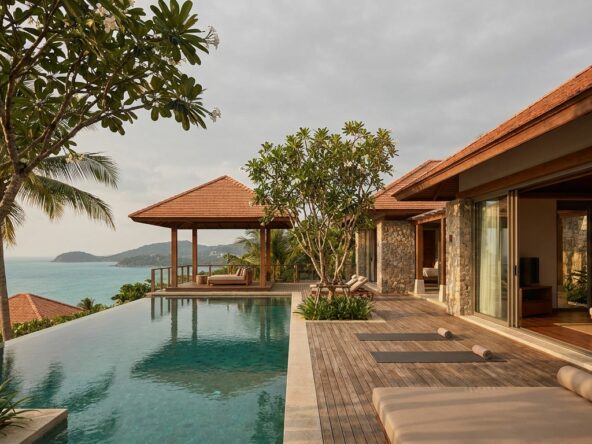
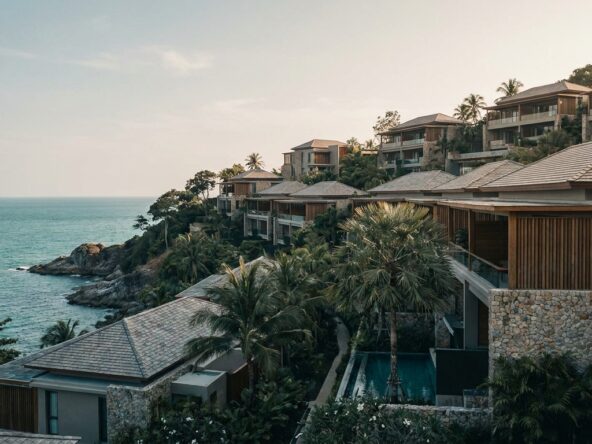
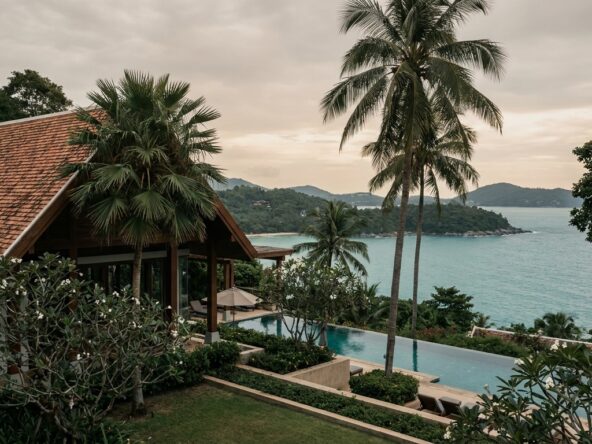
Many premium villa developments in Phuket — including those in Layan, Cherngtalay, and Surin — are structured as leasehold. Buyers who take the time to understand how it works often find it entirely workable, particularly for lifestyle use or rental investment.
One important distinction: a leasehold is not the same as owning the land. When the lease expires, the land reverts to the freeholder unless renewed. Working with an experienced agent and a qualified Thai lawyer is essential to ensure the terms are properly drafted and registered.
Thai Company Structure
Some foreign buyers purchase land through a Thai-registered limited company. The company — which can have foreign shareholders up to a 49 percent stake — holds the land title.
This structure is legal when the company is genuinely operational and the Thai shareholders are legitimate. Thai authorities have historically scrutinized nominee shareholder arrangements, where Thai nationals hold shares purely as a formality to enable foreign control. Using nominees is illegal and carries real legal risk.
If you are considering this route, independent Thai legal advice is not optional. It adds ongoing costs including annual accounting and company filings, and requires careful setup from the start.
BOI Promotion and Long-Term Residency Schemes
Thailand's Board of Investment (BOI) and the Thailand Elite visa program have both been associated with property-linked benefits at various points. The LTR (Long-Term Resident) visa, introduced in recent years, allows high-net-worth foreigners to live in Thailand for extended periods and has been linked to relaxed property access in some promoted zones.
These schemes continue to evolve. If you are planning a long-term relocation, it is worth understanding how your residency status may interact with your ownership options before you commit to a structure.
Freehold vs Leasehold: Which Is Right for You?
This is the question most American buyers ask once they understand the basic framework. The honest answer depends on what you are buying, where, and why.
For a condominium in a well-managed development, freehold is almost always preferable if the foreign quota is still available. You hold the title outright, and the asset is straightforward to sell or transfer.
For a villa with land, leasehold is the practical route for most foreign buyers. A 30-year lease on a well-built villa in a strong location — with a reputable developer and properly registered terms — is a secure and widely accepted structure in the Thai market. Many buyers who initially resist leasehold come to see it differently once they understand how it works in practice.
At OCEAN Worldwide Property, every listing is tagged with its ownership type — freehold or leasehold — as a standard search filter. You do not have to dig through listings to find out. It is one of the first things you see.
Due Diligence: What Americans Should Check Before Buying
Thai property law is different from what you are used to in the US. A few things deserve particular attention.
Title deed verification. Not all land documents in Thailand carry the same weight. A Chanote (Nor Sor 4 Jor) is the strongest title, with GPS-surveyed boundaries and full transferability. Lower-grade documents exist and are not suitable for purchase. Always verify the title at the Land Department.
Developer track record. Off-plan purchases carry risk in any market. In Thailand, that risk is amplified if the developer is undercapitalized or has a history of delays. Working with verified, pre-checked developers matters. OCEAN only lists projects from developers whose track record and financial standing have been assessed beforehand.
Legal representation. You need your own Thai lawyer, independent of the developer or agent. Expect to pay for a proper title search, contract review, and transfer assistance. This is not a step to skip.
Foreign Exchange Transaction form. If you are buying a condominium freehold, keep the FET form from your bank transfer. You will need it to repatriate funds when you sell.
Tax and reporting obligations. As a US citizen, you are subject to worldwide income reporting requirements under FBAR and FATCA rules. Rental income from a Thai property is reportable to the IRS. Speak to a US tax advisor familiar with overseas property before you buy.
What Americans Can Realistically Buy in Phuket and Koh Samui in 2026
The Phuket real estate market is valued at approximately $12.8 billion, with foreign buyer activity continuing to drive demand in the upper segments. Sansiri, one of Thailand's largest developers, has committed 15 billion baht to Phuket development — a strong signal of institutional confidence in where the market is heading.
For American buyers, the most common purchases fall into a few categories:
- Freehold condominiums in Phuket Town, Patong, or beachside developments where foreign quota is still available
- Leasehold villas in established areas like Layan, Cherngtalay, and Rawai, where infrastructure and resale markets are mature
- Off-plan units from verified developers, typically offering staged payment plans and projected rental yields of 5 to 8 percent
Koh Samui offers a quieter alternative with strong rental demand in areas like Bophut, Chaweng Noi, and Maenam. OCEAN covers both islands, which is useful if you are still weighing one against the other.
You can browse current Phuket villas for sale filtered by ownership type, area, and price range to get a realistic picture of what is available at your budget.
Common Mistakes American Buyers Make
Assuming Thai property law works like US law. It does not. The ownership structures, title types, and transfer processes are different. Approach it as a new system to learn, not a variation on what you already know.
Skipping independent legal advice. Some buyers rely entirely on the developer's lawyer. That lawyer works for the developer, not for you.
Not accounting for ongoing costs. Common area fees, property management, local taxes, and company maintenance costs (if applicable) add up. Build them into your yield calculations from the start.
Buying somewhere they have never visited. Phuket's west coast, north coast, and south all have distinct characters. Rawai feels nothing like Cherngtalay. Spend time in the areas you are considering before committing.
Working With an Agent Who Knows the Market
Buying property in Thailand as an American does not have to be complicated. But it does require the right guidance from people who know the legal landscape, the developers, and the neighborhoods.
OCEAN Worldwide Property has been on the ground in Phuket since 2004. The team covers both Phuket and Koh Samui, works only with verified developers, and handles the full purchase journey from first search to signed contract.
If you are ready to start exploring, get in touch with the team or browse current listings at oceanwwp.com.
FAQs
Can an American citizen own property in Thailand?
Yes, with conditions. Americans can own condominium units in freehold — in their own name — as long as the building's foreign quota has not been reached. For villas and landed property, the standard route is a registered leasehold of up to 30 years, or ownership through a properly structured Thai company. Both options require qualified legal advice.
Can Americans buy land in Thailand?
Not directly in their personal name. Thai law restricts land ownership to Thai nationals. Americans can access land through a registered long-term lease or through a properly structured Thai company, but both require careful legal setup.
Is leasehold property in Thailand safe for foreign buyers?
A registered 30-year lease, properly documented at the Land Department, provides genuine legal protection. The key is ensuring the lease is registered rather than just a private contract, that renewal terms are clearly stated, and that the developer or freeholder is reputable. Many experienced foreign buyers in Phuket hold leasehold villas without issue.
Do Americans pay taxes on Thai property?
In Thailand, property transfers involve transfer fees and, in some cases, withholding tax and specific business tax depending on how long the seller has held the property. As a US citizen, you are also required to report foreign income — including Thai rental income — to the IRS under FBAR and FATCA rules. A US tax advisor with international property experience is worth consulting before you buy.
What is the foreign quota for Thai condominiums?
Under the Thai Condominium Act, foreigners can collectively own no more than 49 percent of the total floor area of a condominium building. If a building has reached its foreign quota, new foreign buyers cannot purchase freehold units there, though leasehold arrangements are sometimes available as an alternative.
How do I verify a developer before buying off-plan in Thailand?
Check the developer's track record on completed projects, their financial standing, and whether they hold the necessary permits. Working with an agency that has pre-checked its developer relationships — rather than going directly through a developer's sales team — adds a meaningful layer of protection.
How much does property in Phuket cost for American buyers in 2026?
Entry-level condominiums in Phuket start from around THB 3 to 5 million for a one-bedroom unit. Mid-range villas in areas like Rawai or Thalang typically range from THB 10 to 25 million. Premium villas in Layan, Cherngtalay, or Surin with sea views can reach THB 30 million and above. Prices vary significantly by location, finish, and ownership structure.