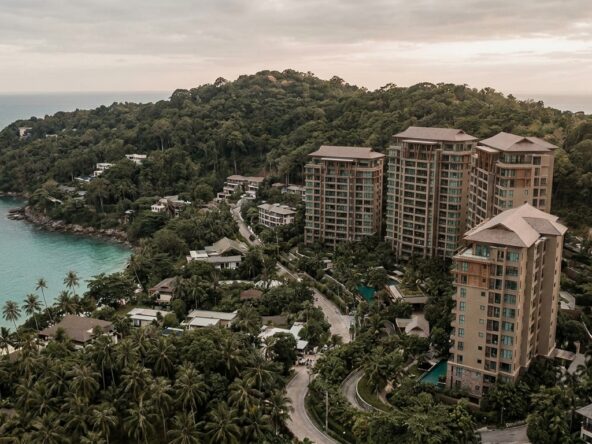


For Phuket property buyers, sellers and investors, the important question is not whether other Thai islands are growing. The question is what that growth means for Phuket’s position, pricing and long-term demand.
According to property consultancy Colliers Thailand, Koh Samui and Koh Phangan are now emerging as global property investment hotspots, driven by surging foreign demand, rising land prices and a wave of new project launches. Foreign buyers dominate demand, particularly in the residential leasehold market, and major Bangkok-based developers are now acquiring land on both islands in preparation for future projects.
Phattarachai Taweewong, research and communication director at Colliers Thailand, said the two islands are evolving into an international investment hub. “Over the past two years, land prices on both islands have risen sharply, mirroring Phuket’s rapid appreciation several years earlier,” he said. “Despite the increase, land values remain significantly lower than in Phuket, leaving substantial room for further growth.”
The numbers behind the shift
As of the first quarter of 2026, Samui and Phangan had a combined 154 residential projects on the market, comprising 2,860 units with a total development value exceeding 61 billion baht. Many resort home and condo projects achieved strong absorption rates, particularly those targeting foreign buyers.
Samui remains the larger of the two markets, with 113 projects comprising 2,422 units worth an estimated 53.2 billion baht. Resort villas remain the dominant segment, with 65 projects and 749 units valued at nearly 30 billion baht. Prime locations include Mae Nam, Chaweng-Bophut and Lamai.
Condo prices generally range between 60,000 and 80,000 baht per square metre, while some luxury projects command prices greater than 200,000 baht per square metre. Foreign buyers account for 85-90% of purchases, while Thai buyers represent 10-15% of the market.
Phangan, long known primarily as a tourist destination, is evolving into an international residential and investment market. The island had 41 residential projects with 438 units worth a combined 7.94 billion baht as of the first quarter of 2026. The market recorded rapid growth over the past two years, with annual new supply exceeding 100 units in 2024 and 2025.
Who is buying and why
More than half of demand on Samui comes from European investors, followed by buyers from Russia, Israel, China, Australia, the Czech Republic and France. Leasehold ownership remains the dominant structure, allowing overseas investors to drive market growth.
On Phangan, more than 90% of buyers are foreigners, with particularly strong demand from Israel, Europe and Australia. Many seek long-stay residences, retirement homes or rental investment properties. Areas such as Sri Thanu and Hin Kong are popular with European buyers and digital nomads due to their focus on wellness lifestyles and established expatriate communities, according to Colliers. Meanwhile, Haad Yao, Haad Salad and Mae Haad attract affluent buyers seeking privacy, sea views and luxury villas.
Major developers are paying attention
The strong performance has attracted major Bangkok-based developers, many of whom have begun acquiring land on both islands in preparation for future projects. Competition is expected to intensify this year as Supalai Plc and Chiang Mai-based developer Ornsirin Holding enter the market to capture demand in high-potential resort destinations.
This developer interest matters because it signals confidence in sustained foreign demand and long-term appreciation potential. When major listed developers with proven track records enter a market, they typically bring capital, marketing reach and project quality that can accelerate market maturity.
What this means for Phuket property
The rise of Samui and Phangan does not diminish Phuket. Instead, it may validate the broader thesis that Thailand’s resort islands offer compelling long-term value to foreign buyers seeking lifestyle-led investment, rental income and second homes.
Phuket’s land prices remain significantly higher than both Samui and Phangan, according to Colliers. This price gap may attract some buyers who perceive Samui or Phangan as offering better value or earlier-stage appreciation potential. However, Phuket’s infrastructure, international connectivity, luxury hospitality sector, marina facilities and established expatriate community remain difficult to replicate.
The data suggests that Thai resort property demand is diversifying geographically, not abandoning Phuket. For Phuket sellers, the key point is that buyers now have more options. For Phuket buyers, the shift may increase the importance of location, product quality and clear investment rationale within Phuket itself.
Phattarachai cautioned developers to conduct thorough due diligence on land titles and focus on locations with proven demand, as project success will increasingly depend on site quality, pricing and product positioning. This advice applies equally to Phuket, where the market is maturing and differentiation matters more than in earlier growth phases.
Frequently Asked Questions
Are Samui and Phangan competing directly with Phuket for foreign buyers?
They attract similar buyer profiles—foreign investors seeking leasehold villas and condos in Thai resort markets. However, Phuket’s infrastructure, international connectivity and luxury hospitality sector remain more developed. The shift suggests diversification of demand across Thai islands, not abandonment of Phuket.
Why are land prices rising faster on Samui and Phangan than Phuket?
According to Colliers, land prices on Samui and Phangan are rising sharply because they started from a lower base and are now attracting major developer attention. Phuket experienced similar rapid appreciation several years earlier. Land values on Samui and Phangan remain significantly lower than in Phuket, leaving substantial room for further growth.
What should Phuket property buyers watch for?
Buyers should pay attention to how Phuket’s pricing, product quality and infrastructure continue to differentiate the island from other Thai resort markets. Location, access, hospitality amenities and expatriate community depth remain Phuket advantages. The rise of Samui and Phangan may increase the importance of clear investment rationale within Phuket itself.
Is this developer interest in Samui and Phangan a long-term trend?
Major Bangkok-based developers, including listed company Supalai, are acquiring land and entering the market. This suggests confidence in sustained foreign demand. Colliers describes Phangan as entering a structural growth phase, supported by quality tourism, growing expat communities and increasing international demand for second homes and investment properties.
What remains uncertain?
It is unclear how quickly infrastructure, international flight access and hospitality offerings on Samui and Phangan will develop relative to Phuket. It is also unclear whether foreign buyer demand can sustain rapid supply growth across multiple Thai islands simultaneously. Market performance will depend on product quality, pricing discipline and site selection.
Sources
- Bangkok Post — Samui, Phangan are new property hotspots — link