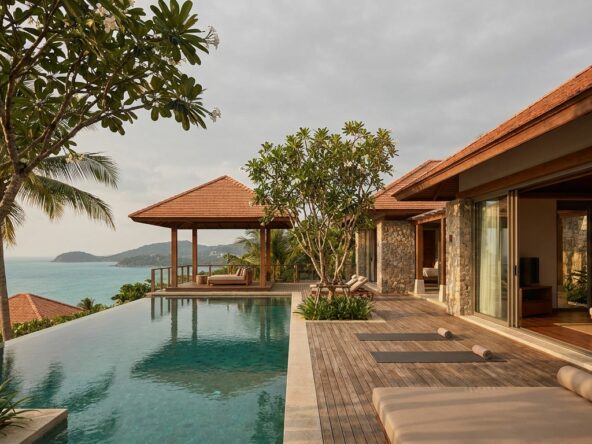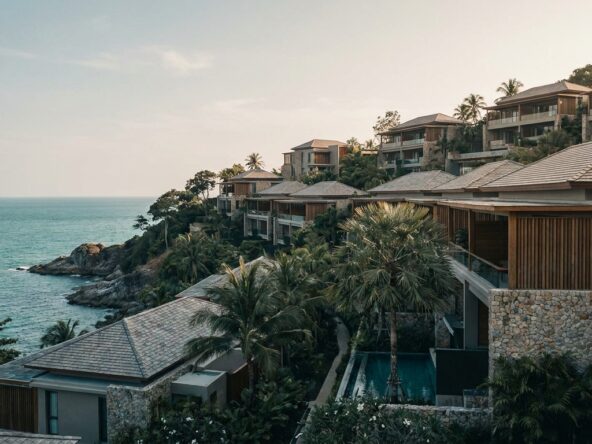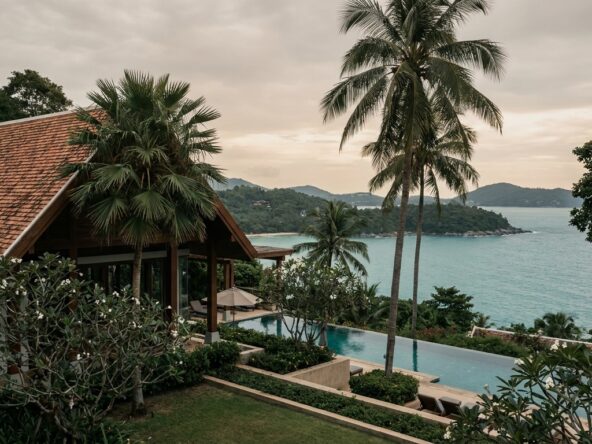

The Sarasin Bridge was once just the road out of Phuket. That is changing. The bridge is becoming a dividing line in Thailand’s hotel investment map, separating an island that has run out of beachfront from a mainland coast that still has it.
Phuket’s problem is a good one: too much success, not enough land. Beachfront sites are scarce, prices have climbed accordingly, and much of what remains is being built as condominiums and villas rather than hotels. Developers chasing ultra-luxury resorts—the kind that need seclusion, scale and an uninterrupted stretch of sand—are increasingly looking past the island altogether.
They are finding what they need across the bridge.
What the pipeline shows
The InterContinental Phang-Nga Bay Resort, a 150-key property scheduled to open in 2028 at Samet Nangshe, and the 150-key Kimpton Natai, opening a year earlier, anchor a coastline running from Natai to Thai Muang. According to C9 Hotelworks research, the active pipeline in the area totals 315 keys, including a modest 15-key expansion at Khaolak Paradise Resort further north.
These properties are not overflow. They offer what Phuket largely cannot: long, undeveloped oceanfront capable of supporting full-service resorts rather than the compact, stacked product that scarcity forces on the island.
The numbers support the shift. According to the Khao Lak and Phang Nga Hotel & Tourism Market Review 2026, published by C9 Hotelworks, Phang Nga’s tourism revenue reached 56.6 billion baht (US$1.7 billion) in 2025, up 2% year-on-year. This occurred even as Thailand’s wider southern region, covering fourteen provinces, saw both visitor numbers and revenue decline.
International travellers made up 61% of Phang Nga’s arrivals but generated 76% of its revenue, spending more than double per head compared to domestic visitors. That spending gap explains why developers are betting on this stretch of coast rather than simply on regional growth.
Khao Lak’s year-round advantage
Further north, Khao Lak is proving the shift is not only about five-star construction. At the northern end of Khuk Khak Beach sits Memories Beach, a sandy-bottomed break that has become the centre of Thailand’s surf scene. The beach offers consistent, waist-to-chest waves suited to beginners, with bigger swells during the monsoon keeping intermediate surfers engaged.
Pakarang Surf Shop, attached to the beach, rents boards and runs lessons. The beach has hosted Rip Curl competition heats alongside its everyday mix of learners and regulars. The season runs roughly from April to November—the monsoon months, exactly when the Similan Islands close and the region’s dive boats stay in port.
The two seasons dovetail, giving Khao Lak something rare on this coast: a reason for visitors to come year-round rather than only in the dry months.
Hotel data reflects the same resilience. Average daily rates in Khao Lak rose 26.2% year-on-year in the first quarter of 2026, extending gains that ran as high as 46.4% through 2025, even as occupancy softened from March amid a weaker Middle East travel market.
Structural change, not cyclical growth
The clearest sign that Khao Lak is maturing rather than simply riding a good season is the 170-hectare Matalay integrated resort community, now under development with five international-standard resort sites under one masterplan. It is the kind of large-scale, single-owner development Phuket can no longer accommodate.
The project is arriving alongside easier four-lane access from Phuket International Airport, turning what was once a long, winding drive north into a straightforward extension of the island’s own catchment. Together, the road and the masterplan mark a structural shift in Khao Lak’s supply, not a one-off cycle of new openings.
What this means for Phuket property
None of this makes Phuket obsolete. It makes it full.
What is emerging north of the Sarasin Bridge is not an overflow market but a distinct one, built around space the island no longer has and a guest profile willing to pay for it. For Phuket property buyers, the shift carries several implications worth noting.
First, beachfront scarcity on the island is now structural. New luxury hotel supply cannot easily be added, which means existing beachfront real estate—whether villas, condominiums or boutique hotel sites—faces less future competition from large-scale resort development. That scarcity may support pricing over time, especially in established beachfront areas such as Surin, Layan and Natai’s southern edge.
Second, the movement of ultra-luxury hospitality to Phang Nga and Khao Lak does not dilute Phuket’s appeal. It confirms demand for premium product in the wider Andaman region. Buyers considering Phuket property are not competing with Khao Lak; they are looking at different use cases. Phuket offers connectivity, infrastructure, international schools, medical facilities and established communities. Khao Lak offers space, seclusion and a less developed coastline.
Third, the improved road access linking Phuket International Airport to Khao Lak shortens travel time and integrates the two markets operationally. For buyers focused on rental performance, this may matter. Guests staying in Khao Lak are using the same airport, often the same airlines and frequently the same booking channels as those staying in Phuket. The two markets are closer than they were.
Frequently Asked Questions
Why are luxury hotel developers choosing Phang Nga and Khao Lak over Phuket?
Phuket’s beachfront land is scarce and expensive. Developers building ultra-luxury resorts need large, undeveloped oceanfront sites, which are increasingly difficult to find on the island. Phang Nga and Khao Lak offer the space and seclusion these projects require.
Does this shift affect property values in Phuket?
Beachfront scarcity may support pricing over time, especially in established areas. The movement of new luxury hotel supply to Phang Nga means less future competition for existing beachfront real estate on the island, though broader market conditions and demand still drive values.
How does Khao Lak’s surf season affect the property market?
The surf season runs during the monsoon months, when dive boats and the Similan Islands are closed. This gives Khao Lak year-round visitor appeal rather than relying solely on the dry season, which may support rental demand and hotel performance throughout the year.
Is Khao Lak competing with Phuket for buyers?
Not directly. Phuket offers infrastructure, connectivity, schools and established communities. Khao Lak offers space and a less developed coastline. Buyers are typically choosing between different property types and lifestyles rather than comparing equivalent products in both locations.
What is the Matalay integrated resort community?
Matalay is a 170-hectare masterplanned development in Khao Lak featuring five international-standard resort sites. It represents the kind of large-scale, single-owner project Phuket can no longer accommodate due to land scarcity and fragmented ownership.
Sources
- Thaiger — The Sarasin shift: Thailand’s luxury coastline moves north of Phuket — link
- C9 Hotelworks — Khao Lak and Phang Nga Hotel & Tourism Market Review 2026