

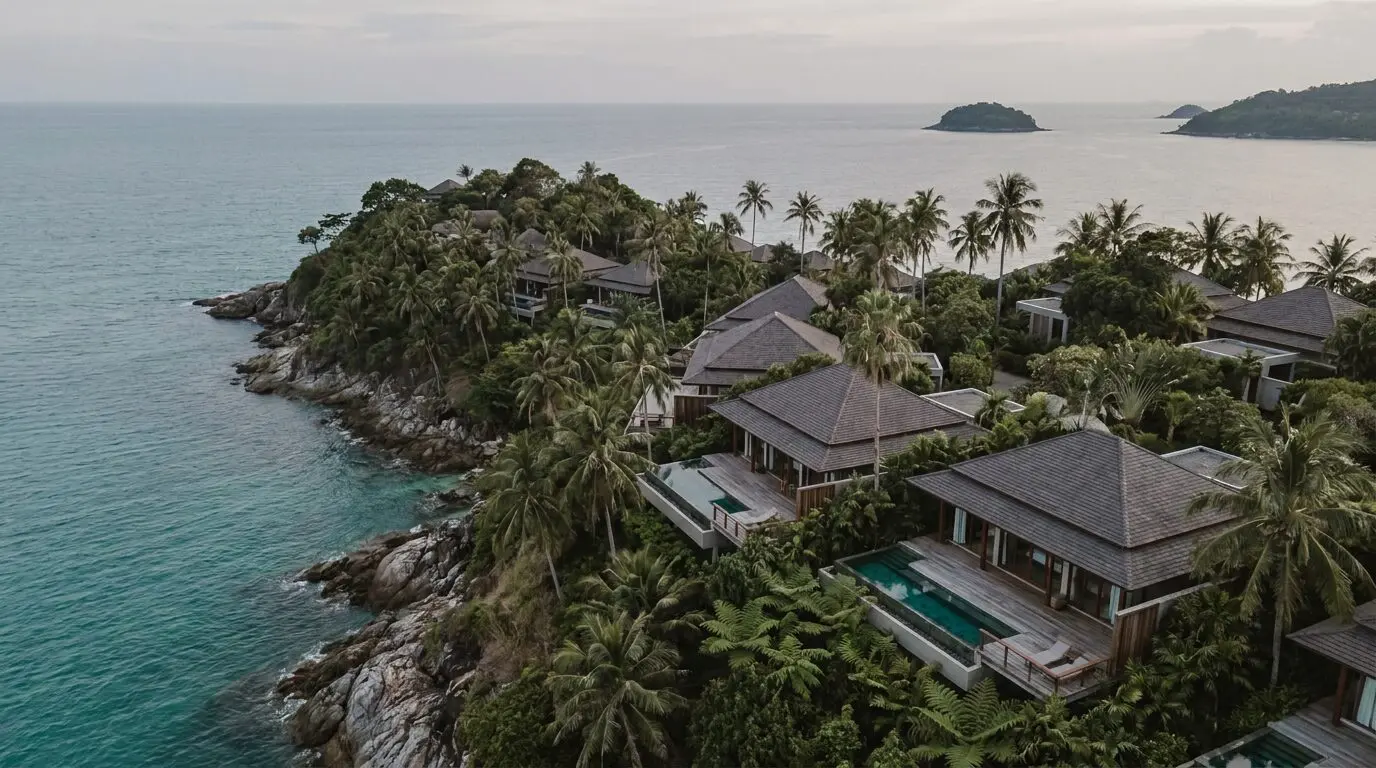
The concern was that Thailand’s intensified enforcement against illegal nominee structures would shake foreign confidence in Phuket and Samui villa markets. The data so far suggests otherwise.
According to property technology group Juwai IQI, foreign demand for resort and luxury residential properties has not weakened measurably since enforcement increased. Buyers are asking more questions about ownership structures, but they are not walking away from deals or abandoning deposits.
The shift is toward legal clarity, not retreat.
What the enforcement targets
Kashif Ansari, co-founder and group chief executive of Juwai IQI, said the crackdown appears focused on people working illegally in Thailand rather than expats living in villas.
“The rules haven’t changed,” Ansari said. “They’re just stepping up enforcement. Anyone who has followed the law will have no problem.”
The company’s agents have not observed foreign villa owners rushing to sell assets ahead of possible audits. Pending purchases have not been cancelled because of the enforcement measures.
Ansari said foreign buyers generally welcome greater transparency and legal certainty, as this helps protect long-term investments. “Ultimately, buyers like to operate in well-regulated, transparent markets where their investment is protected. We find Thailand’s focus on compliance reassuring.”
Buyers are asking more questions
While demand has not pulled back, buyer behaviour has shifted slightly. Juwai IQI agents are now receiving more enquiries about legal ownership arrangements than before the enforcement campaign began.
“Our agents are getting more questions about legal arrangements than they did in the past,” Ansari said. “Some buyers want to clearly understand in advance how it will work, just to make sure they’re not getting into trouble. We think that’s a good thing.”
Buyers are working with lawyers and agents to ensure compliance. The company has not seen buyers walk away from pending purchases because of enforcement concerns.
Foreign participation in Phuket villas
Juwai IQI estimates that in Phuket, around three in five property transactions involve a foreign buyer or lessee. In Samui and Phangan, foreign demand is even more pronounced, with more than nine in 10 villa buyers estimated to be foreign.
The company believes that between 2,400 and 3,000 villas in Phuket are ultimately foreign-owned or leased. A similar number is estimated across Samui and Phangan.
Ansari stressed that these figures refer primarily to the luxury resort villa segment rather than conventional housing, which remains overwhelmingly Thai-owned.
“There isn’t an official figure for foreign villa ownership because foreigners can’t hold land in their own name and long-term leases aren’t tracked by nationality,” he said.
Chinese buyer demand remains strong
Thailand continues to rank among the most attractive overseas property destinations for Chinese buyers. According to Juwai IQI enquiry data for the first quarter of 2025, Thailand was the second-most popular destination globally among Chinese property seekers.
More than half of enquiries were for homes valued at $750,000 or below, while 27.5% targeted properties priced above $2 million. “Nine in 10 Chinese buyers say their purchases are both for their own use and for investment,” Ansari said.
Within Thailand, Bangkok remains the most popular destination, followed by Phuket, Chiang Mai, Pattaya and Hua Hin.
Juwai IQI said it has not observed any meaningful shift of Chinese capital from Thailand to competing destinations such as Malaysia. “Malaysia is certainly an attractive market, but we haven’t noted any shift in buyers from Thailand to Malaysia, or the other way around,” Ansari said.
The legal routes buyers are using
Ansari said foreign buyers currently have three main options: purchasing condominium units under freehold ownership, buying villas structured under condominium ownership, or entering long-term leasehold agreements.
He warned that buyers should not believe their lease can be automatically extended for 90 years. “Also, never enter into a nominee arrangement where Thai shareholders hold the land but you actually control it. That is exactly what the authorities are enforcing against now,” he said.
The government is considering reforms to increase the foreign ownership quota in condominiums from 49% to 75%, though no timeline has been confirmed. If implemented, the change could expand options for foreign buyers seeking freehold ownership in villa developments structured as condominiums.
Why this matters for Phuket property
The enforcement campaign has clarified the line between legal and illegal ownership structures. For buyers, this is not a constraint but a signal.
Foreign demand in Phuket’s villa market has not been driven by nominee structures alone. It has been driven by location, lifestyle, rental yield potential, long-stay flexibility and investment diversification.
Those factors remain intact. What has changed is the emphasis on legal compliance, and buyers appear willing to work within that framework rather than walk away from the market.
For sellers and developers, the data suggests that demand is durable as long as ownership structures are clear, legally sound and properly communicated.
Frequently Asked Questions
Has the nominee crackdown reduced foreign demand for Phuket villas?
No. According to Juwai IQI, foreign demand for resort and luxury villas has not weakened measurably. Buyers are asking more questions about ownership structures, but they are not walking away from deals or abandoning deposits.
What ownership options are available to foreign buyers in Phuket?
Foreign buyers can purchase condominium units under freehold ownership, buy villas structured under condominium ownership, or enter long-term leasehold agreements. Nominee arrangements where Thai shareholders hold land but the buyer actually controls it are illegal and the focus of current enforcement.
Are foreign villa owners in Phuket selling because of enforcement concerns?
No. Juwai IQI has not observed existing foreign villa owners rushing to sell assets ahead of possible audits. The company said buyers who followed the law have no reason to be concerned.
How much of Phuket’s villa market is foreign-owned or leased?
Juwai IQI estimates that around three in five property transactions in Phuket involve a foreign buyer or lessee. The company believes between 2,400 and 3,000 villas in Phuket are ultimately foreign-owned or leased, though official figures are not available.
Is Thailand still popular with Chinese property buyers?
Yes. According to Juwai IQI enquiry data for the first quarter of 2025, Thailand was the second-most popular destination globally among Chinese property seekers. Within Thailand, Bangkok remains the most popular destination, followed by Phuket, Chiang Mai, Pattaya and Hua Hin.
Sources
- Bangkok Post — Crackdown unlikely to hit foreign property demand — link